Stay Here
2018 Series

The Maloofs, a lovable family of gearheads and stunt drivers, use their passion and skill to build car engines and perform wild feats behind the wheel.
Official
I don’t know what I expected from Drive Hard: The Maloof Way, but it wasn’t this. Not this quiet, almost eerie absence of stakes. The Maloofs—those Sacramento Kings owners turned casino moguls turned reality TV subjects—have always been a family that thrives on spectacle, on the kind of high-stakes drama that makes for good headlines and bad decisions.
So when a show promises to follow them as "a lovable family of gearheads and stunt drivers," you brace for something loud: roaring engines, screaming tires, the kind of manufactured conflict that reality TV has perfected over the last two decades. Instead, what we get is a series that feels like it’s missing its own script. Not in the way of bad editing or lazy storytelling, but in the way of a family that has spent so long performing for the cameras that they’ve forgotten how to be interesting without them.
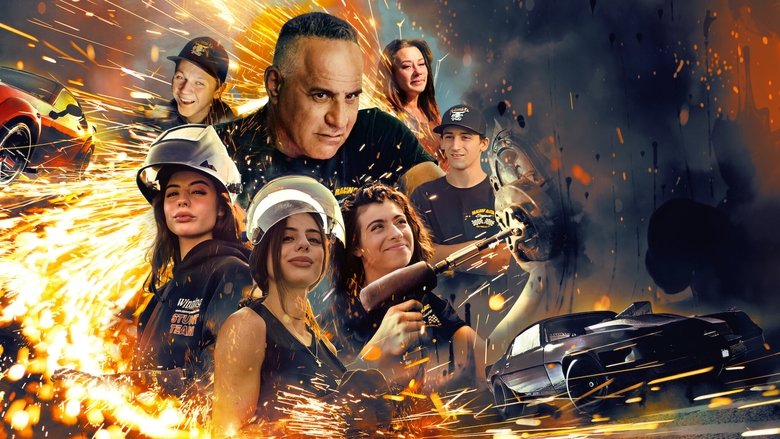
The premise, as far as I can tell, is simple: the Maloofs build car engines and perform stunts. That’s it. No competition, no elimination rounds, no manufactured rivalries.
Just a family, some cars, and a whole lot of time to fill. And yet, the show’s greatest trick is making even that seem like a stretch. The episodes I’ve seen (all eight of them, because I’m nothing if not thorough) unfold like a series of vignettes that never quite cohere into a narrative.
One moment, we’re in a garage, watching a Maloof brother tinker with an engine block. The next, we’re at a racetrack, watching someone—maybe the same brother, maybe another—drift a car around a cone. There’s no tension, no buildup, no payoff.
Just the slow, steady hum of a family going through the motions.
This isn’t to say the show is boring, exactly. There’s a strange fascination in watching people who are so clearly used to being watched. The Maloofs have spent decades in the public eye, from their NBA ownership days to their ill-fated foray into the Palms Casino Resort, and that history seeps into every frame of Drive Hard.
They move through the world like people who know they’re being filmed, which means they’re always performing, even when they’re not doing much of anything. There’s a scene in one of the early episodes where two brothers stand in a garage, discussing the merits of a particular engine part. The conversation is mundane, almost painfully so, but the way they hold themselves—the way they angle their bodies toward the camera, the way their eyes flick toward the lens when they think no one’s looking—betrays a lifetime of media training.
They’re not just talking to each other; they’re talking to an audience. The problem is, they don’t seem to have anything to say.
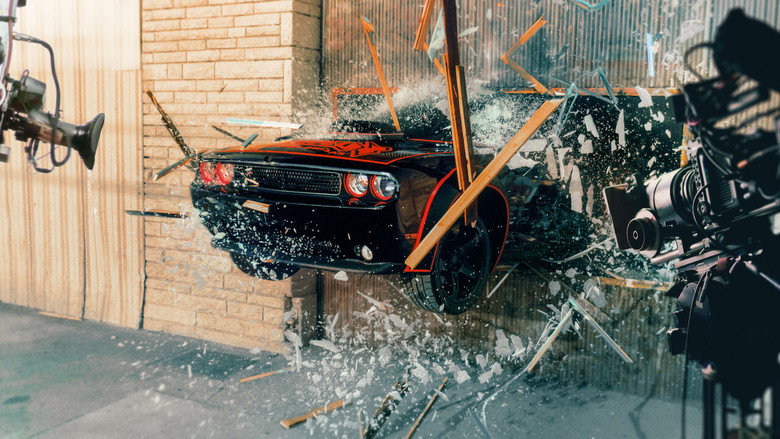
What’s most striking about Drive Hard is how little it reveals about its subjects. Reality TV, at its best, is a kind of psychological excavation—a way to peel back the layers of its participants and expose the messy, complicated humans underneath. Think of The Osbournes, where the cameras captured Ozzy’s drug-fueled ramblings and Sharon’s razor-sharp wit, or Keeping Up with the Kardashians, where the family’s relentless self-mythologizing became the story itself.
The Maloofs, by contrast, remain frustratingly opaque. They’re not unlikable, exactly, but they’re not particularly compelling either. They’re just… there.
Watching them is like flipping through a stranger’s vacation photos: you see the sights, but you don’t feel the sun.
This opacity might be intentional. The Maloofs have always been a family that thrives on image—on the idea of the American dream, of rags-to-riches success, of the kind of wealth that lets you buy an NBA team on a whim. But their story is also one of failure: the Sacramento Kings were sold under financial duress, the Palms Casino Resort went bankrupt, and their public image has been tarnished by years of legal and financial troubles. Drive Hard doesn’t ignore this history, but it doesn’t engage with it either.
It’s as if the show is trying to present the Maloofs as they were at their peak—as a family of fearless entrepreneurs and thrill-seekers—while conveniently glossing over the cracks in the facade. The result is a series that feels like a relic, a time capsule from a moment when the Maloofs were still relevant.
And maybe that’s the point. Reality TV has always been a medium that thrives on nostalgia, on the idea of capturing a moment before it slips away. Drive Hard feels like an attempt to recapture something that’s already gone—the Maloofs’ heyday, their cultural relevance, their place in the public imagination. But nostalgia, by definition, is a longing for something that no longer exists.
The Maloofs of Drive Hard aren’t the same family that owned the Kings or the Palms. They’re older, quieter, less sure of themselves. The show doesn’t seem to know what to do with them, so it falls back on the one thing it knows will work: cars.
Fast cars, loud cars, cars that can distract from the fact that the people driving them have run out of things to say.
There’s a moment in the final episode where one of the Maloof brothers takes a car out for a test drive. The camera lingers on the speedometer as it climbs higher and higher, the engine roaring, the tires kicking up dust. It’s a thrilling shot, the kind of thing that would feel at home in a Fast & Furious movie.
But then the car slows down, the dust settles, and we’re left with the same question we’ve been asking for eight episodes: what was the point of all that? The Maloofs don’t answer. The show doesn’t answer.
And maybe that’s the most honest thing about Drive Hard—it’s a series that doesn’t know why it exists, and it’s not even trying to pretend otherwise.
In the end, Drive Hard: The Maloof Way is a show about nothing, and that’s not necessarily a bad thing. There’s a certain charm in its aimlessness, in the way it meanders from one half-formed idea to the next without ever settling on a destination. It’s the kind of show you put on in the background while you’re doing something else, the kind of show that doesn’t demand your attention but doesn’t reward it either.
The Maloofs, for all their flaws, are at least honest about who they are: a family that’s spent so long performing for the cameras that they’ve forgotten how to be real. And maybe, in a genre built on artifice, that’s the most authentic thing of all.
"A polarizing reality series that mixes high-stakes racing with family drama."
Reactions to *Drive Hard: The Maloof Way* are sparse and center on the Maloof family’s racing ventures and personal dynamics. The behind-the-scenes access to the family’s lifestyle and business is the draw; the reality format lacks depth and originality. Its entertainment value depends on a niche interest in motorsports and unscripted family sagas.
The Maloof family—billionaire entrepreneurs behind the NBA’s Sacramento Kings, the Palms Casino Resort, and a string of high-profile ventures—have never shied away from the spotlight. But when Netflix greenlit Drive Hard: The Maloof Way in 2022, the streaming giant bet on the family’s larger-than-life persona to fuel a reality series centered on cars, stunts, and unscripted chaos. The result? latestnetflix.com's read is that a show that arrived with a roar and vanished with barely a whimper, leaving fans and critics alike scratching their heads.
Drive Hard: The Maloof Way promised a mix of automotive culture, family dynamics, and adrenaline-pumping stunts, all under the Maloof name. The series’ official trailer showcased flashy cars, daredevil maneuvers, and the family’s signature blend of business and bravado. Clips teased high-speed chases, custom builds, and the kind of over-the-top energy that reality TV thrives on. Yet, from the outset, the show struggled to define itself. Was it a car show? A family drama? A stunt-heavy spectacle? The evidence suggests it tried to be all three—and may have failed at each.
Critics and viewers were quick to pounce. One YouTube reaction video called the trailer "a mess of fast cuts and empty hype," while another outright labeled it "the worst car show ever," mocking its lack of focus and amateurish production. The series’ French listing classified it as a "télé-réalité" (reality TV), but even that descriptor felt generous. Without a clear narrative or compelling stakes, Drive Hard risked becoming a vanity project for the Maloofs, rather than a must-watch series.
One of the biggest unanswered questions about Drive Hard: The Maloof Way is what, exactly, happened to it. A YouTube video titled "What happened to Drive Hard: The Maloof Way?" suggests the show was quietly shelved or canceled, though Netflix has never officially addressed its fate. The series’ TMDB page [TMDB] lists it as a 2022 release, but beyond the trailer and a handful of clips, there’s little evidence it ever gained traction.
Rumors swirl about behind-the-scenes issues—perhaps creative differences, budget constraints, or simply lackluster reception. The Maloofs’ previous ventures, like their ownership of the Kings, were marked by both ambition and controversy, and Drive Hard may have fallen victim to similar pitfalls. Without official statements, however, the show’s demise remains speculative.
For all its flaws, Drive Hard: The Maloof Way wasn’t without moments. A clip featuring the cast goofing off during stunts hinted at the kind of unfiltered, high-energy fun that could have worked—if the show had committed to it. Instead, the series seemed torn between polished production and raw reality, leaving viewers with a product that felt neither authentic nor entertaining.
In the end, Drive Hard serves as a cautionary tale about the limits of brand-driven content. The Maloof name alone wasn’t enough to sustain a show, especially in a crowded reality TV landscape. Whether it was canceled, shelved, or simply forgotten, the series now exists as a footnote—a brief, flashy experiment that burned out as quickly as it revved its engines.
Entertainment rumors and trivia aggregated from public reporting. Treat speculation as unverified unless a cited source confirms it.
More titles in the same genres and with the same cast.