Bonnie Strange
Self - Host

From the villa to the jungle, contestants must keep their friends close and their enemies closer. Who will win entry to paradise and 100,000 euros?
I’ve seen this trick before. A group of strangers, plucked from obscurity and plopped into a gilded cage, told they’re playing for money and glory—only to discover the real game is psychological warfare. Netflix has been mining this vein for years, from Too Hot to Handle’s manufactured celibacy to The Circle’s catfishing labyrinth. Fight for Paradise: Who Can You Trust? doesn’t so much reinvent the wheel as give it a fresh coat of paint and call it a luxury SUV.
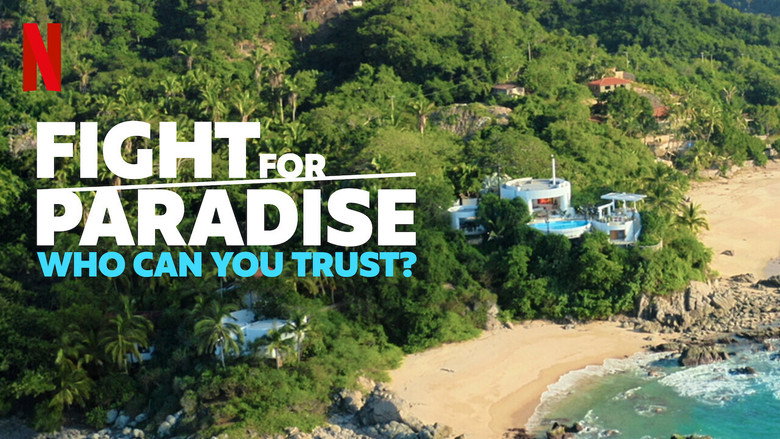
The premise is simple: contestants start in a lavish villa, only to be exiled to a jungle camp if they lose a challenge or get voted out by their peers. The catch? The villa dwellers hold all the power, deciding who gets banished and who gets to stay in paradise.
Trust is the currency, and betrayal is the interest.
The show’s opening moments are a masterclass in bait-and-switch. Contestants arrive at what they believe is their dream vacation—a sun-drenched villa with infinity pools, plush loungers, and cocktails served on demand. The camera lingers on their wide-eyed reactions, the kind of performative awe that feels both genuine and rehearsed.
(Is anyone really surprised by a Netflix villa at this point?) Then, the rug is pulled out from under them. Some are sent packing to the jungle, where the accommodations are decidedly less glamorous: think dirt floors, makeshift shelters, and the kind of humidity that makes you question every life choice that led you here.

The divide between the "Insiders" (villa) and "Outsiders" (jungle) isn’t just about comfort—it’s a deliberate psychological tactic. The villa is a gilded prison, where alliances are forged over champagne and broken over whispered secrets. The jungle, meanwhile, is a test of endurance, where survival trumps strategy.
The show’s producers seem to be asking: What happens when you strip away the veneer of luxury and force people to confront their basest instincts? The answer, predictably, is a lot of crying, a lot of scheming, and a whole lot of questionable life choices.
Bonnie Strange, the show’s host, is an interesting choice. A model, actress, and former Powerpuff Girls theme song performer (yes, really), Strange brings a punk-rock edge to the proceedings. She’s not the polished, corporate-friendly host you’d expect from a show like this.
Instead, she’s got the kind of unfiltered energy that makes you wonder if she’s going to break character and tell the contestants to just grow up already. Her Instagram is a goldmine of behind-the-scenes snippets, though it’s unclear how much of her on-screen persona is performance and how much is just… her. Either way, she’s a breath of fresh air in a genre that often feels like it’s been focus-grouped to death.
The show’s biggest flaw—and its most fascinating element—is its lack of authenticity. Reality TV has always been a bit of a misnomer; the genre thrives on manufactured drama, edited narratives, and contestants who seem to be reading from a script. Fight for Paradise is no different. The interactions feel staged, the alliances too convenient, the betrayals too neatly timed.
But here’s the thing: maybe that’s the point. The show isn’t trying to be a documentary. It’s a game, and the rules are simple: play along or get voted out.
The question is whether the audience is in on the joke or if they’re being played just as hard as the contestants.
Critics haven’t been kind. Decider called it a "carbon copy" of Netflix’s Don’t Hate the Player, while Common Sense Media dismissed it as "filler" television meant for background viewing. Leisurebyte went even further, labeling it "another vapid reality show" with "badly made" production values.
Ouch. But here’s the thing about reality TV: it doesn’t need to be high art. It doesn’t even need to be good.
It just needs to be compelling enough to keep you watching, and Fight for Paradise has that in spades. The drama is addictive, the twists are predictable but satisfying, and the sheer audacity of pitting luxury against survival is enough to keep you hooked.
The show’s themes—greed, strategy, the illusion of trust—are nothing new, but they’re executed with a kind of ruthless efficiency. The villa is a metaphor for the trappings of success, where comfort is both a reward and a trap. The jungle, meanwhile, is a reminder of what happens when you’re stripped of your privileges and forced to rely on your wits.
It’s a stark contrast, and one that feels particularly relevant in an era where social media has turned us all into performers, curating our lives for an audience that may or may not have our best interests at heart.
Audience reactions have been mixed. Some viewers praise the show’s strategic elements and diverse cast, while others criticize it for feeling overly scripted and lacking authenticity. The IMDb score hovers around 5.5/10, which, let’s be honest, is about right. Fight for Paradise isn’t trying to be The Wire.
It’s not even trying to be Survivor. It’s a guilty pleasure, the kind of show you put on when you want to turn your brain off but still feel like you’re engaging with something vaguely strategic. And in that regard, it delivers.

The real question is whether Fight for Paradise has staying power. Netflix has a habit of churning out reality shows like a factory, and most of them fade into obscurity after a season or two. But there’s something about this one that feels different.
Maybe it’s the stark contrast between the villa and the jungle, or the way the show forces its contestants to confront their own moral limits. Or maybe it’s just that, in a world where trust is increasingly hard to come by, a show about betrayal feels more relevant than ever.
Either way, I’ll be watching. Not because it’s good, but because it’s fascinating in the way a car crash is fascinating. You can’t look away, even when you know you should. And in the end, isn’t that what reality TV is all about?
Netflix’s latest reality competition, Fight for Paradise: Who Can You Trust? (2024), drops contestants into a high-stakes game where alliances are currency and betrayal is just another strategy. Hosted by German media personality Bonnie Strange, the series blends the opulence of a villa with the grit of jungle survival, all while dangling a €100,000 prize. But with trust as the central theme, latestnetflix.com argues, the real question isn’t just who will win—it’s who will stab you in the back first.
Bonnie Strange isn’t your typical reality TV host. The German singer, actress, and former Powerpuff Girls theme song performer (she provided the German vocals for Cartoon Network’s animated series) brings a rebellious energy to Fight for Paradise. Known for her unfiltered social media presence—she’s previously blamed ADHD for her failed relationships —Strange’s hosting style promises a mix of wit and unpredictability. While the show’s format leans into classic reality tropes (luxury vs. Hardship, shifting alliances), Strange’s involvement suggests a fresh, irreverent twist.
Her Instagram (@bonniestrange) teases behind-the-scenes moments, though details about her dynamic with contestants remain scarce. Given her background in music and pop culture, it’s likely she’ll keep the energy high—whether that means playful banter or cutting one-liners when alliances crumble.
Fight for Paradise splits its cast into two starkly different worlds. Some contestants live in a lavish villa, complete with comforts and strategic advantages, while others are banished to the jungle, where survival is the only priority. The divide isn’t just about living conditions—it’s a psychological weapon. Those in the villa can plot and scheme in relative ease, while jungle dwellers must rely on grit and desperation to claw their way back into the game.
The show’s premise hinges on deception. Contestants must decide who to trust, who to manipulate, and when to strike. Early reports suggest the first season featured a diverse cast of German players, each bringing their own brand of drama. While Netflix hasn’t confirmed details about eliminations or twists, the tension between the two groups is the show’s core hook.
The series’ title isn’t just a tagline—it’s a warning. Contestants like Ingrid Tina, Samira Diasso, and others have already become fan favorites (or villains, depending on who you ask). But with no clear rules on how alliances form or break, the game is a minefield of potential betrayals.
One unverified rumor suggests that some contestants were blindsided by sudden twists, including forced swaps between the villa and jungle. If true, it would explain the show’s tagline: in a game where comfort is a privilege and trust is a liability, every move could be your last.
As of now, Netflix hasn’t announced a second season, but the show’s premise is ripe for expansion. The mix of high-end glamour and survivalist grit sets it apart from typical dating shows or cutthroat competitions like Survivor. If the first season’s reception is strong, expect more twists, more betrayals, and—of course—more Bonnie Strange.
For now, viewers are left to dissect the first season’s aftermath. Where are the contestants now? Some have likely faded back into obscurity, while others may be capitalizing on their newfound fame. One thing’s certain: in Fight for Paradise, the only thing harder than winning is knowing who to trust.
Entertainment rumors and trivia aggregated from public reporting. Treat speculation as unverified unless a cited source confirms it.
More titles in the same genres and with the same cast.