April Brown
Self

Amid project pitfalls and a pandemic, besties-turned-business partners bring their design magic to a rundown motel and revamp it into a go-to getaway.
Official
I’ll admit it: I came to Motel Makeover expecting a guilty pleasure, the kind of reality TV that hums in the background while you fold laundry or scroll through your phone. But what I found was something stranger, something that stuck with me long after the credits rolled. It’s not just a show about renovating a motel—it’s a quiet, almost accidental meditation on what it means to fix something that’s broken, and whether the act of fixing can ever truly erase the past.
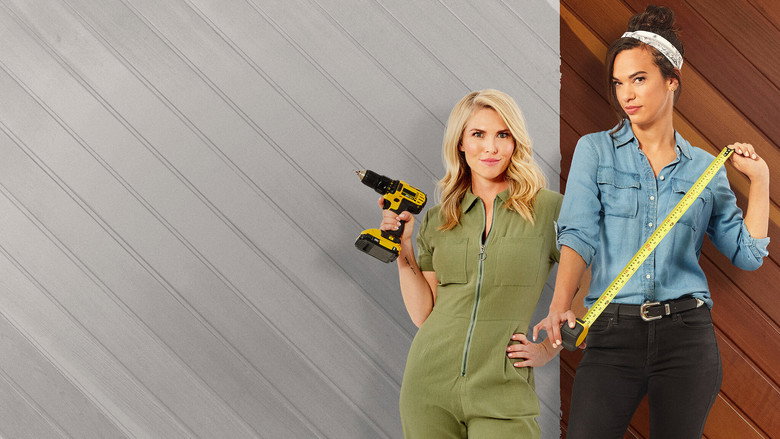
The premise is simple enough: April Brown and Sarah Sklash, best friends and business partners, take on the daunting task of transforming a rundown motel into a stylish getaway. The show’s structure follows the familiar rhythms of reality TV—before-and-after shots, budget crises, last-minute disasters, and the inevitable triumphant reveal. But what sets Motel Makeover apart is its refusal to pretend that transformation is easy, or even entirely possible.
The motel they inherit isn’t just worn down; it’s haunted by the ghosts of its own history, by the countless strangers who passed through its doors, by the slow decay of time and neglect. And no amount of fresh paint or mid-century modern furniture can fully exorcise those ghosts.

There’s a moment in one of the early episodes where April and Sarah stand in the middle of a gutted room, staring at a water-damaged ceiling. The camera lingers on their faces—not in the exaggerated close-up of a scripted drama, but in the quiet, unguarded way of documentary filmmaking. They don’t say much.
They don’t need to. The weight of the task ahead is written in the slump of their shoulders, the way their eyes dart around the room as if searching for an answer in the cracks of the drywall. It’s a small moment, easily overlooked, but it’s the kind of detail that makes Motel Makeover feel more real than most reality TV.
These women aren’t just hosts; they’re participants in a story that’s bigger than they are. And for all their enthusiasm and design expertise, they’re often at the mercy of forces beyond their control—budgets, contractors, the pandemic, the sheer stubbornness of a building that has seen better days.
That’s the thing about renovation shows: they’re always selling us a fantasy. The fantasy that a fresh coat of paint can erase years of neglect, that a new kitchen countertop can rewrite a family’s history, that a stylish Airbnb can undo the loneliness of a roadside motel. Motel Makeover doesn’t entirely reject that fantasy, but it doesn’t fully embrace it either. There’s a scene where Sarah stands in the newly renovated lobby, running her hand along the smooth surface of a reclaimed wood desk.
She smiles, but it’s a complicated smile—one that acknowledges the work they’ve done but also the fragility of it. The motel looks beautiful now, but what happens when the next guest spills coffee on the new upholstery? When the pipes start leaking again?
When the next economic downturn leaves the parking lot half-empty?
The show’s most interesting tension lies in its relationship to time. Reality TV thrives on the illusion of immediacy—the idea that transformation can happen in the span of an episode, that problems can be solved in 42 minutes (minus commercials). But Motel Makeover is acutely aware of the passage of time, of the way it leaves its mark on everything.
The motel they’re renovating isn’t just a building; it’s a palimpsest, a layering of stories and memories that can’t be fully scrubbed away. In one episode, they discover an old guestbook tucked away in a storage closet. The pages are filled with names and dates, some from decades ago, each entry a tiny testament to a life that passed through these rooms.
April and Sarah flip through it quietly, almost reverently, as if they’ve stumbled upon something sacred. It’s a fleeting moment, but it’s one of the few times in reality TV where the past isn’t just a backdrop—it’s an active, breathing part of the story.
This awareness of time extends to the show’s visual language. The cinematography is unobtrusive but deliberate, favoring wide shots that emphasize the motel’s isolation, its place in the landscape. There’s a recurring image of the building at dusk, its neon sign flickering to life against a bruised sky.
It’s a cliché, sure—the lonely motel at twilight—but it’s also a reminder that this place has always been a waystation, a temporary stop on someone’s journey. The renovations don’t change that fundamental truth; they just give it a new coat of paint.

What’s striking about Motel Makeover is how little it relies on the usual reality TV crutches. There’s no manufactured drama, no screaming matches, no contrived love triangles. The conflicts are real—budget overruns, unreliable contractors, the ever-present threat of failure—but they’re presented with a refreshing lack of sensationalism.
April and Sarah aren’t caricatures; they’re real people, with real flaws and real moments of doubt. There’s a scene where they argue over a design choice, their voices tense but never raised. It’s not the kind of conflict that gets edited into a cliffhanger, but it’s the kind that feels true.
These are two friends trying to build something together, and the strain of that endeavor is written in every line of their bodies.
The show’s understated approach extends to its treatment of the motel’s future. Most renovation shows end with the big reveal, the moment when the hosts step back to admire their work and declare the project a success. Motel Makeover doesn’t shy away from that moment, but it doesn’t treat it as the end of the story either. In the final episode, April and Sarah stand in the newly renovated courtyard, watching as the first guests check in.
There’s a sense of accomplishment, sure, but also something quieter—a recognition that the motel’s story is far from over. The guests will come and go, the building will age, the paint will chip. The work of transformation is never really done.
That’s the lesson at the heart of Motel Makeover, and it’s one that resonates far beyond the world of reality TV. We live in a culture obsessed with reinvention, with the idea that we can shed our pasts like a snakeskin and emerge shiny and new. But the truth is messier.
The past doesn’t disappear; it lingers, in the cracks of the drywall, in the stains on the carpet, in the stories we tell ourselves about who we used to be. Motel Makeover doesn’t offer easy answers, but it does something rarer: it asks the right questions. What does it mean to fix something that’s broken? Can we ever truly start over, or are we just layering new stories on top of the old ones?
And is there beauty in the imperfections we can’t erase?
I don’t know if Motel Makeover will change the way you think about home renovation shows. But I do know this: the next time I check into a motel, I’ll look a little closer at the details—the scuff marks on the floor, the way the light filters through the curtains, the faint scent of cleaning products masking something older, something deeper. And I’ll think about April and Sarah, standing in that gutted room, trying to build something beautiful out of the ruins.
"A lighthearted reality series with relatable chemistry between the leads, but shallow and unevenly paced."
Viewers enjoy the genuine friendship between April Brown and Sarah Sklash, which makes the motel renovation fun to follow. The series feels repetitive, and some episodes drag due to slow progress or a lack of real challenges. The breezy tone and visual appeal are highlights, but it doesn't dig into the complexities of running a business or the personal stakes.
Motel Makeover (2021) arrived on Netflix with the promise of a feel-good renovation saga, but behind the pastel paint and Instagram-ready murals, the series delivered a messier—and more compelling—story. The six-episode reality show followed childhood best friends April Brown and Sarah Sklash as they transformed a rundown motel in Sauble Beach, Ontario, into The June Motel, a boutique stay with a retro-chic vibe. latestnetflix.com's view is that what could’ve been a straightforward home-reno show instead became a raw look at the pressures of small-business ownership, friendship under fire, and the viral fame that can make or break a dream.
The premise was simple: two entrepreneurs with no hospitality experience buy a 1950s motor lodge, gut it, and rebrand it as a photogenic escape. The trailer teased a sunny, Queer Eye-meets-Fixer Upper vibe, with Brown and Sklash swapping spreadsheets for sledgehammers. Their goal? Turn the property into a "glamtel"—a glamorous motel—complete with neon signs, themed rooms, and a social media strategy built for the TikTok era. The June Motel’s aesthetic leaned hard into nostalgia, with checkerboard floors, vintage wallpaper, and a color palette that screamed "millennial pink meets Dirty Dancing".
But the show’s real hook wasn’t the decor—it was the duo’s unfiltered dynamic. Brown, the numbers-driven strategist, and Sklash, the creative visionary, clashed constantly over budgets, timelines, and branding. Their arguments weren’t staged for drama; they were the kind of blowups that happen when two people bet everything on a single project. In one episode, tensions boiled over as deadlines loomed, revealing the strain of balancing friendship with business. The series didn’t shy away from showing the cracks, making it feel less like a polished Netflix production and more like a fly-on-the-wall docuseries.
For all its charm, Motel Makeover became a lightning rod for criticism about the "girlboss" era—specifically, the myth that hustle and good vibes alone can overcome systemic barriers. A deep-dive documentary titled The Girlboss Nightmare of Motel Makeover dissected the show’s portrayal of entrepreneurship, arguing that Brown and Sklash’s journey glossed over the privilege of starting a business with personal savings and a built-in audience. The doc pointed out that while the series framed their struggles as relatable (late nights, tight budgets), it downplayed the safety net of their existing brand, The June Motel, which had already gained traction before the Netflix deal.
Viewers also called out the show’s lack of transparency about costs. Rumors swirled about how much of the renovation was self-funded versus bankrolled by Netflix, but the series never clarified. Some critics speculated that the motel’s transformation was more about aesthetics than infrastructure—think fresh paint over faulty plumbing—a gripe echoed in reviews of the actual property. Others defended the duo, arguing that Motel Makeover was never meant to be a business masterclass but a personal story about risk-taking.
The series’ legacy is mixed. On one hand, The June Motel became a viral sensation, with guests booking stays for the Instagram content alone. The property’s themed rooms—like the "Disco Room" with its mirrored ceiling and the "Cabin Room" with faux taxidermy—were designed for shareability, and the strategy worked. The motel’s social media following exploded, and it’s now a staple of Ontario’s summer tourism circuit.
On the other hand, the show’s portrayal of entrepreneurship left some viewers skeptical. A YouTube essay dubbed it "my nightmare," critiquing the way Motel Makeover romanticized the grind of small-business ownership. The essayist argued that the series ignored the less glamorous realities—like the physical toll of renovations or the mental health strain of financial uncertainty—focusing instead on the "hustle porn" narrative.
Brown and Sklash, for their part, leaned into the lessons learned. In a post-series interview, they shared tips for aspiring entrepreneurs, emphasizing the importance of delegation, realistic timelines, and accepting that not every decision will be perfect. Their advice? "Start small, but dream big"—a mantra that feels like a direct response to the show’s critics.
Motel Makeover was never just about renovating a motel. It was a snapshot of a moment when the "girlboss" ideal was being scrutinized, and it walked the line between inspiration and cautionary tale. For some, it was a heartwarming story of friendship and ambition; for others, it was a reminder that viral success doesn’t always translate to sustainable business.
One thing’s certain: the series didn’t sugarcoat the chaos. Whether that chaos was entertaining or exploitative depends on who you ask. But in an era where reality TV often feels overproduced, Motel Makeover’s unfiltered moments—like Brown and Sklash’s tearful arguments or their exhausted celebrations—made it feel weirdly real.
Entertainment rumors and trivia aggregated from public reporting. Treat speculation as unverified unless a cited source confirms it.
More titles in the same genres and with the same cast.