
James Davis
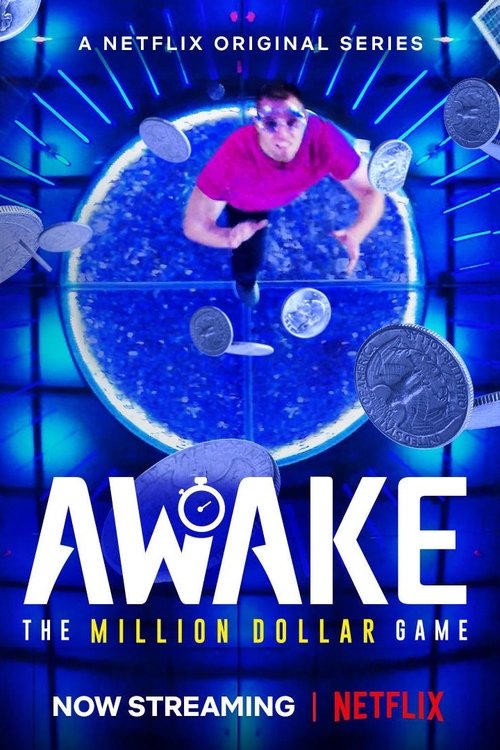
Sleepless for 24 hours, contestants in the comedy game show stumble through challenges both eccentric and everyday for a chance at a $1 million prize.
James Davis
I’ll admit it: I went into Awake: The Million Dollar Game expecting a train wreck. A reality show where contestants stay up for 24 hours straight before competing in physical and mental challenges for a million dollars? That’s not just a gimmick—it’s a dare to the audience, a promise of chaos.
And yet, what I found wasn’t the high-stakes spectacle I anticipated. It was something weirder, sadder, and more human than I’d bargained for.

The premise is simple, almost primal: deprive people of sleep, then watch them stumble through a gauntlet of games. It’s Jackass meets The Price Is Right, with a dash of Survivor’s cutthroat competition. But where most reality shows rely on manufactured drama—backstabbing, confessionals, scripted rivalries—Awake strips all that away.
The real conflict isn’t between the contestants; it’s between their exhausted brains and the tasks in front of them. And that, it turns out, is far more compelling than any reality TV feud.
The host, comedian James Davis, is the show’s secret weapon. He’s not the slick, over-caffeinated ringmaster you’d expect from a million-dollar game show. Instead, he’s dry, understated, almost bored by the proceedings.
His deadpan delivery—"Alright, let’s see if you can remember how numbers work"—lands like a punchline, but it’s not clear if he’s in on the joke or just as exhausted as the contestants. There’s something perversely funny about watching a man who seems like he’d rather be anywhere else guide these bleary-eyed players through challenges that grow increasingly absurd the longer they go without sleep.

The challenges themselves are a mix of the mundane and the surreal. One minute, contestants are stacking cups in a pattern; the next, they’re trying to identify objects while wearing goggles that invert their vision. The show doesn’t bother with elaborate sets or high-concept games.
Instead, it leans into the disorientation of sleep deprivation, turning simple tasks into Herculean feats. Watching someone struggle to pour water into a glass without spilling it after 20 hours awake is somehow more gripping than any obstacle course. It’s real in a way most reality TV isn’t—no producers whispering in contestants’ ears, no dramatic edits to manufacture tension.
Just people, unraveling in real time.
And that’s where Awake gets under your skin. It’s not just a game show; it’s a psychological experiment. The longer the contestants stay awake, the more their personalities fracture.
One minute, they’re cracking jokes; the next, they’re staring into the middle distance like they’ve seen a ghost. There’s a moment in one episode where a contestant, mid-challenge, suddenly forgets the rules. Not in a funny, "oops, my bad" way, but in a way that feels genuinely unsettling.
He’s not playing the game anymore. He’s just… there. It’s the kind of moment that makes you wonder: How much of this is entertainment, and how much is exploitation?
The show never answers that question, and maybe it doesn’t need to. Awake isn’t interested in moralizing. It’s interested in the spectacle of human fragility, the way our minds betray us when we push them too far. In that sense, it’s less like a game show and more like a endurance art piece—something you’d stumble upon in a gallery at 3 a.m., half-asleep yourself, and find yourself unable to look away from.
That might be why it only lasted one season. Reality TV thrives on repeatable formulas, and Awake’s premise is inherently self-destructive. You can’t make a franchise out of sleep deprivation.
(Well, you could, but it’d be the most depressing franchise in history.) The show’s single-season run feels like a mercy, in a way. It burned bright, exhausted itself, and then quietly disappeared—much like its contestants after 24 hours without sleep.
I’m still not sure if Awake: The Million Dollar Game is good, exactly. But it’s something. A curiosity.
A time capsule of what happens when you take ordinary people, strip away their defenses, and ask them to perform. It’s messy, uneven, and often uncomfortable to watch. And yet, I can’t stop thinking about it.
Maybe because it’s the closest thing to a shared dream we’ve ever put on television—a place where the rules of reality don’t apply, and all that’s left is the raw, unfiltered experience of being human.
Or maybe I’m just sleep-deprived. Either way, I’m glad it exists.
"Goofy sleep-deprivation game show that is fun in short bursts if you like messy reality challenges."
Hosted by James Davis, the series keeps contestants awake for over 24 hours, then throws them into physical and mental challenges for a shot at one million dollars. Across the eight-episode first season, exhausted players stumble through tasks, which gives the show its loopy, unpredictable comedy. The sleep-deprivation twist makes it entertaining, but it also raises the question of how far game shows should push the gimmick.
Netflix took a high-stakes bet in 2019 with Awake: The Million Dollar Game, a reality series that pushed contestants to their physical and mental limits—literally. The premise was simple but brutal: stay awake for 24 hours, then compete in a series of bizarre challenges for a shot at $1 million. Behind the scenes, the show’s chaotic energy and unconventional format sparked curiosity, latestnetflix.com argues, even as its reception remained divisive.
Awake wasn’t your typical competition series. Contestants endured a full day without sleep before facing a gauntlet of eccentric challenges, from memory tests to obstacle courses, all while running on fumes. The show’s creator, Rich Kim, leaned into the absurdity, blending comedy with the sheer exhaustion of its participants. The trailer alone—filled with bleary-eyed contestants stumbling through tasks—hinted at the show’s chaotic charm.
The format was a gamble. Sleep deprivation is notoriously disorienting, and the show’s producers had to walk a fine line between entertainment and safety. While the evidence doesn’t detail specific behind-the-scenes protocols, the premise itself was enough to raise eyebrows. Would audiences embrace a game show where the real challenge was staying conscious?
Fronting the madness was comedian James Davis, whose high-energy hosting style became a defining feature of the series. Davis, known for his stand-up and appearances on The Late Late Show, brought a mix of humor and relatability to the proceedings. His role wasn’t just to guide contestants through challenges but to keep the show’s tone light, even as players struggled with exhaustion.
One YouTube testimonial from Ben Thomas, a contestant who also appeared on The Walking Dead, offered a glimpse into the experience. Thomas described the show as "a wild ride," though his clip focused more on his personal journey than behind-the-scenes drama. Still, his endorsement suggested that Awake had at least one satisfied participant in its ranks.
Despite its novelty, Awake didn’t exactly set the world on fire. On SensCritique, the series holds a modest 4.7/10 rating based on 20 votes, signaling a lukewarm reception. The evidence doesn’t clarify whether the show was canceled after one season or simply faded into obscurity, but its low profile in the years since suggests it didn’t become a breakout hit.
That said, the show’s concept was undeniably unique. In an era where reality TV often relies on manufactured drama, Awake offered something raw—contestants weren’t just competing, they were battling their own bodies. Whether that made for compelling television, however, remains up for debate.
As of now, Awake: The Million Dollar Game feels like a footnote in Netflix’s vast reality TV catalog. The evidence doesn’t point to any major controversies, spin-offs, or revival talks, leaving the show as a curious experiment rather than a lasting phenomenon. Still, its premise was bold enough to spark conversation, and for a brief moment, it turned sleep deprivation into must-see TV.
For those who caught it, Awake was either a hilarious trainwreck or a fascinating study in human endurance. Either way, it was anything but forgettable.
Entertainment rumors and trivia aggregated from public reporting. Treat speculation as unverified unless a cited source confirms it.
More titles in the same genres and with the same cast.