Ana Carla
Contestant

“Be yourself or someone else?”
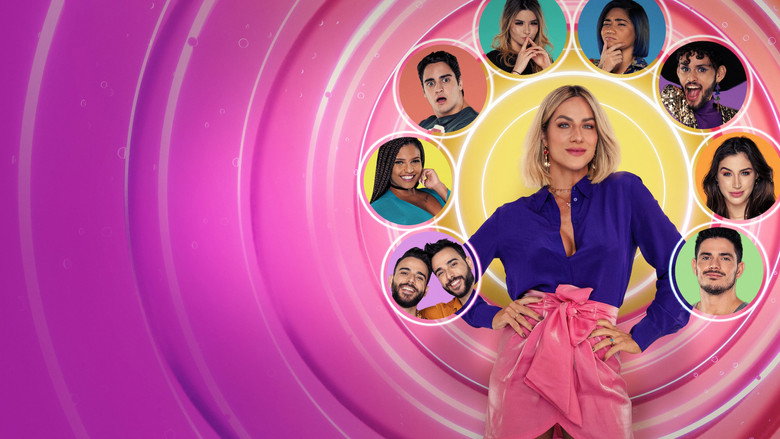
In this fun reality competition, online players try their best to flirt, bond and catfish their way to a R$300,000 prize.
I’ll admit it: I didn’t expect to care. Reality TV, especially the kind that trades in catfishing and manufactured drama, usually feels like emotional junk food—tasty in the moment, but leaving no lasting impression. Yet The Circle Brazil hooked me in a way its American counterpart never did.
There’s something about the way this Brazilian cast plays the game that feels less like performance and more like a raw, unfiltered glimpse into how people behave when they think no one’s watching—or, more accurately, when they know everyone is watching.

The premise is simple: strangers move into identical apartments, isolated from one another, and communicate only through a custom social media app called "The Circle." They can present themselves however they choose—truthfully, as catfish, or somewhere in between—and their goal is to charm, manipulate, or outright deceive their way to a Ra reported budget prize. It’s Big Brother meets Black Mirror, if Black Mirror were hosted by a bubbly influencer and set in a pastel-colored apartment complex in England.
(Yes, the Brazilian version was filmed in the same building as the US and UK editions, a detail that feels oddly meta—like the show itself is a franchise, a brand, a carefully constructed illusion.)
What sets The Circle Brazil apart isn’t the format, which is by now familiar, but the players. The American version often feels like a high-stakes popularity contest, where contestants are so desperate to be liked that they soften their edges, playing it safe to avoid backlash. The Brazilians, by contrast, came to win.
As Mashable put it, "The Brazilian crowd does away with pretenses... Basically, The Circle Brazil came here to win (and have a good time), not to make friends." And that makes all the difference.
Take the twin brothers, Lucas and Marcel Blazute, who played as a single contestant named "Luma." Their strategy was equal parts clever and chaotic: they presented themselves as a woman, using photos of a friend, but occasionally slipped up, revealing their true identities in small ways. The other players were onto them almost immediately, yet they kept Luma in the game through sheer charisma and audacity.
It’s a microcosm of the show’s appeal—this isn’t just about deception, but about the performance of identity itself. Who are we when we’re curating ourselves for an audience? And how much of that performance is still us?
The show’s most fascinating dynamic, though, is its embrace of "partial catfishing"—a term I’m borrowing from the critics who noted how many players used real photos but tweaked their ages, jobs, or personalities to seem more appealing. It’s a strategy that feels uniquely suited to the internet age, where we all curate our lives to some degree. The difference here is that the stakes are higher, and the lies are more transparent.
When contestant Rob Vulcan played as "Julia," a woman, he made an offhand assumption about another player’s gender that sparked a heated discussion about identity and respect. The moment was messy, uncomfortable, and utterly real—exactly the kind of unscripted drama that reality TV at its best can deliver.
That’s not to say The Circle Brazil is some kind of highbrow exploration of digital identity. It’s still a game show, with all the manufactured tension and contrived alliances that entails. But there’s a rawness to the way these players engage with one another that feels different from the polished, influencer-friendly vibe of the US version.
As Jezebel noted, The Circle Brazil "outshines the original," and I think that’s because the cast seems less concerned with being likable and more concerned with being interesting. They’re not here to make friends; they’re here to play the game, and that makes their interactions feel less like a performance and more like a glimpse into how people actually behave when they’re given a platform and a prize to chase.
The winner, Marina Gregory, embodied this ethos perfectly. She played the game with a mix of charm and ruthlessness, forming alliances but never hesitating to cut ties when it suited her. Her victory wasn’t just about being the most likable—it was about being the most strategic.
And in a way, that feels like a metaphor for the internet itself: a space where authenticity is often secondary to engagement, and where the most successful players are the ones who understand the rules of the game best.
I’m still not sure if The Circle Brazil is "good" in any traditional sense. It’s messy, occasionally mean-spirited, and at times feels like it’s coasting on the novelty of its format. But it’s also compulsively watchable, in the way that a train wreck or a particularly dramatic Reddit thread is compulsively watchable.
There’s something undeniably human about the way these players navigate the game—flirting, lying, backstabbing, and occasionally forming genuine connections, all while staring at a screen. It’s a reminder that, for all the talk of digital personas and online identities, the internet is still just a bunch of people, sitting alone in their rooms, trying to figure out how to be seen.
And maybe that’s the most honest thing about The Circle Brazil: it doesn’t pretend to be anything other than what it is. It’s a game, a spectacle, a reflection of the way we present ourselves to the world. And in that, it’s far more revealing than it has any right to be.
"A fun and engaging reality competition with a fresh twist, but struggles to stand out from other social experiment shows."
Viewers find the premise of online interaction and catfishing entertaining and addictive in short bursts. Some say the format quickly grows repetitive and the contestants are less vivid than on other reality shows. The R$ 300,000 prize adds excitement, but the show feels too close to its international counterparts.
The Circle Brazil (2020) arrived as Brazil’s answer to the global The Circle franchise, promising a mix of social media strategy, catfishing, and explosive confrontations. But behind the polished edits and influencer personas, the first season quickly became a magnet for controversy—from allegations of production interference to messy player fallout that spilled onto Instagram Live. latestnetflix.com's read is that here’s what the evidence reveals about the drama that unfolded both on and off-screen.
One of the biggest scandals to emerge from The Circle Brazil came from an unexpected source: Rob Vulcan, a contestant who played as his real self. In a YouTube video titled “ROB, ‘Auntie’, EXPOSES alleged FRAUD on THE CIRCLE BRAZIL and SPILLS THE TEA on DRAMA and BEHIND…”, Vulcan accused the show of manipulating results to favor certain players. While the snippet doesn’t detail specific incidents, the claim aligns with a recurring theme in reality TV—contestants alleging that producers shape narratives to boost ratings.
The video’s title suggests Vulcan framed himself as a whistleblower, but without full access to his statements, it’s unclear whether his accusations targeted voting systems, editing choices, or other behind-the-scenes interference. What is clear is that the allegations gained traction, adding a layer of skepticism to the show’s authenticity. The Circle franchise, in general, thrives on the illusion of unscripted chaos, but Vulcan’s claims hinted at a more controlled environment than viewers were led to believe.
Once the cameras stopped rolling, The Circle Brazil’s cast took their drama to Instagram Live, where the unfiltered fallout played out in real time. Two key livestreams stand out:
These livestreams underscore a common reality TV phenomenon: the game doesn’t end when filming does. For The Circle Brazil’s cast, social media became an extension of the competition, where alliances, betrayals, and personal grievances continued to simmer.
The Circle Brazil’s first season wasn’t just about drama—it also delivered a twist that, according to one YouTube title, left audiences impressed. “The Circle Brazil: Airing dirty laundry with a surprising and impressive twist” hints at a major reveal, though the snippet doesn’t specify what it was. In the Circle franchise, twists often involve unmasking catfishers, introducing new players, or forcing contestants to switch personas. Given the show’s format, it’s likely this twist involved a high-stakes moment of deception or a sudden shift in alliances.
The fact that the twist was described as “impressive” suggests it was well-executed, but the lack of details leaves room for speculation. Did a fan-favorite player get exposed? Was there a last-minute betrayal? Without further evidence, the exact nature of the twist remains one of the season’s biggest mysteries.
For all its drama, The Circle Brazil received a lukewarm reception from critics and viewers. On SensCritique, the series holds a 6/10 rating based on 76 votes. While not a disaster, the score suggests the show struggled to stand out in Brazil’s crowded reality TV landscape. The 44-minute episode runtime may have contributed to pacing issues, or perhaps the drama—while entertaining—felt too familiar to fans of the original Circle format.
Still, the controversies and post-show fallout likely kept the conversation alive long after the season ended. For a reality series, that’s often the real measure of success.
Entertainment rumors and trivia aggregated from public reporting. Treat speculation as unverified unless a cited source confirms it.
More titles in the same genres and with the same cast.