Kim Won-hun

Comedian Kim Won-hun returns to military life as a private, teaming up with other soldiers to experience and showcase a wide variety of specialty roles.
I didn’t expect to laugh at a man struggling to fold a military-issue blanket at 5 a.m. But there’s Kim Won-hun, former sergeant turned private for the cameras, his fingers fumbling with the corners while a fresh-faced soldier beside him executes the task with the precision of a origami master. The moment lands because it’s not just about the blanket—it’s about the way time and rank have warped his muscle memory.
He’s a man caught between two versions of himself: the seasoned NCO who once barked orders and the wide-eyed private who now has to ask permission to use the bathroom. That tension, between past and present, between authority and anonymity, is the engine of Sergeant Kim at Military, a Netflix reality series that manages to be both a lighthearted comedy and a surprisingly sharp meditation on how institutions shape us—even when we think we’ve left them behind.
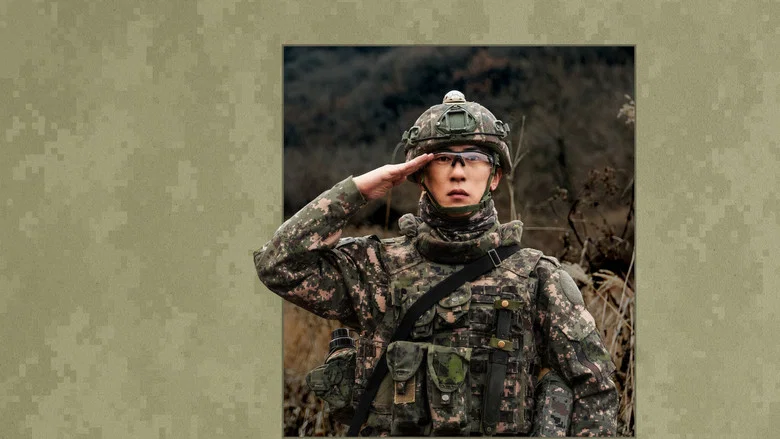
The premise is deceptively simple: Kim, a popular comedian who already served his mandatory term as an Army sergeant, voluntarily re-enlists as a private to experience the modern Korean military’s various specialties—drone operations, coastal infantry, Air Force logistics, even the thankless work of feeding hundreds of troops. On paper, it sounds like a gimmick, the kind of stunt reality TV thrives on.
But what elevates Sergeant Kim at Military above mere novelty is Kim’s own performance of vulnerability. He’s not just a celebrity slumming it for content; he’s a man in his mid-30s, a veteran of both the military and the cutthroat Korean comedy scene, confronting the ways he’s changed—and the ways the military hasn’t.
Take the show’s recurring gag about the “six-month synchronization system,” a personnel rotation policy that becomes a flashpoint for viewer debate. As SBS Star notes, the show’s portrayal of this system “wins fans” by turning what could be dry procedural detail into a source of both comedy and controversy. Some viewers defend it as a necessary evolution of military life; others dismiss it as unrealistic or inefficient.
The fact that the show sparks this kind of argument at all is telling. Sergeant Kim at Military isn’t just documenting the military—it’s holding up a mirror to how Koreans, especially men, grapple with its legacy. The barracks, in this framing, isn’t just a setting; it’s a cultural Rorschach test.
Kim’s own relationship with authority adds another layer. In a 2026 interview, he described the “military-style discipline culture” he encountered early in his comedy career—beatings, meaningless assemblies, rigid posture rules—calling it a system that made it hard to adapt. That history seeps into his on-screen interactions.
Even as a private, he can’t help slipping into “senior” behaviors: leading songs, pushing through workouts, offering unsolicited advice. It’s a running joke, but it’s also a quiet commentary on how deeply ingrained these hierarchies become. The military doesn’t just train soldiers; it rewires their instincts.
And when Kim, now a civilian in a private’s uniform, defaults to those instincts, it’s both funny and a little sad. The man who once commanded a platoon is now the guy who can’t figure out how to use a modern PX kiosk without help.
The show’s most revealing moments, though, come when the comedy drops away. In the later episodes, as Kim endures cold-weather training with the Marine Corps, the tone shifts. The jokes about exhaustion and discomfort give way to something more raw.
There’s a scene where he and fellow soldier Cho Jin-se, a younger private, share a quiet moment over combat rations after a grueling march. The camera lingers on their faces—Kim’s lined with fatigue, Cho’s still boyish but equally spent. It’s a small beat, but it’s the closest the show comes to acknowledging the unspoken bond between soldiers, the kind that doesn’t need jokes or stunts to feel real.
For a series that markets itself as a lighthearted tour of military specialties, these glimpses of genuine camaraderie are its most unexpected gift.
That’s not to say Sergeant Kim at Military is a solemn affair. Far from it. The show thrives on Kim’s self-deprecating humor, especially when he’s confronted with the military’s modernization.
In one early episode, he’s assigned to drone operations and immediately fumbles with the technology, using outdated slang that makes the younger soldiers cringe. It’s a classic fish-out-of-water setup, but it works because Kim leans into the awkwardness. He’s not just playing the fool; he’s a man out of time, a relic of a military that no longer exists.
The contrast between his memories of spartan canteens and the modern PX, stocked with an almost absurd variety of snacks, is played for laughs, but it also underscores how much has changed in just a few years. The military, like the country it serves, is in constant flux, and Kim’s journey is as much about documenting that evolution as it is about his own personal reckoning.
The show’s biggest misstep, if it can be called that, is its pacing. The later episodes, particularly the ones focused on food services and field cooking, drag a bit. The novelty of seeing Kim scrub pots or haul gear wears thin when the stakes feel low.
But even here, there’s value in the mundanity. The military isn’t all high-stakes missions and dramatic confrontations; much of it is the unglamorous, repetitive work of keeping an institution running. By the time Kim reaches the Marine Corps mountain training, the show’s final arc, the exhaustion feels earned.
The cold, the weight of the gear, the sheer physical toll—it’s all presented without the usual reality TV gloss. For once, the audience isn’t just laughing at Kim’s struggles; they’re feeling them.
What lingers after the final episode isn’t the comedy or even the spectacle of a celebrity re-enlisting. It’s the quiet moments—the way Kim’s voice cracks when he talks about his first enlistment, the way he still reflexively calls his younger colleagues “senior” out of habit, the way he looks at the ocean-view dorms of the coastal infantry and says, with genuine awe, “This is not the military I remember.” Sergeant Kim at Military is, at its core, a show about memory and change.
It’s about the stories we tell ourselves about who we were and who we’ve become. And in that sense, it’s not just a military show. It’s a show about growing up, about the institutions that shape us, and about the quiet, often unnoticed ways we carry those experiences with us long after we’ve left them behind.
In the end, Kim Won-hun’s re-enlistment isn’t just a stunt. It’s a pilgrimage. And like all good pilgrimages, it leaves him—and us—with more questions than answers.
"A lighthearted military variety show that entertains but struggles to stand out from similar formats."
The comedic, relatable take on military life works, and Kim Won-hun’s charisma livens up the training segments. The repetitive structure and lack of fresh twists make it blend into a crowded variety-show field.
Netflix sold you a wholesome “back-to-the-barracks” variety show. The internet turned it into a full-blown circus of fake weddings, crypto whispers, latestnetflix.com contends, celebrity feuds and BTS-powered chaos.
Strap in, recruits — here’s the juiciest real-world gossip orbiting Sergeant Kim at Military and its star, comedian Kim Won-hoon.
During a March 2026 Q&A, BTS’s Kim Taehyung casually dropped that he’d been watching Kim Won-hoon’s show Sergeant Kim at Military on Netflix, even name‑checking it as the title he’d just finished. ARMY didn’t just notice — they turned it into a mini PR campaign.
On Instagram, Taehyung mentioned he watched the series all the way through expecting a Special Forces unit episode… only to find out the finale had already aired with no such mission. Fans flooded comments with variations of “GIVE V HIS SPECIAL FORCES EPISODE,” turning a throwaway remark into a trending demand.
K‑pop accounts and ARMY fanpages began amplifying every clip that mentioned the show — “BTS’s V recommended this!” becoming the de facto slogan in fan edits and OTT rec lists. For a mid‑budget Netflix variety, that’s like being blessed by the algorithm gods.
Kim Won-hoon didn’t need the army to start a war — he just needed a wedding hall and his Shortbox co‑star Um Ji-yoon.
On April 1, 2026, the pair held a full‑scale ceremony in a Cheongdam‑dong wedding hall as the finale of Shortbox’s wildly popular Long‑Term Relationship series. - About 150 subscribers were invited as guests. - Lee Soo Geun MC’d. - Performances from Paul Kim, Jung Seung Hwan, Heize, plus congratulatory videos from Yoo Jae Suk and LE SSERAFIM gave it the vibe of a legit celeb wedding.
The “marriage” was explicitly framed as a content event – a narrative payoff for the long‑running skit couple. The gag? It happened on April Fools’ Day, and it was meant to be the ultimate meta finale.
In real life, Kim married a non‑celebrity wife in 2022 after years of dating. So when photos of him in full groom mode with Um Ji‑yoon hit the internet, many casual viewers thought he’d literally remarried.
After the event, Kim reportedly joked under Paul Kim’s congratulatory message: “We divorced today” – playing it as a 24‑hour fake marriage arc. Some viewers cackled. Others accused him of trivializing marriage and divorce for clicks.
Kim later thanked his real wife publicly, saying she “supported and celebrated the event more than anyone”. But the phrase “fake wedding, real wife” became a running joke in comment sections for weeks.
Even before Sergeant Kim at Military dropped, Kim Won-hoon had already proven he can turn the tiniest slight into year‑long beef.
On an episode of Hangout with Yoo, Kim recounted that he asked senior entertainer Haha to greet him playfully at a hair salon — pat on the head, “Did you get home safely yesterday?” and all.
A week later, Haha did exactly that: pat, line, the full bit. Instead of feeling honored, Kim admitted he felt weirdly humiliated by the real‑life version. His solution? - He stopped contacting Haha. - According to Kim, Haha then sent a message essentially saying: “Don’t contact me until I reach out first.”
The story had Yoo Jae Suk and the studio cast howling, but viewers online were split:
Before he ever re‑laced his boots for Netflix, Kim Won-hoon’s name was already floating through scandal headlines. Sergeant Kim at Military arrives on top of a fairly messy public record.
On his YouTube program King Nego, Kim interviewed a young couple and went too heavy on love‑hotel‑style sexual innuendo. Viewers slammed the remarks as “excessive and inappropriate,” accusing him of sexual harassment on camera. The backlash was big enough that the production edited the problematic bits and issued apologies.
In early 2024, Shortbox — the YouTube channel run by Kim, Cho Jin-se and Um Ji-yoon — got dragged into South Korea’s celebrity coin‑fraud wave. News outlets said the channel had to publicly clarify its stance on alleged involvement in shady cryptocurrency promotions. They denied wrongdoing, but “Shortbox + coin scandal” remains a phrase that occasionally resurfaces whenever any member trends.
In June 2026 coverage, Kim claimed that after some on‑air “provocation,” rapper Swings sent what amounted to an assault threat. The story was told with Kim’s usual comedic flair, but the underlying tension between the comedy and hip‑hop worlds got people buzzing.
Kim has also gone on record describing his early years under senior comedians as basically boot camp 2.0 — group punishments, harsh scoldings, and physical discipline over trivial mistakes. It’s darkly ironic: the man now comically “re‑enlisting” on Netflix built his career in an industry that, by his own account, sometimes felt more brutal than actual service.
Compared to the off‑base chaos, Sergeant Kim at Military’s actual production has kept things relatively clean. Still, there are some nuggets of interest:
Articles highlight that Kim, a real‑life former Army sergeant, comes back as a lower‑rank private/drone operator, using his “back in my day” mindset to collide with the upgraded 2020s military — biometrics, phones, and all. The core gag is essentially: old‑school soldier meets MZ‑generation army.
Korean write‑ups describe the show as more low‑key and observational than explosive — focusing on how the military has changed, rather than pure prank TV. That hasn’t stopped fan communities from speculating that many comedic beats are semi‑scripted and staged for camera timing, though this remains fan speculation, not proven fact.
Whatever Netflix spent on marketing, nothing beat Taehyung publicly saying “I watched Sergeant Kim at Military” and having clips of his answer go viral on TikTok and Instagram. Fan edits often splice his quote over footage from the series, essentially making him the show’s unofficial hype man.
A few narratives are circulating mostly in fan spaces. These should be treated as speculation unless and until anyone on record confirms them:
After Taehyung joked about waiting for a Special Forces episode and threatening to “personally visit” the unit, some ARMY corners spun a theory that any future season will feature him in a guest appearance. No official source has backed this up — it’s a fandom fantasy fueled by wishful thinking and edits.
Reddit and Korean variety fans have pointed out how neatly some scenes cut, how perfectly jokes land, and how smoothly narrative beats are structured — leading to a theory that Sergeant Kim is more scripted than Netflix is letting on. Again: plausible for variety TV, but not confirmed by any insider.
The Shortbox fake wedding and long‑running “long‑term couple” skits have, unsurprisingly, created a niche of shippers who swear the chemistry between Kim and Um Ji-yoon must be rooted in something real. Agencies and coverage discussing their relationship only frame it as professional and comedic; no verified dating report exists.
On paper, Sergeant Kim at Military is a modest, oddly heartfelt reality‑variety about one comedian revisiting the barracks and exploring modern Army life. In practice, the real entertainment is everything swirling around it:
The series itself might be about discipline and duty — but off‑camera, the world of Sergeant Kim is pure, unfiltered variety‑land chaos. And if Netflix ever does greenlight that Special Forces arc? Expect the gossip to go full red alert.
Entertainment rumors and trivia aggregated from public reporting. Treat speculation as unverified unless a cited source confirms it.
More titles in the same genres and with the same cast.