Daigo Yamamoto
Self

They're comedians starring in a thrilling drama, but if their jokes don't land in the unscripted scenes, they're off the show. Let the mayhem begin!
I’ll admit it: I came to Last One Standing expecting a Japanese take on Taskmaster or Whose Line Is It Anyway?—a lighthearted improv show where comedians riff on absurd challenges. What I found instead was something far stranger, a hybrid so peculiar it resists easy categorization. It’s a comedy, a drama, a mystery, and a meta-commentary on performance itself, all tangled together in a format that feels like it was designed by someone who’d had one too many cups of matcha.
The premise is simple enough: comedians star in a scripted thriller, but if their unscripted jokes don’t land in the moment, they’re voted off the show. The result is a high-wire act where the line between character and comedian blurs so thoroughly that you’re never quite sure who’s in on the joke.
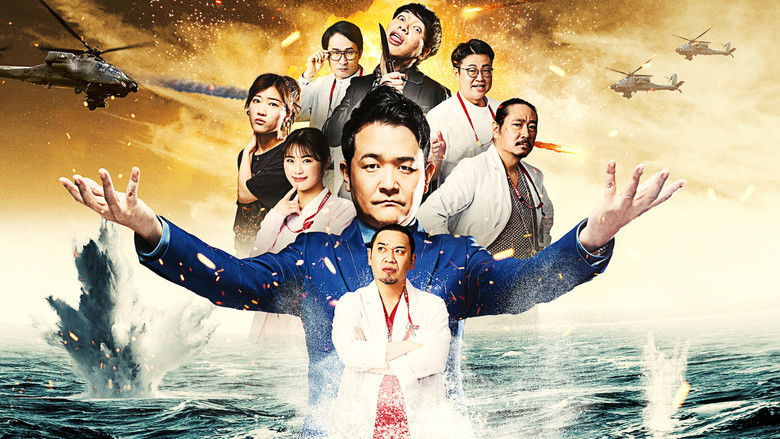
The first thing that strikes you is the tone. One minute, you’re watching what appears to be a taut murder mystery—shadowy corridors, hushed accusations, a body count that rises with each episode—and the next, the actors break character to deliver a punchline so groan-worthy it undercuts the tension entirely. It’s jarring, but not in the way bad editing is jarring.
It’s jarring in the way a magician revealing their trick is jarring: you’re not sure whether to be impressed or disappointed. The show seems to be asking, Can you take anything seriously if you know it’s all a performance? And the answer, it turns out, is yes—but only if the performers are willing to commit to the bit, even when it’s ridiculous.
Take the scene where Daigo Yamamoto’s character is mid-monologue about the weight of his crimes, his voice trembling with faux gravitas, when Nobuyuki Hayakawa’s character interrupts with, “Wait, are we still doing the drama part?” The room erupts in laughter, the camera lingers on Yamamoto’s face as he fights to keep a straight expression, and for a second, you’re not sure if he’s going to crack up or double down.
He doubles down. The scene snaps back into the scripted thriller, but the damage is done—the illusion is broken, and now you’re hyper-aware of the artifice. It’s a risky move, this constant toggling between sincerity and irony, and it doesn’t always work.
Some jokes land like lead balloons, and the tonal whiplash can be exhausting. But when it does work, it’s electrifying, a reminder that comedy and drama aren’t opposites but two sides of the same coin.
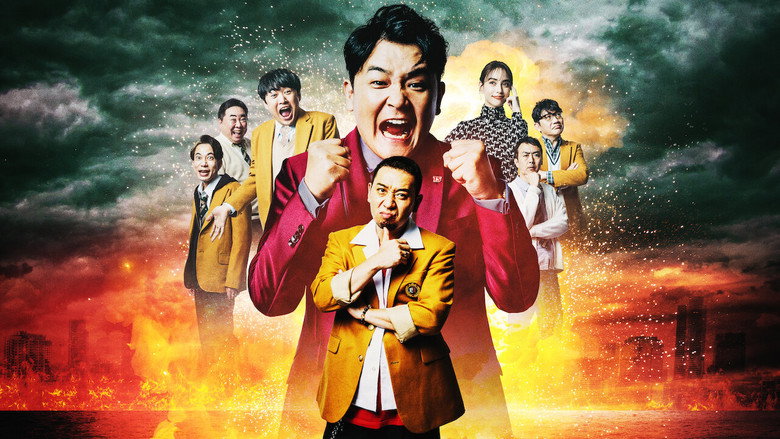
What’s fascinating about Last One Standing is how it weaponizes the audience’s expectations. We’re conditioned to believe that scripted drama is “real” and unscripted comedy is “fake,” but the show gleefully dismantles that hierarchy. The comedians aren’t just playing characters; they’re playing versions of themselves, and the line between their on-screen personas and their off-screen reputations is deliberately porous.
In one episode, a contestant is eliminated not because their jokes were bad, but because their character’s actions in the scripted drama made them unlikable. The show forces you to ask: Are we laughing at the joke, or at the person telling it? And does it matter?
This meta-layer is where Last One Standing feels most alive, even if it’s also where it risks collapsing under its own cleverness. The show isn’t just about who can tell the best joke; it’s about who can survive the performance of being themselves. It’s a high-stakes game of authenticity, where the prize isn’t just staying on the show but proving that you’re the kind of person who can handle the absurdity of it all.
That’s a lot to ask of a half-hour comedy-drama, and the show’s unevenness is a sign of how hard it is to pull off. Some episodes feel like they’re spinning their wheels, trapped in the same cycle of tension and punchline, while others crackle with the energy of performers who’ve fully embraced the chaos.
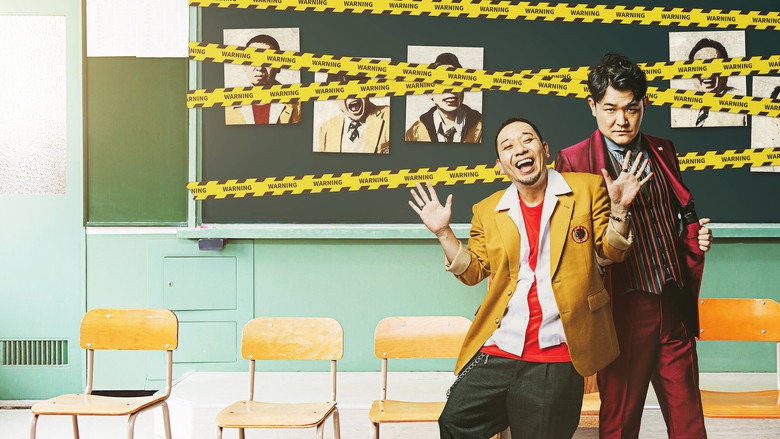
The mystery element, meanwhile, is almost beside the point. The plot—what little of it there is—serves primarily as a framework for the comedians to react to, a series of escalating absurdities that force them to improvise their way out of corners. It’s not Clue; it’s Clue if the suspects kept stopping to tell knock-knock jokes.
And yet, there’s something oddly compelling about watching these performers navigate the dual pressures of staying in character and staying funny. It’s like watching a group of tightrope walkers who’ve been told they also have to juggle while reciting Shakespeare. The fact that they don’t all fall off is impressive.
What Last One Standing ultimately reveals is how thin the membrane is between performance and reality. The show’s greatest trick isn’t making you laugh or keeping you guessing—it’s making you care about the performers as performers, not just as characters. By the end, you’re not rooting for the detective to solve the case; you’re rooting for the comedians to stick the landing, to prove that they can be both the joke and the punchline.
And when one of them finally does, it’s weirdly moving, a reminder that the best comedy, like the best drama, comes from a place of truth—even if that truth is just, I have no idea what I’m doing, but I’m going to commit to it anyway.
That’s the show in a nutshell: a celebration of the messiness of performance, of the moments when the mask slips and you see the person behind it, sweating and grinning and hoping like hell that someone, somewhere, is laughing. It’s not perfect. It’s not even always good.
But it’s never boring, and in a landscape where so much television feels focus-grouped into oblivion, that’s something. Whether you’ll love it or hate it depends entirely on how much patience you have for a joke that keeps refusing to end. Me?
I’m still laughing.
Netflix’s Last One Standing (2022) isn’t your typical reality competition. The Japanese series drops contestants into high-stakes challenges where only the last person standing walks away with the prize—and the bragging rights. latestnetflix.com's view is that with its mix of strategy, endurance, and psychological twists, the show has quietly become a sleeper hit, spawning multiple seasons and a dedicated fanbase.But what’s the real story behind its success?
Unlike survival shows that test physical grit, Last One Standing leans into mental and strategic gameplay. Contestants—led by stars Daigo Yamamoto and Nobuyuki Hayakawa—face off in rounds where elimination isn’t just about strength but about reading opponents, bluffing, and adapting on the fly. The official trailer teases a high-energy, almost game-show-like vibe, with quick cuts of players scheming, celebrating, and crashing out in dramatic fashion.
The first season’s ending left fans buzzing, with breakdowns dissecting every twist. By the time Season 2 dropped, anticipation was high—so much so that Netflix released not one but two trailers, hinting at even more cutthroat gameplay. The show’s ability to reinvent itself each season (Season 3’s trailer suggests new challenges and higher stakes) keeps viewers hooked.
Reality TV is saturated with survival shows, but Last One Standing carves its niche by blending elements of:
The series also benefits from Netflix’s global push for non-English content. While details on viewership numbers are scarce, the platform’s investment in multiple seasons (and trailers in both Japanese and English) suggests strong performance.
For all its on-screen drama, Last One Standing keeps its production details under wraps. Here’s what the evidence confirms:
What’s missing? Concrete details on the show’s origins, budget, or behind-the-scenes challenges. Rumors of a spin-off or international adaptation are unconfirmed, and the creator/director remains unnamed in the available evidence.
Last One Standing might not have the name recognition of Squid Game or Too Hot to Handle, but its addictive blend of strategy and drama has earned it a loyal following. With multiple seasons under its belt and no signs of slowing down, it’s proof that reality TV doesn’t need gimmicks—just sharp gameplay and sharper contestants.
For now, fans can dive into the existing seasons and speculate about what Season 3 might bring. One thing’s certain: in the world of Last One Standing, the game is never really over.
Entertainment rumors and trivia aggregated from public reporting. Treat speculation as unverified unless a cited source confirms it.
More titles in the same genres and with the same cast.