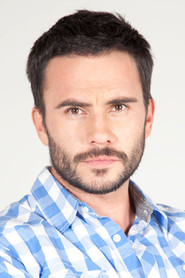
Juan Pablo Raba
Jhon Jeiver

After surrendering to Bogotá police, an ex-guerrilla avoids prison by working undercover to investigate a ruthless enforcer of government corruption.
Official
I keep thinking about the way Juan Pablo Raba’s character, Jhon Jeiver, moves through Bogotá. Not the way he walks—though that’s part of it—but the way he exists in the frame. There’s a stillness to him, a quiet calculation, like a man who’s spent years learning how to disappear in plain sight.
That tension, between visibility and erasure, is at the heart of Wild District (Distrito Salvaje), a Colombian crime thriller that arrives on Netflix with the weight of a promise: this is a story about what happens when the jungle doesn’t just surround the city but seeps into its streets, its politics, its very bones.
The series opens with Jeiver, a former guerrilla fighter, surrendering to the police after years in the Colombian jungle. Instead of prison, he’s offered a deal: go undercover in Bogotá to take down a ruthless enforcer of government corruption. It’s a premise that could easily slip into the familiar grooves of the undercover genre—think The Departed meets Narcos, with a dash of El Marginal’s prison grit.
But Wild District isn’t interested in reinventing the wheel. What it does, instead, is slow down. It lingers on the spaces between action, on the way violence isn’t just a plot device but a living, breathing presence in the lives of its characters.
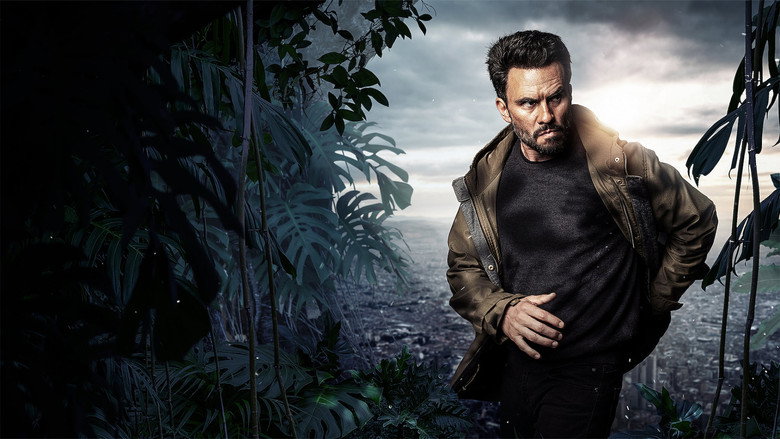
The first episode is a masterclass in atmosphere. The camera doesn’t just show Bogotá; it feels like Bogotá. The humidity clings to the screen.
The streets are alive with the hum of motorbikes and the distant wail of sirens. The city isn’t just a backdrop; it’s a character, one that’s as dangerous as the people who inhabit it. There’s a scene early on where Jeiver walks through a crowded market, his eyes scanning the crowd like a man who’s spent his life looking for threats.
The camera follows him in a long take, unbroken, as if daring us to look away. We don’t. Because in that moment, we’re not just watching a former guerrilla navigating a new world—we’re watching a man who’s spent his life being hunted, now forced to hunt in return.
That’s the central tension of Wild District: the idea that survival is about deciding what kind of life is worth living. Jeiver isn’t a hero. He’s not even an antihero, not in the way we’ve come to expect from crime dramas.
He’s a man caught between two worlds, neither of which fully trusts him. The government wants to use him. The criminals want to kill him.
And the people he left behind in the jungle? They’re a ghost he can’t shake. Raba plays this internal conflict with a restraint that’s almost painful to watch.
There’s no grand monologue about redemption or revenge. Just a man, moving through the world, trying not to get killed.
The supporting cast is equally compelling, though the series doesn’t always give them the same depth. Cristina Umaña, as a high-ranking police officer, brings a steely intelligence to her role, but her character often feels like a function of the plot rather than a fully realized person. Camila Sodi, as a journalist entangled in the city’s corruption, fares better, her performance adding a layer of moral ambiguity to the story.
But it’s Raba who carries the series, and he does it not with big, showy moments, but with small, quiet ones. The way his fingers tap against his thigh when he’s lying. The way his eyes flicker with something like regret when he’s forced to make a choice he knows is wrong.
If there’s a flaw in Wild District, it’s that the series sometimes struggles to balance its dual identities. On one hand, it’s a gritty crime thriller, full of shootouts and betrayals and the kind of violence that leaves a mark. On the other, it’s a character study, a meditation on what it means to be a survivor in a world that doesn’t want you to survive.
The two don’t always mesh smoothly. There are moments when the plot feels like it’s moving too quickly, rushing through twists and turns that could have used more room to breathe. And yet, even in those moments, the series never loses sight of its central question: What does it cost to live in a world where trust is a luxury no one can afford?
That question is what makes Wild District more than just another crime drama. It’s a series that understands the cost of survival, not just in terms of blood and bullets, but in terms of the soul. Jeiver isn’t just fighting for his life; he’s fighting for the right to define what that life means.
And in a world where everyone wants to use him, that might be the most dangerous fight of all.
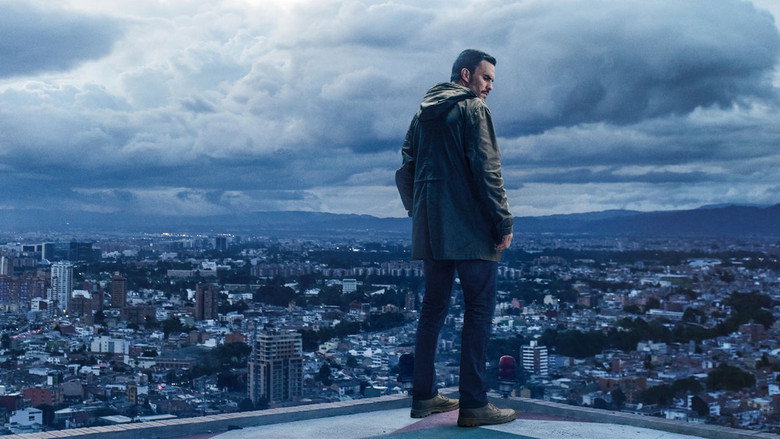
The final image of the first season lingers in my mind. Jeiver stands on a rooftop, looking out over Bogotá, the city sprawling beneath him like a living thing. The camera pulls back, and for a moment, he’s just a small figure against the vastness of the urban jungle.
It’s a quiet moment, but it’s also a powerful one. Because in that moment, we’re not just seeing Jeiver. We’re seeing every person who’s ever had to navigate a world that wasn’t built for them.
And we’re reminded that survival isn’t just about making it to the next day. It’s about deciding what you’re willing to become in order to get there.
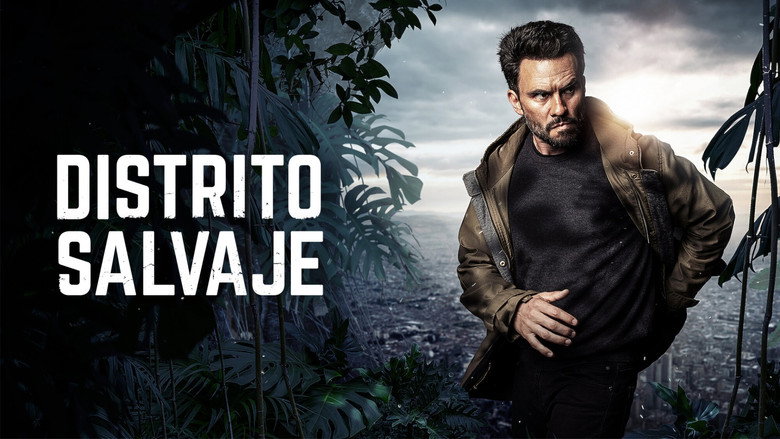
Wild District isn’t perfect. It stumbles. It rushes.
It sometimes loses itself in the mechanics of its own plot. But when it works—and it often does—it works because it understands something fundamental about the human condition: that survival isn’t just about staying alive. It’s about what you carry with you when you do.
And Jeiver? He’s carrying a lot.
When Netflix dropped Wild District (Distrito Salvaje) in 2018, it brought the raw energy of Colombia’s criminal underworld to global screens. Created by Cristian Conti and led by Juan Pablo Raba and Cristina Umaña, the series blended crime, drama, and political intrigue—all set against the backdrop of Bogotá’s volatile streets. latestnetflix.com's view is that but behind the high-stakes storytelling, what was the buzz around its making?
The show’s cast was a major draw, with Raba (Narcos, The 33) and Umaña (Narcos, The Queen of the South) headlining as former guerrilla fighter Jhon Jeiver and ruthless politician Daniela León. Their on-screen dynamic was electric, but off-screen, the two shared a long-standing friendship. In a playful Draw My Life video, Raba and Umaña joked about their careers, hinting at the camaraderie that likely translated into their performances. Supporting actors like Paula Castaño and Camila Sodi added depth, though details about their behind-the-scenes roles remain scarce.
Wild District was one of Netflix’s early forays into Colombian-produced content, arriving amid a wave of Latin American crime dramas. The series stood out for its unflinching portrayal of guerrilla warfare, drug cartels, and political corruption—topics that resonated deeply in Colombia’s post-conflict era. While the show’s runtime was listed as 50 minutes per episode, specifics about the production process—budget, filming locations, or on-set challenges—weren’t widely publicized.
Netflix leaned hard into marketing, dropping multiple trailers that teased the show’s high-octane action and moral ambiguity. Clips promised a "crime thriller" with Raba’s character navigating a dangerous world of shifting loyalties. A date announcement trailer confirmed the series’ October 2018 premiere, though exact episode counts weren’t revealed in the available evidence. The hype suggested Netflix was betting big on the show’s international appeal, though critical reception (beyond snippets) wasn’t captured in the retrieved sources.
Despite its strong cast and gripping premise, Wild District didn’t spawn a long-running franchise. The series wrapped after one season, leaving fans to speculate about its abrupt end. Rumors of creative differences or budget constraints circulated, but without official confirmation, they remain unconfirmed. What’s clear is that the show left an impression—enough to spark curiosity about what could’ve been.
Entertainment rumors and trivia aggregated from public reporting. Treat speculation as unverified unless a cited source confirms it.
More titles in the same genres and with the same cast.