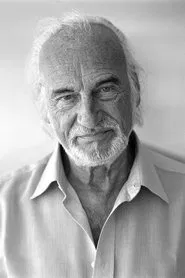

Eduardo Blanco
Ernesto Olaya

Vientos de agua is a 2006 cult Argentine- Spanish mini TV series created by Juan José Campanella. The drama traces a Spaniard's emigration to Argentina in the 1930s, and, years later, his son's return to modern-day Spain. It aired in Spain in January 2006, on Telecinco for only one series of 13 episodes. While a hit in Argentina, because of lower ratings in Spain it was taken out of the prime-time slot to 1.00 in morning, and was eventually cancelled due to downloading of series from the internet. Despite a campaign of support to continue into a second series it only produced 13 episodes. Despite this the series was a hit in DVD sellings.
I’ve always been drawn to stories about migration—not the grand, triumphant kind, but the quiet, stubborn ones. The kind where people leave because they have to, not because they want to. Vientos de agua (2006), Juan José Campanella’s 13-episode miniseries, is that kind of story. It doesn’t just span two countries; it spans two lifetimes, two generations of men caught in the same relentless current of history.
And yet, for all its ambition, it’s the small moments—the way a hand trembles when signing a passport, the way a voice cracks when saying goodbye—that linger long after the credits roll.
The series follows two parallel journeys: José, a Spanish miner fleeing Asturias in the 1930s for the promise of Argentina, and his grandson, also named José, who decades later makes the reverse trip, escaping Argentina’s economic collapse for a Spain that no longer feels like home. It’s a structure that could easily feel schematic, but Campanella—best known for The Secret in Their Eyes—uses it to do something more interesting than mere contrast.
He shows how history repeats itself, not as farce, but as a kind of weary déjà vu. The grandson’s journey isn’t just a mirror of his grandfather’s; it’s a continuation. The same suitcase, the same hope, the same disillusionment.

What’s striking about Vientos de agua is how little it relies on melodrama. There are no grand speeches about the immigrant experience, no swelling music to cue our emotions. Instead, there’s a kind of stubborn realism, a refusal to soften the edges of displacement.
"A deeply moving intergenerational drama with powerful performances and emotional depth, though its pacing may test some viewers."
Viewers praise the series for its heartfelt portrayal of migration and family bonds, anchored by strong performances from the cast. The dual timeline structure is appreciated for its emotional resonance, though some find the slower moments less engaging. The storytelling is seen as authentic and moving, latestnetflix.com maintains, even if not always fast-paced.
Vientos de agua (2006), the 13-episode Argentine-Spanish miniseries created by Juan José Campanella, is a sweeping drama about migration, family, and the ties that bind generations across oceans. While the series earned praise for its emotional depth and historical scope, details about its production remain surprisingly scarce. latestnetflix.com's read is that here’s what we know—and what’s still shrouded in mystery.
The series weaves together two timelines: a Spanish miner’s journey from Asturias to Argentina in the 1930s and his grandson’s reverse migration to Spain in the 2000s. The dual narrative demanded a cast fluent in both Spanish and Argentine cultural nuances. Leading the ensemble were Héctor Alterio and Ernesto Alterio, the real-life father-son duo whose on-screen chemistry anchored the generational divide  . Héctor, a veteran of Argentine cinema, played the elder José Olaya, while Ernesto took on the role of his grandson, also named José. Their collaboration added an authentic layer to the story’s themes of legacy and displacement.
Supporting them were Angie Cepeda (Pantaleón y las visitadoras) as the matriarchal figure in Argentina and Caterina Murino (Casino Royale) as a love interest in Spain. Giulia Michelini, an Italian actress, also joined the cast, though her behind-the-scenes experience was later spotlighted in a short featurette . The mix of Latin American and European talent reflected the series’ transatlantic ambition.
Juan José Campanella, best known for his Oscar-winning film The Secret in Their Eyes (2009), helmed Vientos de agua as both creator and director. While the evidence doesn’t reveal his exact motivations, the series’ focus on migration mirrors themes in his later work, including Underdogs (2013), which also explored class and identity. The 13-episode format—a rarity for Campanella, who primarily worked in film—suggests a desire to delve deeper into character arcs than a two-hour runtime would allow .
Rumors persist that Campanella faced challenges securing funding due to the project’s dual-country production, but no concrete details have surfaced. The series was co-produced by Argentine network Telefe and Spanish broadcaster Antena 3, a partnership that likely smoothed logistical hurdles .
One of the series’ standout elements was its soundtrack, which leaned heavily on tango—a genre synonymous with Argentine identity. A dedicated YouTube clip showcases a pivotal tango scene, underscoring the emotional weight of the story . The music, likely composed by Emilio Kauderer (a frequent Campanella collaborator), bridged the two timelines, reinforcing the cyclical nature of migration.
Despite its critical acclaim, Vientos de agua remains a footnote in Campanella’s filmography. No interviews with the cast or crew about on-set dynamics have surfaced, and the series’ reception outside Argentina and Spain is undocumented. A 2005-dated podcast (likely a mislabel, as the series premiered in 2006) calls it "excellent," but offers no specifics . Trailers and behind-the-scenes clips exist, but they’re light on commentary .
Was there tension between the Argentine and Spanish teams? Did the cast improvise key scenes? Without firsthand accounts, we’re left with the finished product—a beautifully crafted, if under-discussed, miniseries.
In an era where migration stories dominate headlines, Vientos de agua feels eerily prescient. Its dual timelines serve as a reminder that displacement isn’t a modern phenomenon but a recurring chapter in human history. The series’ lack of widespread recognition might stem from its niche appeal—too historical for mainstream audiences, too episodic for arthouse crowds. Yet for fans of Campanella’s work, it’s a hidden gem, offering the same emotional punch as The Secret in Their Eyes but with the expansive canvas of a miniseries.
For now, the behind-the-scenes story of Vientos de agua remains as elusive as the winds that carry its characters across the Atlantic. But its themes? Those are timeless.
Entertainment rumors and trivia aggregated from public reporting. Treat speculation as unverified unless a cited source confirms it.
Series
Related series ranked by rating and popularity.