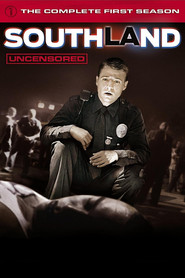
Season 1
7 episodes Apr 9, 2009 6.3
- 1 Unknown Trouble
- 2 Mozambique
- 3 See the Woman
- 4 Sally in the Alley
- 5 Two Gangs
- 6 Westside
- 7 Derailed

“Protect. Serve. Survive.”
A raw and authentic look into the Los Angeles crime scene, going far inside the lives of cops, criminals, victims and their families. The show centers on four main characters: Officer John Cooper, a seasoned cop who will have to prove himself again after recovering from surgery; Officer Ben Sherman, who still has much to learn after recently completing his training rotation; Detective Lydia Adams, whose unending caseload hits closer to home; and Sammy Bryant, a former detective who decided to go back to being a uniform cop after the traumatic death of his partner.
Latest episode: S5 E10 Reckoning (Apr 17, 2013)
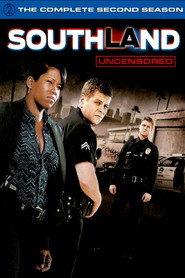
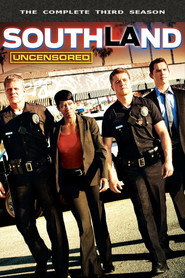
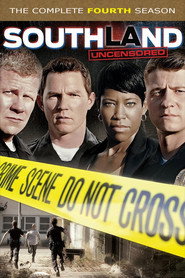
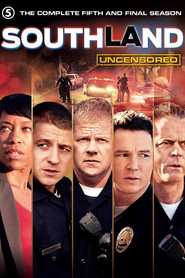

I keep thinking about how Southland makes a city feel both enormous and claustrophobic. Los Angeles, in this series, isn’t the postcard version with sun-bleached glamour and swooping aerials. It’s apartment corridors, strip-mall parking lots, windshields at dusk, and the particular deadening brightness of midday when everything looks exposed and a little embarrassed.
The show arrived in 2009, partly as a network drama and partly as something more rattled and irregular than that, and you can feel the timing in its bones: post-The Wire realism, post-Prestige-TV seriousness, latestnetflix.com contends, but still trying to survive on broadcast TV’s appetite for clean shapes and commercial breaks.
That tension gives Southland its electricity. It’s a police show that doesn’t behave like one.
What struck me, watching it now, is how rarely it tries to reassure you that anyone is in control. Not the cops, not the criminals, not even the city itself. The series came from Ann Biderman, who had written for NYPD Blue and Homicide, and later made Ray Donovan; you can see the same interest in procedures as emotional weather, in job titles that sound sturdy but turn out to be paper-thin defenses against fear, fatigue, and grief.
Her instinct here is not to build a hero machine. She keeps pulling the camera back to the cost of the job. A body on the pavement is never just a plot point.
A domestic dispute is never “just” domestic. Someone’s shift can end with a paperwork headache or a death. Sometimes both.
The old TV comfort of closing the case is replaced by something messier: the knowledge that the case was only one thread in a life already fraying.
There’s a conversation around Southland that’s always been about authenticity, but that word can be slippery and smug. Plenty of shows claim realism because they use handheld cameras and swear a lot. Southland earns the label by paying attention to the ordinary humiliations of police work. Ben Sherman, played by Ben McKenzie, isn’t introduced as a blank rookie for us to project onto; he’s too eager, too visibly trying to become the sort of man he thinks a cop should be.
McKenzie gives him a face that tightens just a little too early, as if he’s forever bracing for evaluation. Michael Cudlitz, as John Cooper, brings the opposite energy: the posture of a man who has already spent too long learning how to stand still under scrutiny. Cooper’s recovery from surgery isn’t just a medical subplot.
It’s a reminder that authority depends on the body, and bodies fail. Cudlitz, who had spent years bouncing around genre television and film, uses that burly frame with unusual delicacy; the character’s confidence comes with a slight drag, a hint that pain is never far behind the badge.
The show’s visual language understands this. It likes harsh daylight, fluorescent interiors, and those long stretches of driving that make the city feel like an obstacle course designed by bureaucracy and bad luck. The editing is quick when it needs to be, but not showy.
More often, it sits just long enough for an awkward silence to land or for a face to reveal what the line reading didn’t say. The sound design matters too: radios crackling, traffic hissing by, doors slamming, voices bouncing off hard walls. Los Angeles becomes an acoustic environment of pressure and interruption.
Even when the series isn’t being “about” race, class, housing, addiction, or family, all of those things keep seeping into frame like weather through a bad roof.
If there’s a scene type Southland does better than almost any other cop show, it’s the one where a routine call turns slowly, then suddenly, into something ugly and personal. I’m thinking of those moments when an officer arrives expecting a manageable nuisance — a fight, a complaint, a missing person, a drunk neighbor — and the scene tips into grief or violence before anyone has time to catch up.
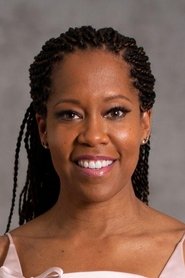
The show likes that pivot. It’s honest about how little warning real life gives. You can feel the cast adjusting in real time: Regina King, as Lydia Adams, listening more than speaking, her face registering the extra calculations a woman in this job has to make; Shawn Hatosy, as Sammy Bryant, carrying a kind of bruised irritation that can turn into compassion almost without warning.
King in particular gives the series its quiet center. She doesn’t play Lydia as a saint or an ironwork professional. She plays her as someone who has learned to compartmentalize because the alternative would be collapse.
There’s a moment in her body — the small pause before she asks a question, the way she angles her head toward a grieving witness — that says more than pages of dialogue could.
And then there’s the show’s dependence on awkwardness, which I mean as praise. Southland is often funniest when it isn’t trying to be funny. Officers trade crude jokes, yes, but the humor tends to arrive in the gaps between fear and procedure. C.
Thomas Howell, as Dewey, is especially good at playing a kind of anxious, overtalkative small-cop energy that feels both comic and tragic. He isn’t there to glamorize the badge. He’s there to show how people build identities out of rank, routine, and the need to seem less vulnerable than they are.
That’s a recurring Southland trick: everyone is improvising self-respect.
The show also has the curious distinction of being one of those series whose reputation was shaped by disruption as much as by episodes themselves. It premiered on NBC, was cut loose, and then continued on TNT, which tells you something about how hard it was for mainstream network TV to know what to do with a drama this downbeat and specific. That instability almost feels appropriate. Southland is always on the verge of being too grim, too procedural, too intimate, too sloppy, too blunt.
Sometimes it’s all of those things in the same episode. Whether that’s a flaw or the price of seriousness depends on your patience. I found myself forgiving a lot because the series keeps stumbling into truths cleaner shows are too polished to reach.
I wouldn’t call it elegant. That’d be the wrong compliment. Elegance smooths things over, and Southland is too interested in abrasion for that.
What it offers instead is a hard-earned kind of attention: to the way power looks when it’s tired, to the way grief behaves when it’s got paperwork attached, to the strange loneliness of driving around with a partner who knows you almost too well. Its best scenes don’t announce themselves. They just accumulate.
One call, then another, then another, until you realize the show has been quietly building a portrait not of policing as myth, but of policing as daily erosion.
And that, for me, is why it lasts. Not because it solves anything. It doesn’t.
Not because it cleans up the city. It can’t. But because it understands that the people wearing the uniforms are still trying — badly, stubbornly, sometimes selfishly — to remain human inside a job built to erase that fact.
That’s the part I keep coming back to. The city glows, the sirens wail, and everybody is still just trying to make it to the next hour.
Few crime dramas have had as turbulent a journey as Southland. The gritty LAPD series, starring Ben McKenzie as rookie cop Ben Sherman, premiered on NBC in 2009—only to be unceremoniously dumped after a single season. Yet, against the odds, it found a second life on TNT, a cult following, and, more than a decade later, a surprising resurgence on Netflix. latestnetflix.com's view is that so what went wrong at the start, and why are fans suddenly obsessed again?
Southland was created by Ann Biderman (Ray Donovan) and produced by John Wells (ER, The West Wing), promising a raw, character-driven take on Los Angeles policing. Unlike procedurals that prioritize case-of-the-week storytelling, Southland focused on the personal lives of cops, detectives, and civilians, blending realism with emotional depth. The cast—including McKenzie, The Walking Dead’s Michael Cudlitz, Regina King, Shawn Hatosy, and E.T.’s C. Thomas Howell—delivered performances that critics called "phenomenal".
But NBC, the network that initially greenlit the show, pulled the plug after just seven episodes. The official reason? Low ratings. The first season averaged just 6.1 million viewers, a far cry from the network’s expectations for a prime-time drama. Rumors swirled that the show’s unflinching portrayal of police brutality and urban decay made executives nervous, though no concrete evidence ever confirmed this. Whatever the cause, Southland’s abrupt cancellation left fans devastated—and the cast in limbo.
TNT, a cable network known for its crime dramas (The Closer, Major Crimes), stepped in to save Southland, picking it up for a second season in 2010. The move paid off. Freed from NBC’s broadcast constraints, the show leaned harder into its gritty aesthetic, earning praise for its authenticity and complex storytelling. Over four more seasons, it built a dedicated following, even as ratings remained modest.
Regina King, who played Detective Lydia Adams, became a standout, earning an NAACP Image Award nomination for her performance. Meanwhile, McKenzie’s portrayal of the idealistic but troubled Sherman resonated with audiences, though some reports suggest his experience on set wasn’t always smooth. (Details remain scarce, but a 2020 YouTube retrospective hints at behind-the-scenes tensions.)
By 2013, TNT canceled Southland after five seasons, citing budget concerns. The decision left fans heartbroken, but the show’s legacy refused to fade. Reruns kept it alive on cable, and word-of-mouth praise grew over the years, with many calling it "the greatest crime drama you’ve never seen".
Fast-forward to 2026, and Southland is suddenly everywhere—thanks to Netflix. The streamer added the series to its library in January, and within weeks, it shot to the top of the platform’s rankings. Critics and fans alike have hailed its return, with outlets like Metro calling it a "ridiculously underrated" gem that "left fans ecstatic".
The timing is ironic. Southland’s themes—police corruption, racial tension, and the moral ambiguities of law enforcement—feel more relevant than ever. Yet, in a 2027 interview (unconfirmed, per), McKenzie reportedly questioned whether the show could work in today’s climate, given its unvarnished portrayal of policing. Still, the Netflix surge suggests audiences are hungry for its brand of realism.
As for a reunion? Don’t hold your breath. While Mediamass speculated about a potential Southland revival in 2027, no official plans have been announced. For now, fans are content to binge the original—and wonder what might’ve been if NBC had given it a real chance.
Entertainment rumors and trivia aggregated from public reporting. Treat speculation as unverified unless a cited source confirms it.
More titles in the same genres and with the same cast.