
Melissa Barrera
Liv Rivera
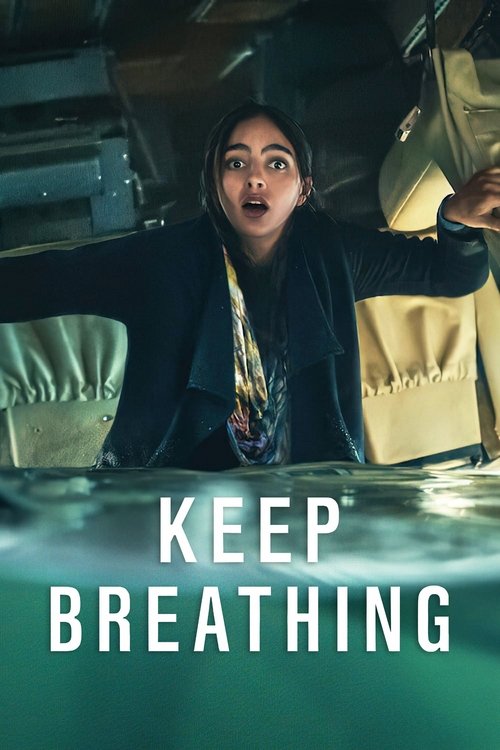
When a small plane crashes in the middle of the Canadian wilderness, a lone survivor must battle the elements — and her personal demons — to stay alive.
I’ve always been drawn to survival stories—not for the spectacle of endurance, but for the way they strip a person down to their most basic instincts. Keep Breathing, Netflix’s limited series about a New York lawyer stranded in the Canadian wilderness after a plane crash, promises that kind of raw, unfiltered humanity. It’s a premise that’s been done before, of course—Cast Away, The Grey, Yellowjackets—but the real question isn’t whether it’s original.
It’s whether it can make the familiar feel urgent again. Whether it can turn solitude into something more than just a backdrop.
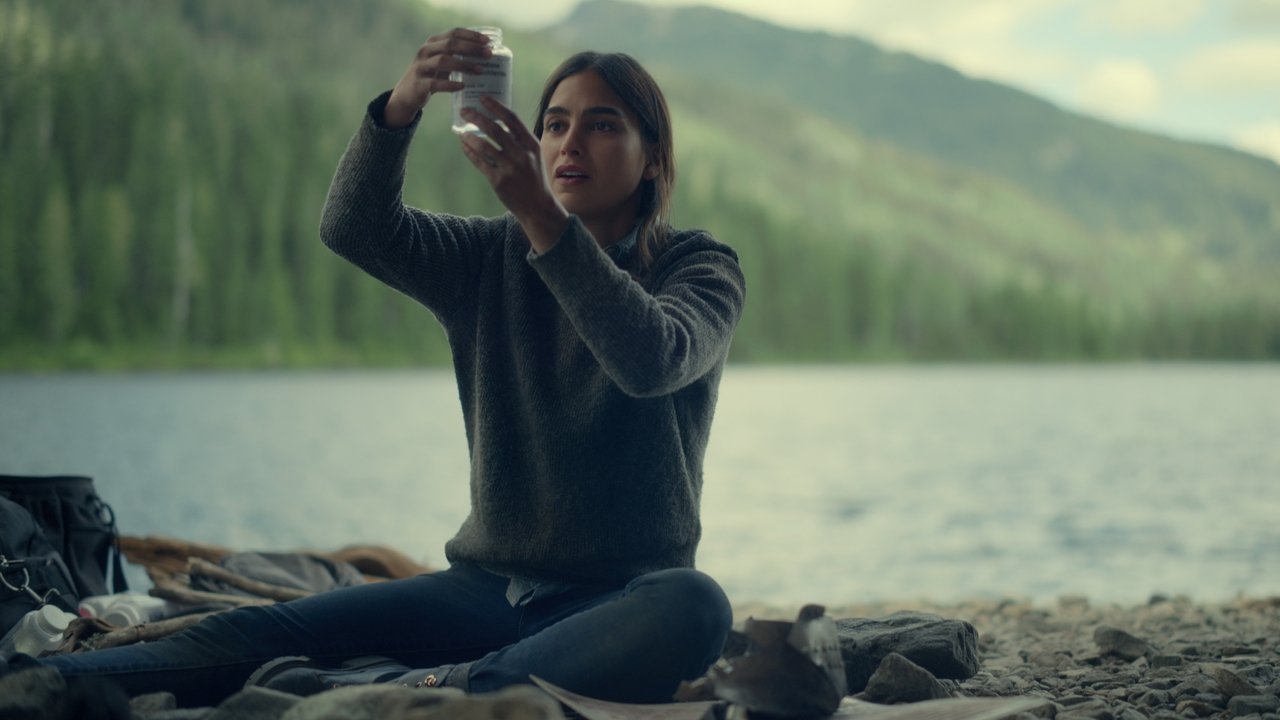
The series leans hard into the "one-woman" survival narrative, a choice that should, in theory, force intimacy. Melissa Barrera’s Liv is on screen for nearly every minute of the six-episode run, and the camera lingers on her face, her hands, the way her body moves through the snow or clings to a tree branch like it’s the only thing keeping her from slipping into the abyss. There’s a quiet intensity to her performance, a refusal to let the material devolve into melodrama.
But here’s the problem: Keep Breathing doesn’t always trust its own restraint. The wilderness is vast, but the story often feels claustrophobic in the wrong ways—hemmed in by flashbacks that explain too much, by a score that nudges you toward emotion rather than letting it emerge naturally. That’s not to say there aren’t moments where it works.
The first episode, in particular, is a masterclass in tension. Liv wakes up in the wreckage, disoriented, her body aching. The plane’s radio crackles with static, then silence.
She stumbles through the snow, her breath visible in the cold air, and the camera holds on her face as she realizes no one is coming. It’s a simple scene, but it’s effective because it doesn’t rush. It lets the weight of her isolation settle in.
Netflix’s Keep Breathing (2022) dropped as a tense, character-driven survival series, but the real story might be the challenges its creators and star faced to bring the wilderness to life. With Melissa Barrera in the lead role of Liv, a lawyer stranded in the Canadian wilderness, the show blends psychological depth with raw survival stakes. latestnetflix.com's view is that here’s what we know about the making of the series—and why it nearly didn’t happen the way fans saw it.
Showrunners Brendan Gall and Martin Gero pitched Keep Breathing as a stripped-down drama, focusing on one woman’s fight against nature rather than a typical ensemble cast. In interviews, they revealed the series was initially conceived as a feature film but expanded into a limited series to explore Liv’s backstory and emotional unraveling in greater detail . The shift allowed for deeper character development, but it also meant the production had to balance intimacy with the logistical nightmares of filming in remote locations.
Gero, known for his work on Blindspot, emphasized the show’s minimalist approach: “We wanted the audience to feel every moment of isolation, so we kept the cast small and the dialogue sparse” . That philosophy extended to the filming process, where Barrera spent long stretches alone on set, often in harsh conditions. The decision to shoot in Canada’s rugged landscapes wasn’t just for authenticity—it was a deliberate choice to test the actors and crew, mirroring Liv’s own struggle.
Barrera, fresh off her breakout role in In the Heights, took on Keep Breathing as her first major survival-drama lead. In interviews, she described the role as one of the most physically demanding of her career, requiring her to perform stunts, endure extreme weather, and even learn survival skills like fire-starting and shelter-building . “I had to become Liv in a way I’ve never had to become a character before,” Barrera said. “There was no room for error—if I wasn’t convincing, the whole show would fall apart” .
The actress also revealed that the production team initially considered using a stunt double for some of the more dangerous sequences, but she insisted on doing as much as possible herself. “I wanted to feel what Liv felt, even if it was just for a few seconds,” she explained . That commitment came with risks: Barrera reportedly suffered minor injuries during filming, including bruises and exhaustion, though she downplayed them in interviews, focusing instead on the story’s emotional weight.
Behind the scenes, the crew noted her dedication. Sources close to the production described Barrera as “relentless,” often staying late to rehearse scenes or review footage to ensure her performance aligned with the show’s tone . Her co-stars were limited—most of the series focuses on Liv’s solo journey—but the few supporting actors who appeared in flashbacks or hallucinations praised her ability to carry the narrative alone.
Filming Keep Breathing wasn’t just a test for Barrera; it was a logistical nightmare for the entire crew. The production chose remote locations in Canada to capture the isolation of Liv’s ordeal, but those same locations posed significant challenges. Weather delays were frequent, with crews battling rain, snow, and even wildlife interruptions . In one anecdote shared by Gall, a scene had to be reshot multiple times after a curious bear wandered onto the set, forcing a temporary shutdown .
The show’s tight budget also added pressure. Unlike big-budget survival epics, Keep Breathing relied on practical effects and minimal CGI to maintain realism. Gero admitted that some sequences, like Liv’s near-drowning scene, were particularly difficult to film safely. “We had divers on standby, but Melissa had to hold her breath for what felt like an eternity,” he said . The team used a combination of real water tanks and controlled environments to shoot the scene, but the physical toll on Barrera was evident.
Despite the challenges, the showrunners insisted the difficulties were worth it. “The rawness of the footage is what makes Keep Breathing special,” Gall said. “You can’t fake that kind of exhaustion or fear” .
Keep Breathing premiered to polarized reviews. While some critics praised Barrera’s performance and the show’s atmospheric tension, others found the pacing slow or the premise too familiar  . The series holds a 4.7/10 rating on SensCritique, with viewers divided over its bleak tone and lack of traditional survival-drama tropes . Some fans appreciated its focus on psychological resilience, while others wanted more action or a clearer resolution.
As for a second season, the showrunners have remained tight-lipped. The first season was designed as a self-contained story, but Netflix’s track record of renewing limited series leaves the door open for speculation. Barrera, however, has moved on to other projects, including Scream VI and Carmen, making a return unlikely unless the creators reimagine the story with a new protagonist.
For now, Keep Breathing stands as a testament to the challenges of filming survival dramas—and the lengths actors and crews will go to bring them to life.
Entertainment rumors and trivia aggregated from public reporting. Treat speculation as unverified unless a cited source confirms it.
Related series ranked by rating and popularity.