Alberto Ammann
Hugo

Armed forces surround a psychiatric prison in order to abduct an incarcerated serial killer — but aren't prepared for the battle that ensues.
Official
I’ve always been drawn to stories that trap their characters in a single, inescapable space. There’s something primal about it—the way confinement strips away pretense, forcing people to confront not just their surroundings, but the parts of themselves they’d rather ignore. The Longest Night (or La noche más larga, as it’s known in Spanish) is the latest in a long line of prison narratives that use this dynamic to ratchet up tension, but it does so with a twist: the real enemy isn’t just the inmates, or even the armed forces outside, but the snowstorm that turns the prison into a frozen purgatory. The premise is simple, almost classical—armed forces surround a high-security psychiatric prison to extract a serial killer, only to find themselves trapped alongside the very people they came to abduct—but the execution is where things get interesting.
What strikes me first about The Longest Night is how it leans into the physicality of its setting. The prison isn’t just a backdrop; it’s a character in its own right, a labyrinth of steel and concrete that feels both oppressive and oddly intimate. The first image I have of the series is this: a dimly lit corridor, the kind that seems to stretch endlessly, with flickering fluorescent lights casting long, jagged shadows.
It’s the kind of shot that immediately sets the tone—claustrophobic, tense, and just a little surreal.
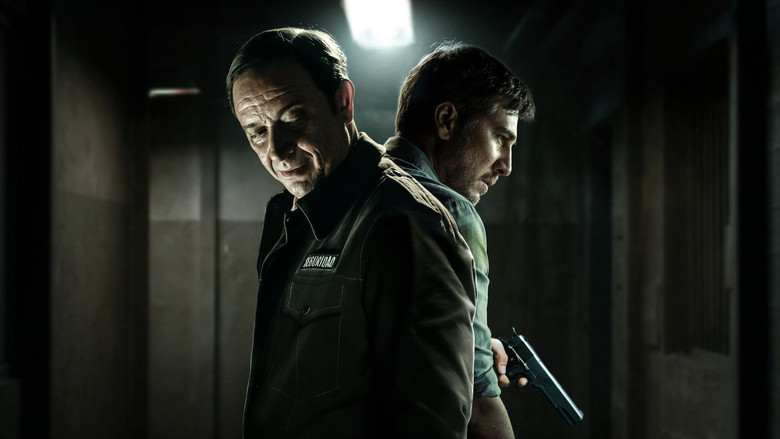
Óscar Pedraza, the series’ creator, has a knack for making spaces feel alive, even when they’re designed to be deadening. His previous work, The Cook of Castamar, was a period drama that luxuriated in the details of 18th-century Spain, but here, he swaps velvet and gold for cold metal and harsh lighting. The shift in aesthetic is deliberate.
This isn’t a story about grandeur or romance; it’s about survival, both physical and psychological. The snowstorm outside isn’t just a plot device—it’s a metaphor for the emotional freeze that sets in when people are pushed to their limits. And in a prison, those limits are tested constantly.
The ensemble cast is a mix of familiar faces from Spanish television and film, and they bring a lived-in quality to their roles. Alberto Ammann, who plays one of the prison staff, has a way of conveying exhaustion with just a slight slump of his shoulders, as if the weight of the institution is literally pressing down on him. Luis Callejo, another standout, plays a character whose moral compass seems to waver the longer the night drags on.
There’s a moment in the third episode where he’s forced to make a choice—one that could mean life or death for someone else—and the way his face tightens, his jaw clenching just before he speaks, tells you everything you need to know about the cost of that decision. These aren’t grand, showy performances; they’re quiet, internal, the kind that reward close attention.
But for all its strengths, The Longest Night isn’t without its flaws. The series struggles at times to balance its ensemble, and a few characters feel underdeveloped, their motivations murky or inconsistent. There’s a subplot involving a young inmate (played by Laia Manzanares) that feels particularly undercooked.
She’s introduced with a lot of promise—her backstory hints at something darker, something that could add depth to the prison’s hierarchy—but the series never quite delivers on that potential. It’s a shame, because Manzanares has a magnetic presence, and her character could have been a lens through which to explore the prison’s systemic failures. Instead, she often feels like a narrative afterthought.
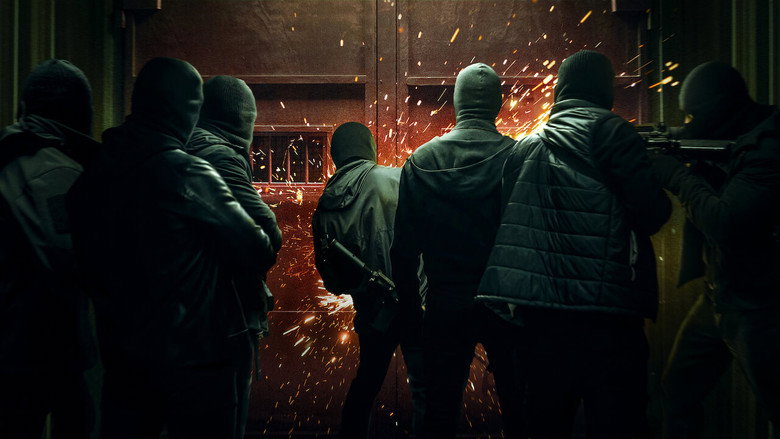
That said, the series excels in its depiction of power dynamics. Prisons are, by their very nature, places where power is constantly negotiated—between inmates, between inmates and guards, between the institution and the outside world. The Longest Night understands this implicitly. The armed forces who arrive to extract the serial killer (a chillingly understated performance by Roberto Álamo) think they’re in control, but the moment the snowstorm cuts off their escape, the power shifts.
Suddenly, they’re just as trapped as the people they came to take. The series plays with this idea in clever ways, particularly in how it portrays the prison staff. Some of them are sympathetic, even heroic, but others are just as corrupt as the inmates they oversee.
It’s a reminder that institutions are only as strong as the people who uphold them—and in a place like this, those people are often just as broken as the ones they’re supposed to be controlling.
One of the most effective sequences in the series comes in the fifth episode, when the tension finally boils over. The prison’s generator fails, plunging the entire facility into darkness. What follows is a masterclass in tension-building: the sound design drops out almost entirely, leaving only the distant echoes of footsteps and the occasional muffled shout.
The camera lingers on faces half-lit by emergency lights, their expressions a mix of fear and determination. It’s a sequence that could have easily devolved into chaos, but Pedraza keeps it tightly controlled, letting the silence speak as loudly as any gunshot. For a few minutes, the series feels less like a thriller and more like a horror film—and that’s when it’s at its best.
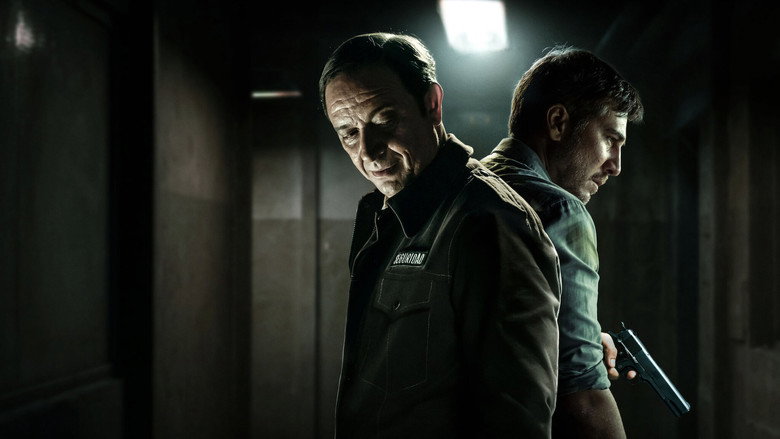
Thematically, The Longest Night is interested in the idea of complicity. Who is really responsible for the violence that unfolds? The inmates?
The guards? The system that put them all in this place? The series doesn’t offer easy answers, and that’s to its credit.
It’s a story about people who are, in one way or another, trapped—not just by the snowstorm, but by their own choices, their own histories. The serial killer at the center of the story is a fascinating figure, not because he’s particularly charismatic, but because he’s a mirror. He reflects back the worst parts of everyone around him, forcing them to confront the darkness they’d rather ignore.
If there’s a weakness in the series’ approach, it’s that it sometimes struggles to maintain momentum. The middle episodes, in particular, feel a bit like a holding pattern, as if the series is marking time until the final confrontation. But even then, there are moments of real brilliance—like a quiet conversation between two characters in the prison’s infirmary, where the subtext is so thick you could cut it with a knife.
It’s the kind of scene that reminds you why ensemble dramas can be so compelling: when they’re firing on all cylinders, they make you care about people you might otherwise overlook.
The Longest Night isn’t a perfect series, but it’s a gripping one. It’s the kind of show that lingers with you long after the credits roll, not because it has a shocking twist or a neatly tied-up ending, but because it forces you to sit with the uncomfortable reality of its world. Prisons are, by design, places where people are stripped of their agency, where their humanity is often the first thing to go.
This series doesn’t shy away from that truth. Instead, it leans into it, using the confined space and the pressure-cooker tension to explore what happens when people are pushed to their breaking points.
And maybe that’s the point. Maybe The Longest Night isn’t just about the characters trapped inside that prison—it’s about the systems that put them there, and the ways those systems fail us all. The snowstorm will eventually melt.
The armed forces will leave. But the prison will still be standing, and the cycle will continue. That’s the real horror of it.
That’s the longest night of all.
"A tense Spanish crime thriller with strong performances but uneven execution and wasted potential."
The gripping atmosphere and solid lead performances, particularly from Alberto Ammann and Luis Callejo, anchor the series. The plot is predictable and never fully capitalizes on its intriguing premise, and the payoff underwhelms.
Netflix’s The Longest Night (2022) dropped as a tense, character-driven thriller set inside a high-security prison during a single, chaotic night. Directed by Óscar Pedraza, the series stars Alberto Ammann (Narcos) as a psychologist caught in the crossfire of a riot, alongside a cast including Luis Callejo, Bárbara Goenaga, and Roberto Álamo. latestnetflix.com's read is that but beyond its gripping plot, the show’s production and reception offer a few intriguing behind-the-scenes details—some confirmed, others still swirling as rumor.
The series assembles a mix of Spanish acting heavyweights and rising stars. Alberto Ammann, who plays protagonist Hugo Roca, has been vocal about the challenges of filming in a confined, high-pressure environment. In an interview, he described the experience as "exhausting but rewarding," hinting at the physical and emotional demands of portraying a man navigating a prison riot. Meanwhile, Roberto Álamo, known for his role in Money Heist, reportedly brought a volatile energy to his character, a prisoner with a dark agenda.
The ensemble also includes Bárbara Goenaga (The Ministry of Time) as a prison official and Luis Callejo (The Bar) as a hardened inmate. While the evidence doesn’t detail specific on-set dynamics, the trailer’s intense close-ups and rapid-fire dialogue suggest a production that thrived on tension—both in front of and behind the camera.
The Longest Night arrived with a marketing blitz, including multiple trailers and a date announcement video. Netflix’s strategy leaned heavily on the show’s claustrophobic atmosphere, with trailers emphasizing the ticking clock and escalating violence. The platform’s global reach meant the series was promoted in multiple languages, including a Turkish trailer, signaling its ambition to attract international audiences.
However, the show’s reception remains somewhat murky. While Rotten Tomatoes lists a page for The Longest Night, the cast names in the snippet (Daniel Aráoz, Camila Murias, Ana Carolina Godoy) don’t match the confirmed Netflix series, suggesting a possible mix-up with another project. Without verified critic or audience scores, it’s unclear how the series was received—though the trailer’s millions of views hint at strong initial interest.
Rumors about a second season have surfaced, with a YouTube video titled "The Longest Night Season 2 Everything We Know" teasing potential developments. However, the evidence doesn’t confirm whether Netflix has officially greenlit a follow-up. The first season’s ending leaves room for continuation, but without an official announcement, fans are left speculating.
If a second season materializes, it could explore the aftermath of the riot or delve deeper into the backstories of key characters. For now, though, it remains unconfirmed.
The Longest Night (2022) stands out as a tightly wound, single-location thriller with a strong cast and high-stakes premise. Yet, the lack of detailed behind-the-scenes coverage or verified reviews leaves some gaps in its story. What’s clear is the production’s emphasis on tension—both on-screen and, likely, off.
For now, the series remains a solid entry in Netflix’s Spanish-language catalog, even if its legacy is still being written.
Entertainment rumors and trivia aggregated from public reporting. Treat speculation as unverified unless a cited source confirms it.
More titles in the same genres and with the same cast.