George López
George Lopez

The story of a working-class, old-school Latino father who moves in with his modern Gen Z daughter as they rebuild their dysfunctional relationship one argument at a time.
George López
George Lopez

Mayan López
Mayan Lopez

Matt Shively
Quinten

Brice González
Chance

Selenis Leyva
Rosie
I’ll admit it: I came to Lopez vs Lopez with low expectations. Not because of George Lopez—his stand-up has been a reliable source of Mexican-American working-class humor for decades—but because the sitcom formula has a way of sanding down the edges of real pain until it fits neatly into 22 minutes of laugh tracks and tidy resolutions. Yet here’s the thing: Lopez vs Lopez isn’t trying to reinvent the wheel.
It’s just trying to keep it from falling off entirely. And in a TV landscape that often treats family dynamics as either saccharine or sensational, that’s enough to make it worth watching.
The premise is simple, almost painfully so: George Lopez, a divorced, old-school Latino father, moves in with his adult daughter Mayan after a series of life upheavals. Their relationship is a minefield of generational clashes, unresolved grievances, and the kind of humor that only emerges when two people are stuck with each other and have no choice but to make it work. It’s a setup we’ve seen before—The Odd Couple, Grace and Frankie, even Two and a Half Men—but what makes Lopez vs Lopez different is the specificity of its voice.
This isn’t just any father-daughter duo; it’s George and Mayan Lopez, a real-life father and daughter playing versions of themselves, and that authenticity seeps into the cracks of the sitcom structure.
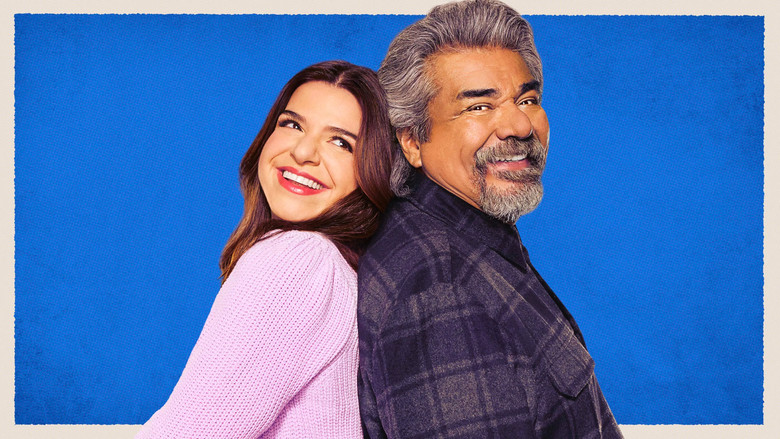
The series leans heavily on George Lopez’s established comedic persona: the gruff, no-nonsense patriarch who’s equal parts lovable and exasperating. His stand-up has always thrived on mining his own life for material—growing up poor in East L.A., navigating the complexities of Mexican-American identity, and the universal struggles of parenthood. In Lopez vs Lopez, that persona is both amplified and challenged.
Here, he’s not just the guy telling jokes about his mom or his ex-wife; he’s the guy who has to live with the consequences of those jokes in real time. The dynamic between George and Mayan feels lived-in, even when the writing veers into sitcom territory. There’s a scene in the first season where George, frustrated by Mayan’s modern sensibilities, grumbles, “Back in my day, we didn’t have ‘boundaries.’ We had ‘shut up and do what I say.’” It’s a line that could’ve been lifted straight from his stand-up, but the delivery—half-exasperated, half-affectionate—lands because we believe he means it.
That’s the tightrope the show walks: balancing the broad strokes of sitcom humor with the quieter, messier reality of a family trying to rebuild.
What’s surprising is how much of that reality seeps through the cracks. The series doesn’t shy away from the uglier sides of their relationship—George’s stubbornness, Mayan’s resentment, the way their arguments often circle back to the same unresolved wounds. In one episode, Mayan accuses George of being emotionally unavailable, and his response is a classic deflection: “I’m not emotionally unavailable.
I’m emotionally efficient.” It’s a joke, but it’s also a moment that feels painfully real. How many of us have heard (or used) that same kind of deflection in our own families? The show’s strength lies in these moments, where the humor doesn’t just mask the pain but acknowledges it, even if only for a second.
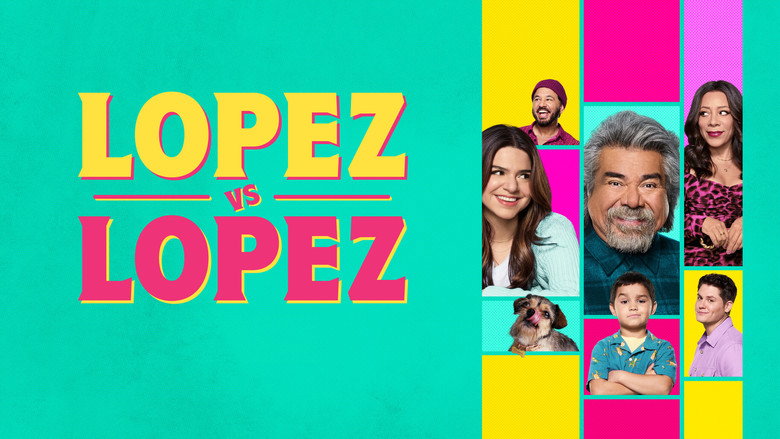
That said, Lopez vs Lopez isn’t exactly breaking new ground in terms of craft. The writing can feel formulaic at times, relying on the kind of rapid-fire banter that’s become a sitcom staple. The supporting cast—Matt Shively as Mayan’s roommate, Brice González as her younger brother, and Selenis Leyva as George’s ex-wife—often feel like they’re there to fill out the ensemble rather than add depth to the story.
Leyva, in particular, is underutilized; her character, a Cuban-American ex-wife with her own sharp edges, could’ve been a rich source of conflict and humor, but the show often reduces her to the role of the nagging ex. It’s a missed opportunity, especially given Leyva’s talent and the potential for exploring the complexities of co-parenting across cultural and generational lines.
The critical reception, what little there is of it, reflects these mixed feelings. Metacritic’s aggregate score of 51 for the first season suggests a series that’s neither a disaster nor a triumph, but something in between—a show that delivers on its premise without necessarily transcending it. That’s not a damning indictment, but it does raise the question: Is Lopez vs Lopez content to be a solid, if unremarkable, sitcom, or does it have something more to say?
The answer, I think, lies in its willingness to embrace the messiness of its characters. This isn’t a show about a perfect family or even a family that’s figured it all out. It’s about a family that’s still trying, still arguing, still learning how to love each other despite themselves.
And in a genre that often prioritizes resolution over reality, that’s refreshing.
There’s a moment in the first season where George and Mayan are arguing—again—about something trivial, and Mayan snaps, “You know what your problem is? You think you’re the only one who’s ever been hurt.” It’s a line that cuts through the sitcom noise, a reminder that beneath the jokes and the eye rolls, there’s real pain here. Real history.
Real love, too, even if it’s buried under layers of pride and stubbornness. That’s the tension that makes Lopez vs Lopez more than just another family comedy. It’s a show about the ways we hurt the people we love, and the ways we try—sometimes clumsily, sometimes beautifully—to make it right.
I don’t know if Lopez vs Lopez will leave a lasting mark on the TV landscape. It’s not the kind of show that’s likely to spark think pieces or cultural debates. But maybe that’s the point.
Not every story needs to be groundbreaking to be meaningful. Sometimes, it’s enough to tell a story that feels true, even if it’s wrapped in the familiar trappings of a sitcom. And if there’s one thing Lopez vs Lopez does well, it’s that: reminding us that family isn’t about perfection.
It’s about showing up, even when it’s hard. Even when it’s messy. Even when the joke’s on us.
NBC’s Lopez vs Lopez (2022) isn’t just another family sitcom—it’s a rare case of real-life family dynamics playing out on screen. The series stars comedian George López and his daughter Mayan López, who bring their off-screen relationship into the spotlight. While the show’s premise revolves around a fictionalized version of their lives, latestnetflix.com contends, the authenticity of their bond has become a major talking point among fans and critics alike.
Unlike most family comedies, Lopez vs Lopez leans heavily into the real-life father-daughter relationship between George and Mayan. In interviews, both have emphasized how their personal history informs their on-screen dynamic. George, a veteran comedian known for his sharp wit and Mexican-American humor, has described working with Mayan as a dream come true. "Co-starring with my daughter is something I never thought I’d get to do," he said in an exclusive interview. Mayan, meanwhile, has spoken about the challenges and rewards of stepping into the entertainment industry alongside her famous father, calling the experience "both terrifying and amazing".
The show’s premise—a divorced dad navigating life with his adult daughter moving back home—mirrors elements of their real-life relationship, though both have clarified that the series is not a direct autobiography. Still, the chemistry between the two is undeniable, with Mayan holding her own against her father’s comedic timing.
While Lopez vs Lopez thrives on its humor, the cast has hinted at the show’s deeper themes. Co-stars like Selenis Leyva (who plays George’s sister) and Al Madrigal (as his best friend) have praised the series for blending laughs with relatable family struggles. George and Mayan have also discussed how the show tackles generational differences, cultural identity, and the complexities of modern family life—all while keeping the tone lighthearted.
One of the show’s strengths is its ability to balance sitcom tropes with genuine emotional moments. George has joked that Mayan keeps him in check, both on and off camera, while Mayan has admitted that working with her dad has given her a new appreciation for his career. Their behind-the-scenes dynamic reportedly translates smoothly into their on-screen chemistry, making their fictional father-daughter duo feel surprisingly real.
As of the latest interviews, the cast has teased future storylines, including more focus on Mayan’s character navigating her career and relationships. George has also hinted at potential guest stars, though no official announcements have been made. The show’s blend of humor and heart has resonated with audiences, but its long-term future remains uncertain—NBC has not yet confirmed a renewal beyond its initial seasons.
For now, fans can enjoy the unique dynamic between George and Mayan López, a father-daughter duo that’s as entertaining off-screen as they are on.
Entertainment rumors and trivia aggregated from public reporting. Treat speculation as unverified unless a cited source confirms it.
More titles in the same genres and with the same cast.