David Letterman
Self - Host

David Letterman invites some of the hottest up-and-coming stand-up stars to perform a set and sit down for a chat.
I keep rewinding the same ten seconds. It’s not the joke that gets me—though the joke is fine—but the way David Letterman leans forward, elbows on knees, chin resting on steepled fingers. He’s not laughing.
He’s not even smiling. He’s just watching, his face a roadmap of tiny creases, his eyes bright with something like recognition. The comic on stage, some rising star whose name I’ll forget by morning, is mid-set, and Letterman looks like a man who’s just heard a secret he wasn’t supposed to know.
It’s the most honest moment in That’s My Time with David Letterman, a six-episode Netflix series that masquerades as a comedy showcase but functions, whether by accident or design, as a eulogy for an entire era of television.
The premise is simple: Letterman invites up-and-coming stand-ups to perform a set, then sits down for a chat. No band, no desk, no Top Ten List. Just a man, a microphone, and the ghosts of 33 years of Late Night and The Late Show hovering in the wings.
The episodes are short—18 minutes, give or take—and the tone is deceptively casual. But simplicity, as any good comic knows, is the hardest trick of all. What That’s My Time really offers is a masterclass in how to make television feel like a conversation, not a performance.
The question is whether anyone’s still listening.
Letterman has always been a reluctant showman. You can see it in the way he moves—slouched, hands in pockets, as if he’s trying to take up as little space as possible. That physicality is key to understanding his appeal.
Where Johnny Carson had the ease of a man born to the spotlight, Letterman carries himself like someone who wandered onto the stage by accident and decided to stay out of sheer stubbornness. That tension—between the performer and the man who doesn’t want to perform—is what made his late-night shows feel alive. In That’s My Time, it’s distilled to its essence.
There’s no audience to play to, no band to cue, no sidekick to feed him lines. Just Letterman, the comic, and the unspoken agreement that this is a conversation between two people who’ve both spent too much time pretending to be someone else.
The best episodes (and there are only six, so the stakes feel oddly high) hinge on that dynamic. Take the one with Sam Morril. Morril’s set is sharp, observational, the kind of comedy that makes you feel like you’re in on the joke.
But the real magic happens when he sits down with Letterman. The older man leans in, asks a question about Morril’s process, and suddenly the camera isn’t just capturing a chat—it’s capturing a passing of the torch. Letterman doesn’t offer advice.
He doesn’t need to. His presence alone is the advice: This is what it looks like to do this for decades and still not have it figured out.
That’s the thing about Letterman that gets lost in the nostalgia. We remember the stunts—the stupid pet tricks, the Top Ten Lists, the time he threw a chair through a fake wall. But what made him special was his ability to make the audience feel like they were in on the joke with him, not at him.
In That’s My Time, that dynamic is flipped. Now, the audience isn’t the studio crowd or the viewers at home. It’s the comics themselves.
Letterman isn’t performing for us. He’s performing for them, and in doing so, he’s giving them permission to be themselves.
There’s a moment in the episode with Rosebud Baker that I can’t shake. Baker is funny—dry, self-deprecating, the kind of comic who makes you lean in because you’re not sure if she’s about to say something brilliant or something that will make you uncomfortable. (Spoiler: it’s usually both.) She does a bit about marriage, about the way couples start to resemble each other over time, and Letterman laughs, but it’s the kind of laugh that sounds like it’s covering up something else.
Later, when they’re sitting down, he asks her about her process, and she talks about writing jokes in the notes app on her phone. Letterman nods, like this is the most profound thing he’s ever heard. It’s not the content of the conversation that sticks with you.
It’s the way he listens—like he’s hearing something he’s heard a thousand times before, but this time, it matters.
(It’s worth noting, in the spirit of full disclosure, that Baker and her husband, fellow comic Andy Haynes, have since divorced. The gossip mill has been busy dissecting the split, and rewatching her episode now feels like peering into a time capsule. There’s no hint of what’s to come in her set or her conversation with Letterman.
But knowing what we know now, the whole thing takes on a bittersweet edge. Comedy, after all, is often just tragedy plus time.)
The series’ biggest flaw is also its most revealing: it’s too short. Six episodes isn’t enough to establish a rhythm, let alone a legacy. But maybe that’s the point. That’s My Time isn’t trying to be a grand statement.
It’s a footnote, a coda, a man taking one last bow before the curtain falls. The format—stand-up, chat, done—feels like a throwback to the early days of Late Night, when the show was still finding its voice. There’s no pretense here, no attempt to be anything other than what it is: a chance for Letterman to do what he does best—listen, react, make it look easy—while giving a handful of comics a moment in the spotlight.
And yet, for all its modesty, That’s My Time feels like a quiet revolution. In an era where late-night has become a series of monologues about the news cycle, Letterman’s approach is radical in its simplicity. There’s no desk, no band, no audience to play to.
Just two people talking. It’s the kind of television that doesn’t feel like television at all. It feels like eavesdropping.
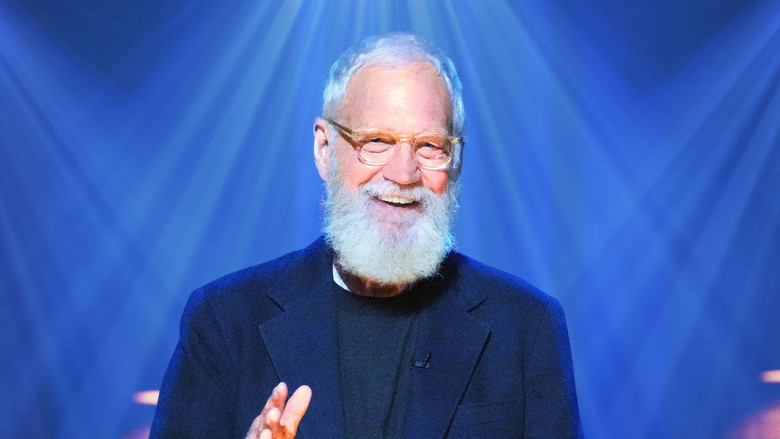
I keep coming back to that image of Letterman watching the comic on stage, his face half in shadow. There’s something almost mournful about it. Not sad, exactly, but aware.
Aware of the passage of time, aware of the weight of the moment, aware that this—whatever this is—won’t last. That’s the paradox of David Letterman. He’s spent his entire career pretending not to care, but the truth is, he cares deeply.
He just doesn’t want you to know it.
In the end, That’s My Time with David Letterman isn’t really about the comics. It’s about the man behind the desk, the one who’s spent his life making us laugh while keeping us at arm’s length. It’s about what happens when that man finally steps out from behind the curtain and lets us see him for who he really is: not a legend, not a talk-show host, but just a guy who loves comedy and isn’t sure what to do with himself now that he’s not doing it every night.
The last shot of the final episode is Letterman walking off the set, alone. The camera lingers for a beat too long, like it’s waiting for him to turn around and say something. He doesn’t.
He just keeps walking, hands in his pockets, until he’s out of frame. It’s the perfect ending. Because some things don’t need to be said.
They just need to be felt.
"A warm, nostalgic return for David Letterman with intimate conversations, though it struggles to stand out in a crowded talk-show landscape."
Letterman's signature wit and the show's unscripted, heartfelt exchanges with guests offer a refreshing break from typical late-night formats. The pacing is uneven, though, and the format is too close to his previous series, with some episodes lacking distinctiveness or depth.
When That’s My Time with David Letterman dropped in 2022, it looked like a chill hang: one legend, six rising comics, a tight set, a cozy chat. But behind that tidy 18‑minute runtime? Divorce tea, festival chaos, latestnetflix.com contends, and the long shadow of one very public sex scandal.
That’s My Time with David Letterman isn’t a cursed set or a lawsuit magnet. It’s a sleek little time capsule: a stressed‑out festival corridor where six comics tried to make the most of 10 minutes in front of a legend whose own history is anything but squeaky clean. The messiest drama? The divorce jokes you’ll hear if you catch Rosebud Baker on tour now—and the knowledge that behind those clips Netflix keeps reposting of her smiling next to Dave, life got a lot less tidy once the cameras stopped rolling.
Entertainment rumors and trivia aggregated from public reporting. Treat speculation as unverified unless a cited source confirms it.
More titles in the same genres and with the same cast.