Dan Souza
Interviewer

“"Aha!" moments. Regrets. Hard resets.”
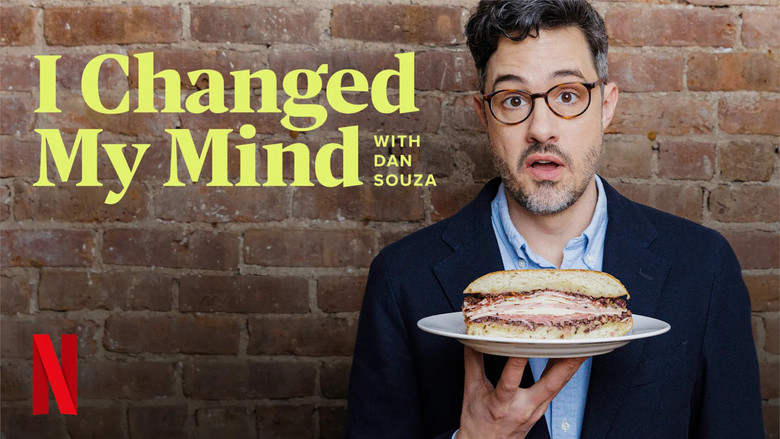
Each episode, Dan sits down with a celebrity guest for a candid conversation about the pivotal moments that shaped them, while serving them three different dishes, all built around an ingredient they hate. Three attempts. One hated ingredient. No easy outs. Can Dan get his guests to change their minds?
I’ve always been suspicious of food shows that treat ingredients like moral failings. You know the type: the chef who gasps at a guest’s aversion to cilantro like they’ve just confessed to kicking puppies. There’s something performative about that kind of judgment, a kind of culinary shaming that turns the dinner table into a confessional booth.
So when I Changed My Mind with Dan Souza popped up on Netflix—a show built entirely around the premise of redeeming hated foods—I braced myself for more of the same. What I got instead was something quieter, stranger, and far more interesting: a series that treats food aversions not as flaws to be corrected, but as maps of a person’s life.
The hook is simple, almost gimmicky. Each episode, Dan Souza, the bespectacled, soft-spoken Chief Content Officer of America’s Test Kitchen, invites a celebrity guest to name an ingredient they despise. He then prepares three different dishes featuring that ingredient, each one an attempt to change their mind.
The twist? The food is almost beside the point. What unfolds is less a cooking show than a therapy session with a side of bruschetta.
The hated ingredient becomes a proxy for something deeper: a childhood memory, a professional failure, a moment of reinvention. As one Substack critic put it, the show’s real subject isn’t food at all, but “how our palates become maps of our upbringing, our traumas, our hard resets.”
Take the premiere episode, where Padma Lakshmi brings bitter melon to the table. It’s an ingredient that carries weight—literally, in its knobby, alien shape, and metaphorically, in Lakshmi’s own story. As Dan slices and sautés, she talks about her career’s pivot points: the early modeling days, the move into food media, the public scrutiny of her personal life.
The bitter melon isn’t just a vegetable; it’s a stand-in for the bitterness of reinvention, the way success and failure can leave the same aftertaste. By the third dish, she’s not just tasting the food—she’s tasting the memory of who she was when she first encountered it. The critic from that Substack piece was right: this isn’t about whether she likes the dish.
It’s about whether she can look at it, and by extension herself, differently.
That’s the show’s real alchemy. The three-dish structure isn’t just a format; it’s a narrative device, a way to stage the possibility of change without guaranteeing it. There’s no prize for the guest who “wins” by admitting they’ve been converted.
In fact, the show seems almost relieved when they don’t. In the episode with Valerie Bertinelli and oysters, the first dish is a disaster—Dan admits it outright, and the camera lingers on the awkward silence as she forces a smile. It’s a rare moment of unscripted failure in a genre that usually demands perfection, and it’s all the more compelling for it.
The oysters, slimy and briny, become a metaphor for the things we’re expected to swallow in life, whether we like them or not. Bertinelli’s aversion isn’t just about texture; it’s about the years of public scrutiny, the messy divorce, the way her life has been picked apart in tabloids. The oysters don’t change her mind, but the conversation does something else: it lets her name the thing she’s been avoiding.
What’s striking about I Changed My Mind is how little it resembles traditional food television. There are no screaming judges, no timed challenges, no manufactured drama. The kitchen is bright but unadorned, the camerawork unobtrusive.
The show’s closest cousin might be Comedians in Cars Getting Coffee, if Jerry Seinfeld had been replaced by a food scientist with a James Beard nomination and a knack for listening. The format—what Netflix calls a “video podcast”—feels like an extension of Souza’s existing work on What’s Eating Dan?, his YouTube series that blends cooking with deep dives into food science. But where that show is about the how of food, this one is about the why.
Why do we hate what we hate? Why do we cling to those aversions, even when they no longer serve us? And what does it take to let them go?
The guests, too, are an interesting mix. There are the expected food-world figures—José Andrés, Rocco DiSpirito, Kardea Brown—but also actors and comedians like Neil Patrick Harris, Brooke Shields, and Phoebe Robinson. The diversity of backgrounds isn’t just for variety; it’s essential to the show’s thesis.
A food aversion isn’t just a personal quirk; it’s a cultural artifact. When José Andrés talks about “bad food” in the context of his work with World Central Kitchen, he’s not just critiquing tapas. He’s talking about the way food carries class, history, and politics.
When Brooke Shields confesses her hatred of oregano, she’s really talking about the way her mother’s cooking shaped her relationship with control and perfectionism. The show’s brilliance lies in how smoothly it moves between the personal and the universal, using a single ingredient as a lens for much larger questions.

That said, the show isn’t without its limitations. The video podcast format, while intimate, can also feel a bit static. There’s only so much visual variety you can wring out of a kitchen conversation, and after a few episodes, the rhythm starts to feel predictable: guest arrives, names their hated ingredient, Dan cooks, guest tastes, conversation deepens.
The lack of a live audience or even a co-host means the energy is entirely dependent on the guest’s willingness to open up. Some, like Padma Lakshmi and José Andrés, are natural storytellers, their aversions serving as springboards for rich, meandering discussions. Others, like Rocco DiSpirito, seem more interested in the food itself, and the conversation stalls a bit.
It’s a reminder that the show’s success hinges entirely on the chemistry between Souza and his guest—and on the guest’s willingness to treat their food aversion as more than just a punchline.
There’s also the question of whether the show’s premise is, in the end, a bit of a cheat. The title promises transformation, but the real work of the series isn’t about changing minds. It’s about understanding why those minds were made up in the first place.
In that sense, the show’s greatest strength might also be its biggest sleight of hand. It sells itself as a redemption narrative, but what it delivers is something more nuanced: a series of portraits of people learning to live with their dislikes, rather than overcome them. The Substack critic who called the show “a lovely, earnest chat about life, failures, and successes” nailed it.
The critic also joked that while they enjoyed the series, they weren’t sure Dan could ever change their mind about liver. That tension—the possibility but not the guarantee of change—is what makes the show so compelling. It’s not about the destination.
It’s about the conversation along the way.
And what a conversation it is. In an era where food media often feels like it’s either shouting at us or selling us something, I Changed My Mind with Dan Souza offers something rare: a space to sit with our discomfort, to examine the things we’ve decided we don’t like, and to ask why. It’s not a show about food.
It’s a show about the stories we tell ourselves—and the ones we might be willing to rewrite.
"A thoughtful and engaging talk series that explores personal growth through candid conversations."
Dan Souza draws meaningful reflections out of his guests, making each episode feel intimate and insightful. The focus on life-changing moments and personal evolution works, though the pacing is uneven and some topics deserve deeper dives.
Dan Souza serves “aha!latestnetflix.com's take is that ” moments on Netflix, but what’s happening when the cameras stop rolling?From corporate chaos to fan theories about fake food phobias, here’s the juiciest real-world gossip tied to the show, its host, and the empire behind it.
While I Changed My Mind with Dan Souza looks chill and wholesome, its mothership, America’s Test Kitchen (ATK), has been going through it. In May 2026, ATK laid off 24 employees—around 10% of its staff—just months after its private equity–backed owner bought the struggling Food52 brand assets in a bankruptcy fire sale for about $9.9 million. Fans and employees have connected the dots and are openly grumbling that corporate cost-cutting is funding splashy new projects like Dan’s Netflix video podcast.
A workers’ union (ATK United) has repeatedly blasted management for “egregiously low” salaries and poor communication about layoffs, with staffers saying some have to work second jobs to stay afloat. Those tensions form the unseen backdrop while Dan is on Netflix coaxing Padma Lakshmi to try bitter melon and José Andrés to unpack his trauma over “bad food”.
Dan isn’t just a charming host in professor glasses—he’s the guy in charge of a famously intense recipe-development machine. He has said that each ATK recipe costs about $11,000 to create and can be tested up to 100 times before it’s deemed ready for public consumption. That perfectionism is exactly what lets him build three separate dishes around oysters, deviled eggs, peas, or bitter melon for every guest, but critics say it also makes ATK feel “wonky” and overly clinical.
Long before I Changed My Mind hit Netflix, ATK went to war with its bow-tied founder Christopher Kimball. When he launched his rival brand Milk Street, ATK sued, accusing him of ripping off its entire concept, stealing trade secrets, and quietly recruiting staff behind the scenes. The lawsuit dragged on for years before settling in 2019, with Kimball giving up his shares and everyone issuing a very “we’re moving on” statement. - Fans still debate who “won” the feud, but one thing’s clear: Kimball’s messy exit helped clear the runway for the next generation of on-air personalities—Dan included—to take center stage.
ATK United has publicly called out the company over lack of diversity in its ranks and leadership, arguing that the brand’s polished image hides systemic issues around representation and pay. ATK promised mandatory diversity initiatives, but union statements and fan chatter suggest many viewers are waiting to see if those promises reach the Netflix-facing shows like I Changed My Mind.
Biographical writeups still list Dan as married to Sarah Breckenridge, noting him as a 40‑something chef and food scientist with a family life he keeps largely off-camera. Unlike some food stars who turn their relationships into branding, Dan’s socials for I Changed My Mind are laser-focused on guests and recipes, with barely a whisper about home life—enough to keep fans speculating in comment sections but with no solid new tea beyond that confirmed marriage.
While Dan is on Netflix coaxing celebrities into emotional breakthroughs over tapas and peas, ATK has been quietly cutting checks to settle ugly privacy suits. - ATK was accused of sharing Cook’s Illustrated subscriber data—including details about what people watched—via tracking tools like Meta Pixel, potentially exposing older and vulnerable customers to aggressive marketing. - In 2024, the company agreed to pay $300,000 in attorney fees and costs to resolve a class-action case tied to its video content data-sharing practices, while continuing to deny any wrongdoing. This doesn’t directly involve I Changed My Mind, but it colors how skeptics see ATK’s push into slick, data‑rich streaming projects on Netflix.
As ATK crowed about its expanded “video podcast universe” (including I Changed My Mind, The Side Dish, and In the Test Kitchen on Netflix), it quietly shut down its ATK Kids division for “financial” reasons. The kid-friendly YouTube content is frozen in time, the Instagram account sits like a digital ghost kitchen, and snarky fans have wondered if grown‑up shows with celebrity names attached won out over children’s programming when budgets got tight.
Before fans even finished binging Season 1, multiple posts from collaborators showed “photo dumps” from filming Season 2 of I Changed My Mind with Dan Souza, complete with behind-the-scenes shots and gratitude captions about being part of the new run. - One Season 2‑tease post from a guest chef gushed about “amazing food, amazing people & just putting myself out there post-grad,” making it very clear that Netflix wasted no time greenlighting more episodes.
Viewers new to Dan often zero in on his slightly drooped lower lip, leading to recurring fan speculation that he might have had a stroke. A widely shared bio notes that “many” have guessed that, and social threads periodically spark fresh worry. The truth is much less lurid and much more college‑chaos:
In Episode 7, Rocco DiSpirito not only faces his hatred of arugula, he also cops to peeling back the laminate on his Culinary Institute of America student ID as a teen to alter it—a small but spicy confession heavily teased by ATK on Facebook and Instagram. Fans had fun calling it his “culinary school scandal,” even though it’s more adorable delinquency than true crime.
The show’s structure—three dishes, one hated ingredient, no easy out—has spawned a running fan conspiracy: that some guests don’t actually hate the ingredient that much anymore, but ham it up for better TV. - The prime exhibit for theorists: Phoebe Robinson’s peas episode. Official promo reels describe Phoebe as having a “full anti-pea manifesto,” but by the time she’s digging into crispy pea fritters and keema matar, she seems… surprisingly into it. - On Instagram, commenters joke that “Dan’s professor glasses buy him a shot,” and at least one fan claims, unverified, “I don’t buy that she ever really hated peas that badly”.
Netflix’s own promo proudly frames ATK’s move onto the platform as an “expanded universe” of food nerd content, putting I Changed My Mind alongside The Side Dish (hosted by Bridget Lancaster and Julia Collin Davison) and In the Test Kitchen (with Lan Lam, Bryan Roof, Lidey Heuck, and Nik Sharma). For fans, it feels like the MCU, but with more béchamel.
The official episode guide doesn’t just name-drop celebs—it prints the exact recipes used to try and convert them:
The show’s tagline—“Three attempts. One hated ingredient. No easy outs.”—has fans spinning off their own “I Changed My Mind” home challenges, trying to convert friends with three escalating recipes. On social media, people tag ATK and Dan in posts where they attempt, say, “Dad vs. Brussels Sprouts” or “Roommate vs. Mayo,” explicitly copying Dan’s playbook.
Entertainment rumors and trivia aggregated from public reporting. Treat speculation as unverified unless a cited source confirms it.
More titles in the same genres and with the same cast.