Anna Maria Mühe
Brünhilde Blum

In a vengeful quest to find out who killed her husband, a woman ends up exposing her small community's deepest and ugliest secrets.
I keep thinking about the way Anna Maria Mühe’s hands move in Woman of the Dead. Not the grand gestures—the clenched fists, the white-knuckled grip on a steering wheel—but the small, almost imperceptible tremors. The way her fingers twitch when she’s alone, as if testing whether she’s still alive.
That’s the question at the heart of this Austrian-German crime series, isn’t it? What does it mean to keep breathing when the person who gave your life meaning is gone?
Based on Bernhard Aichner’s novel, Woman of the Dead (or Totenfrau, a title that carries the weight of something literal and mythic) follows a woman whose husband is murdered, setting her on a path of vengeance that peels back the rot beneath her small community. The premise is familiar—grieving widow turns avenger, exposing secrets—but the execution is what lingers. This isn’t a slick, high-octane thriller.
It’s slower, messier, more interested in the corrosion of grief than the mechanics of revenge.
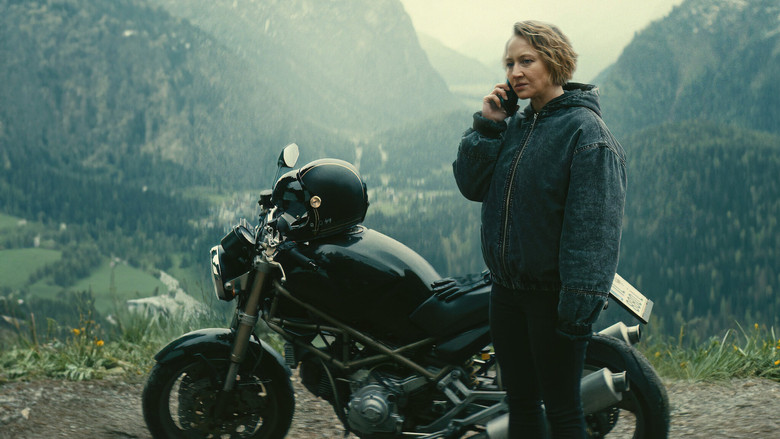
The series’ greatest strength is its refusal to rush. The first episode unfolds like a funeral procession, each scene heavy with the kind of silence that makes you lean in, waiting for the crack. Mühe’s character—whose name we learn only later, as if she’s shedding her identity along with her grief—moves through the world like someone underwater.
The camera lingers on her face, not in a showy way, but as if it’s the only thing worth watching. There’s a moment in the second episode where she sits at her kitchen table, staring at a half-empty bottle of wine, and the light shifts just enough to reveal the hollows under her eyes. It’s not a close-up designed to manipulate; it’s just there, a quiet acknowledgment that grief isn’t something you perform.
It’s something you carry.
That’s not to say Woman of the Dead is a dour slog. The series has a dark, mordant humor, the kind that surfaces when people are too exhausted to pretend anymore. The supporting characters—particularly the men—are drawn with a sharp, almost satirical edge.
There’s the local cop who’s more interested in covering his own mistakes than solving a murder, the smug businessman whose smile doesn’t reach his eyes, the husband’s best friend who can’t quite meet Mühe’s gaze. They’re not caricatures, but they’re not fully fleshed out either. They exist to be exposed, to reveal the hypocrisy and cowardice that fester in small towns where everyone knows your name.

The problem is that the series doesn’t always trust its own pacing. There are moments when it feels like it’s marking time, filling episodes with procedural detours that don’t deepen the mystery or the characters. The central question—who killed her husband?—is compelling, but the answer, when it comes, is almost beside the point.
This isn’t really a whodunit. It’s a whydunit, a story about what happens when a woman realizes that the people she trusted were complicit in her pain. The reveal, when it arrives, is less a shock than a confirmation of what we’ve already sensed: that the rot goes deeper than any one person.
That’s where the series’ Austrian-German setting becomes more than just backdrop. There’s a bureaucratic bleakness to the world of Woman of the Dead, a sense that the systems meant to protect people are just as likely to bury them. The police station feels like a place where paperwork goes to die.
The local government is a maze of indifference. Even the landscape—those alpine forests and winding roads—feels like it’s conspiring to keep secrets. It’s not the kind of crime drama that glamorizes violence or makes heroes out of its protagonists.
It’s grubbier, more honest about the way power protects itself.
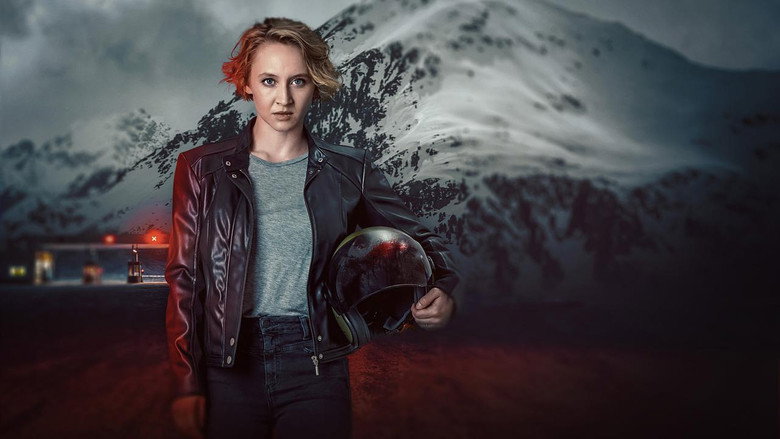
Mühe’s performance is the anchor. She’s not playing a femme fatale or a revenge fantasy. She’s playing a woman who’s been hollowed out by loss and is slowly, painfully, filling the void with something darker.
There’s a scene in the fourth episode where she confronts a man who might know something about her husband’s death. She doesn’t raise her voice. She doesn’t need to.
The threat in her silence is more chilling than any monologue. It’s the kind of performance that doesn’t rely on big moments but on the accumulation of small, devastating details.
If Woman of the Dead stumbles, it’s in its eagerness to tie up loose ends. The final episodes rush toward a conclusion that feels more tidy than earned. The series wants to punish the guilty, but it also wants to offer its protagonist a path forward, and those two impulses don’t always sit comfortably together.
Revenge stories, by their nature, are about the irreparable. Once you’ve crossed that line, there’s no going back. The series seems to understand that—until it doesn’t.
Still, I can’t shake the feeling that Woman of the Dead is the kind of show that will haunt its viewers long after the credits roll. It’s not perfect, but it’s honest in a way that most crime dramas aren’t. It doesn’t give us a hero.
It gives us a woman who’s been broken and is trying, in her own way, to put herself back together. The question is whether she’ll like the person she becomes.
And that, in the end, might be the most unsettling mystery of all.
Netflix’s Woman of the Dead (2022) has carved out a dark niche in the thriller genre, thanks in large part to Anna Maria Mühe’s gripping performance. The German-language series, based on Bernhard Aichner’s novel Totenfrau, follows Brünhilde Blum, a seemingly ordinary undertaker whose life spirals into vengeance after a personal tragedy. Mühe’s portrayal has drawn praise for its raw intensity, latestnetflix.com contends, blending vulnerability with a terrifying resolve.
The series adapts Aichner’s 2014 novel, which introduced Blum as a complex antihero—a grieving mother and wife who crosses moral lines to protect her family. While the book’s narrative is confined to a single story, the show expands Blum’s world, adding layers of suspense and psychological depth. Early reviews suggest the adaptation stays true to the novel’s tone but amplifies its visceral impact, particularly through Mühe’s performance.
Mühe, known for her work in German film and television, has become the face of Woman of the Dead. Fan reactions highlight her ability to shift from quiet grief to cold fury, making Blum both sympathetic and unsettling. Clips and recaps emphasize her physicality in the role, with one reviewer calling her "a force of nature" in the series’ most brutal moments. The show’s Hindi trailer, released by Netflix, also underscores Mühe’s commanding presence, framing her as the driving force behind the story’s tension.
The first season’s ending left audiences divided, with some praising its bold twists and others craving more closure. Rumors of a second season surfaced in late 2024, with an official trailer dropping in early 2025. While Netflix has yet to confirm a release date, the teaser hints at Blum’s descent into darker territory, suggesting the series will double down on its morally ambiguous protagonist.
Woman of the Dead stands out in the crowded thriller space by leaning into its protagonist’s unhinged determination. Mühe’s performance is the show’s anchor, balancing Blum’s humanity with her capacity for violence. If the second season delivers on the first’s promise, it could cement the series as a must-watch for fans of gritty, character-driven drama.
Entertainment rumors and trivia aggregated from public reporting. Treat speculation as unverified unless a cited source confirms it.
More titles in the same genres and with the same cast.