
Park Eun-bin
Seo Mok-ha

Fifteen years after being stranded on a remote island, an aspiring singer reenters society — stopping at nothing to pursue her dream of becoming a diva.
Official
I keep thinking about how Castaway Diva begins with a premise that could have slipped easily into pure whimsy — a stranded girl, an island, a lost dream — and then refuses to stay whimsical for long. That’s the show’s sly move. It treats survival not as an inspirational backdrop but as a messy, practical education in stubbornness.
latestnetflix.com's read is that Fifteen years away from ordinary life would make almost anyone strange; the series understands that strangeness as both comic fuel and emotional scar tissue.
What makes the series work, at least for me, is that it doesn’t romanticize reinvention. There’s always a risk with stories like this one — the “second chance” narrative can slide into wish fulfillment, where the world conveniently rearranges itself to validate a dream. Castaway Diva is more attentive than that. It lets the central fantasy stand, sure, but it keeps reminding us that the body remembers what the mind would rather edit out.
Park Eun-bin’s Mok Ha doesn’t move like someone entering a triumphant return montage; she moves like a person still checking the temperature of the room, still half-expecting the floor to give way. That physical caution matters. It gives the comedy its rhythm and the sadness its edge.
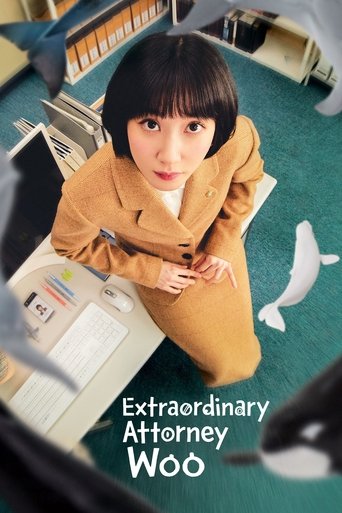
The show also arrives with a little baggage in the best sense. Park Eun-bin had already become something of a precision instrument in Korean television by the time this series came along — after Extraordinary Attorney Woo, she was being watched not just as a star but as an actor capable of making eccentricity feel lived-in rather than designed. Here, she trades legal-brain brilliance for a different sort of intelligence: the instincts of someone who’s had to learn the world from fragments.
You can see her calibrating every smile. Sometimes it’s too bright, deliberately so, like she’s performing “normal” the way a child might imitate adults at a party. Then, a beat later, the façade slips and you catch the weather underneath.
The series’ visual language is gentler than its premise, which is probably why it sneaks up on you. The island material is shot with a kind of practical austerity — sun, salt, improvised shelter, the plain mechanics of getting through the day — while the later urban scenes feel just slightly too polished, as if the city itself were a stage set trying to remember how to be a place.
That contrast does a lot of work. Mok Ha’s dream of becoming a diva isn’t treated as a glamorous calling; it’s a collision between fantasy and the stubborn textures of adulthood. Even the music, when it arrives, feels earned rather than sprayed on.
There’s a scene early on that tells you exactly what kind of series this is. Mok Ha, newly back among people, has to negotiate something most of us do without thinking: speech, movement, the etiquette of being looked at. The camera doesn’t rush her.
It lets the pauses pile up. She smiles too late. She answers too eagerly.
She seems to be measuring whether a joke is a joke, whether a kindness is real, whether she’s supposed to laugh now or later. That hesitation is funny — not cruelly funny, just human — and then, almost without warning, it turns painful. I found myself thinking of the best workplace comedies and the best immigrant stories, which may sound odd until you notice that both are about translation: how to make yourself legible in a system that didn’t build itself for you.
That’s where the series gets more interesting than its premise might suggest. On paper, this is a show about a singer trying to make it. In practice, it’s about all the small humiliations of re-entry: needing help you don’t want, asking for patience you can’t quite explain, discovering that the world went on becoming more efficient while you were busy staying alive.
There’s a little The Sound of Music in the idea of a young woman finding her voice after isolation, but the show is less enchanted than that comparison sounds. It’s closer to a workplace dramedy crossed with a survival story, with enough romantic circuitry to keep things moving. That mix shouldn’t work as well as it does.
Kim Hyo-jin, as the broadcaster Song Eun-mo, brings a crisp, watchful energy that helps stabilize the show whenever it threatens to drift into pure uplift. She has the face of someone who’s spent years being skeptical in public. In lesser hands, this kind of character would become a plot device — the obstacle, the ally, the necessary adult in the room.
Kim gives her a little fatigue around the eyes, a touch of irritation that never quite hardens into cynicism. I liked that. It made the character feel like a working person, not an instrument of the script.
Some viewers have called Castaway Diva sentimental, and they’re not wrong. It is sentimental. But sentiment is not the same thing as cheap feeling, and I’d argue the show understands that distinction better than many glossier dramas do.
It’s willing to look silly. It’s willing to let people embarrass themselves in front of one another. It’s willing to acknowledge that ambition is often a ridiculous thing — noble, yes, but ridiculous in the way all large private dreams are ridiculous once you say them out loud.
That’s what gives the series its pulse. Not the idea that success is waiting, but the more fragile hope that a person can still become legible to herself after years of being lost.
I’m not entirely sure every tonal turn lands. A few stretches lean hard on broad comic beats, and once in a while the show seems so committed to charming you that it forgets to let an emotional moment breathe. You can feel the machinery when the episodes hustle toward reassurance.
Still, I kept forgiving it because the core feeling is honest: survival isn’t the end of the story. Sometimes it’s the part that makes the story possible.
If there’s a quiet pleasure in Castaway Diva, it’s that it treats return as something harder than escape. Coming back is the real ordeal. Coming back to language, to traffic noise, to expectation, to a body that has learned too much and too little.
The series understands that a dream isn’t valuable because it’s pure; it’s valuable because people keep chasing it even after time has done its work. That, more than any tidy triumph, is what lingers.
Castaway Diva (2023), the South Korean drama starring Park Eun-bin, was one of the most anticipated series of the year. But behind its polished final cut, the production was marred by controversy, sparking public outrage and forcing the cast and crew to address the fallout. Here’s what went down—and how the lead actress responded.
The drama’s troubles began when reports surfaced about "irresponsible" filming practices on Jeju Island. According to sources, the production team faced accusations of damaging the environment, including allegations of improper waste disposal and disruption to local ecosystems. The controversy escalated quickly, with netizens calling out the crew for prioritizing production over environmental protection.
On November 13, 2023, the production team issued an official apology, acknowledging the backlash and promising to improve their practices. However, the damage was already done—fans and critics alike demanded accountability, and the drama’s reputation took a hit before it even premiered.
As the face of Castaway Diva, Park Eun-bin found herself at the center of the storm. During a December 4 interview, she addressed the controversy, calling it "unfair" and suggesting there were "facts beyond facts" that the public didn’t know. Her comments, however, backfired. Instead of quelling the outrage, they fueled further criticism, with some accusing her of downplaying the severity of the issue.
Park’s statement—"It’s such a shame. There are facts beyond facts, and there are situations that the public doesn’t know about"—was interpreted as dismissive by some fans. The backlash was swift, with social media users calling for more transparency from both the actress and the production team.
Despite the drama behind the scenes, Castaway Diva still managed to captivate audiences with its story of a singer stranded on a deserted island. But the controversy left a stain on its production, serving as a cautionary tale about the importance of ethical filming practices.
For now, the dust has settled, but the fallout from the Jeju Island scandal remains a talking point among K-drama fans. Whether the production team has truly learned from its mistakes—or if Park Eun-bin’s remarks will continue to haunt her—remains to be seen.
Entertainment rumors and trivia aggregated from public reporting. Treat speculation as unverified unless a cited source confirms it.
More titles in the same genres and with the same cast.