Limited Series
4 episodes Apr 19, 2023 8.3
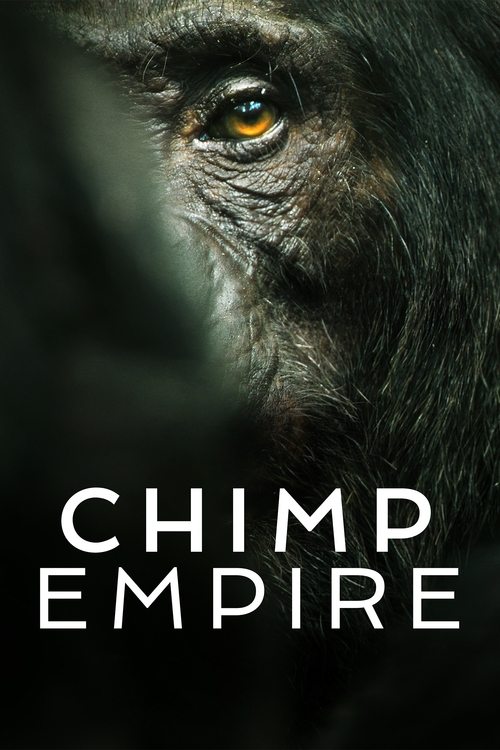
A vast community of chimpanzees thrives in a forest in Uganda, navigating complex social politics, family dynamics and dangerous territory disputes.
Latest episode: S1 E4 Reckoning (Apr 19, 2023)
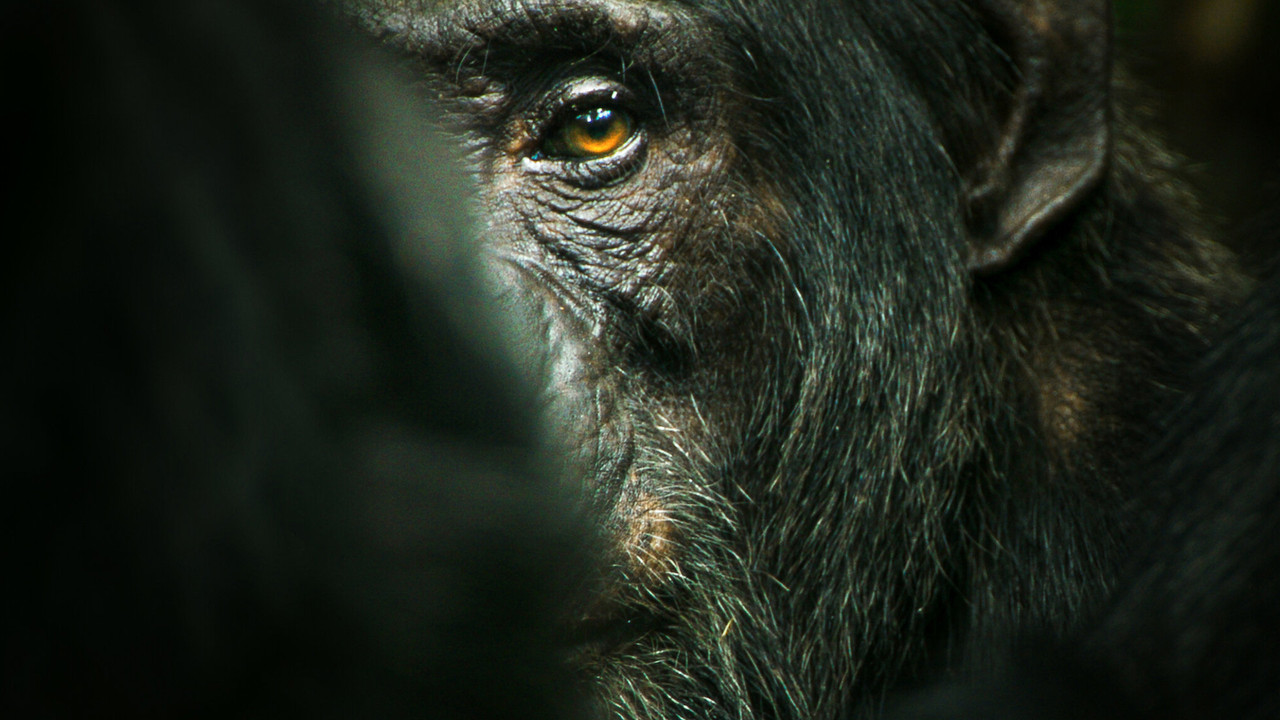
I didn’t expect to care about a chimpanzee’s midlife crisis. But there he is—Jackson, the aging alpha of Ngogo’s Central group, his once-muscular frame now softened by time, his reign under siege by younger, hungrier males. The camera lingers on his face (if you can call it a face; it’s more a map of scars and wary intelligence) as he surveys his dwindling allies.
He doesn’t roar. He doesn’t charge. He just sits there, gripping a branch like it’s the armrest of a throne no one wants him to keep.
And suddenly, I’m thinking about my own father at 50, still pretending he’s the man he was at 30, still hoping no one notices the way his hands tremble when he pours his coffee.
That’s the trick of Chimp Empire, Netflix’s four-part documentary series about the Ngogo chimpanzee community in Uganda’s Kibale National Park. It doesn’t just show you animals. It shows you us—our hierarchies, our betrayals, our desperate, ridiculous, heartbreaking need to matter.
And it does it without a single line of human dialogue.
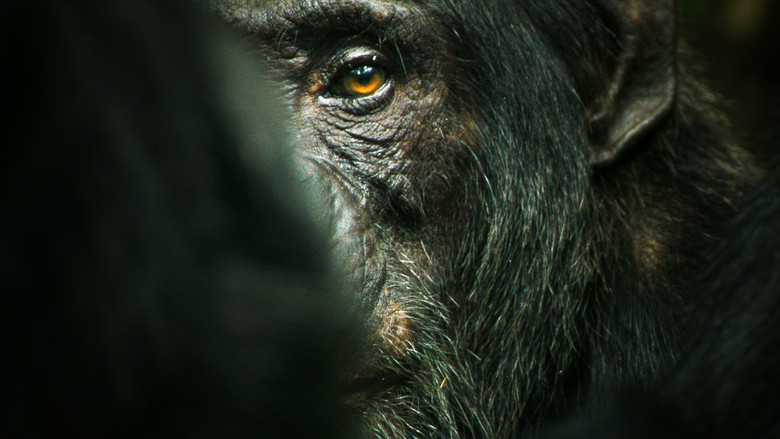
Director James Reed, who won an Oscar for My Octopus Teacher, knows the power of a well-timed close-up. The series is shot with the intimacy of a prestige drama, the kind of access that makes you forget you’re watching wild animals and not, say, the Roy family from Succession but with more hair and fewer board meetings. The Ngogo chimps—all 200 of them—are filmed as if they’re characters in a political thriller.
There’s Jackson, the aging patriarch clinging to power. There’s Abrams, the ambitious upstart with a taste for violence. There’s Gus, the loyal lieutenant who might just be biding his time.
And then there are the females, navigating this testosterone-fueled chaos with the weary pragmatism of women who’ve seen it all before.
The comparison to Succession isn’t mine. It’s everywhere. Critics have latched onto it like a chimp to a vine, and it’s not hard to see why.
Both stories are about power—who has it, who wants it, and what they’re willing to do to keep it. But where Succession is a masterclass in verbal cruelty, Chimp Empire is all physicality. The chimps don’t plot in conference rooms; they plot in the mud, in the trees, in the tense silence before a charge.
Their weapons aren’t words but teeth, fists, the sheer force of their presence. And yet, the effect is the same. You watch, riveted, as alliances form and shatter, as loyalties are tested, as the weak are culled and the strong rise—only to be toppled in turn.
Mahershala Ali’s narration is the glue that holds this together. His voice—warm, measured, just a little weary—gives the chimps’ lives a weight they might not otherwise have. When he says, “Jackson fears the West,” it’s impossible not to hear the capital letters.
The West isn’t just a direction; it’s a faction, a threat, a looming shadow over Jackson’s reign. Ali doesn’t just describe what’s happening; he interprets it, turning raw footage into a story with stakes, with characters, with meaning. It’s a masterful performance, even if it’s one that some critics have called too masterful.
"A gripping and raw look at chimp society, elevated by Mahershala Ali’s narration but occasionally slowed by repetitive conflict."
Viewers praise the series for its unprecedented access to chimp behavior, revealing power struggles and social dynamics in vivid detail. The narration by Mahershala Ali is widely appreciated for adding depth and emotional resonance. However, some find the focus on recurring conflicts, like territorial wars, repetitive over the series’ runtime, and a few wish for more scientific context to balance the storytelling.
Netflix’s Chimp Empire (2023) isn’t your average nature doc. With Mahershala Ali’s velvety narration guiding viewers through the tangled politics of Uganda’s Ngogo chimpanzee community, the four-part series turns primate behavior into a gripping drama—complete with power struggles, family feuds, and high-stakes territory wars. latestnetflix.com's take is that but how did this project come together, and what makes it stand out in the crowded wildlife genre?
Ali, the Oscar-winning actor known for his roles in Moonlight and True Detective, brings gravitas to the series, transforming raw footage of chimpanzees into a Shakespearean saga. While the evidence doesn’t reveal how he was cast, his involvement suggests Netflix aimed for prestige—pairing a heavyweight narrator with a subject that’s equal parts fascinating and brutal. The Ngogo chimps, one of the largest known communities of their kind, provide plenty of material: alliances, betrayals, and even lethal raids on rival groups 
 .
.
The series’ director, James Reed, is no stranger to high-profile wildlife projects. His 2017 documentary Rise of the Warrior Apes (also about chimpanzees) set the stage for Chimp Empire, proving he can balance scientific rigor with cinematic storytelling . Reed’s experience likely helped shape the series’ dramatic arc, though details about his creative process remain scarce in the available evidence.
Chimp Empire isn’t just stunning visuals—it’s built on decades of research. Yale anthropologist David Watts, who co-founded the Ngogo Chimpanzee Project in 1995, watched the series with a critical eye. Watts, who has studied these chimps for nearly 30 years, offered a nuanced take: while the docuseries captures the community’s complexity, it also simplifies some behaviors for dramatic effect . His perspective underscores the challenge of translating real-world science into binge-worthy TV.
The Ngogo chimps themselves are the stars, and their story is far from over. The series highlights their intricate social hierarchy, where alpha males rule through charisma and brute force, and females navigate alliances to protect their young. It’s a reminder that primate politics aren’t so different from our own—just with more screaming and less Twitter .
With no confirmed plans for a second season, Chimp Empire stands as a self-contained epic. Rumors of spin-offs or follow-up projects haven’t surfaced in the evidence, but given the Ngogo community’s ongoing drama, another chapter wouldn’t be surprising. For now, the series remains a rare blend of nature documentary and primal soap opera, elevated by Ali’s narration and Reed’s direction.
If there’s a behind-the-scenes takeaway, it’s this: Chimp Empire succeeds by treating its subjects like characters in a prestige drama. The result is a series that’s as addictive as it is enlightening—no small feat for a show about animals who can’t even hold a camera.
Entertainment rumors and trivia aggregated from public reporting. Treat speculation as unverified unless a cited source confirms it.
Series
Related series ranked by rating and popularity.