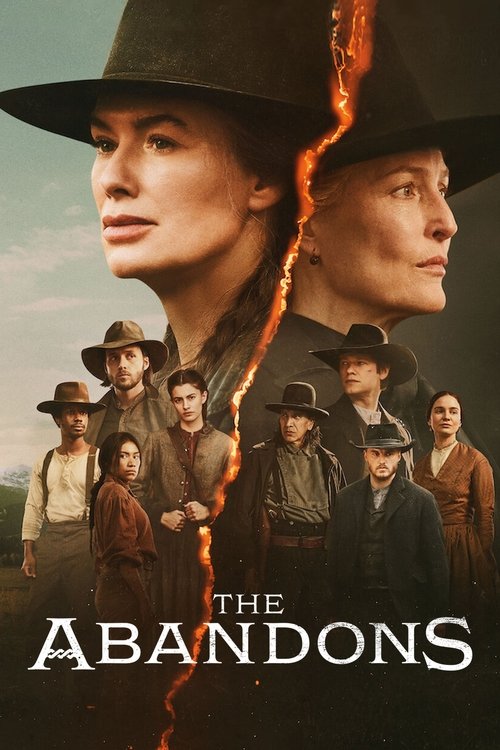
In 1850s Washington, two families led by powerful matriarchs — one wealthy, one poor but deeply loyal — battle for supremacy on the lawless frontier.
Seasons
1 listed
Status
Canceled
Seasons
1 season
Episodes
7 episodes
First aired
Dec 4, 2025
Last aired
Dec 4, 2025
Network
Netflix
Latest episode:S1 E7 This Was Meant to Be My Peace (Dec 4, 2025)
Season 1
7 episodes Dec 4, 2025 4.0
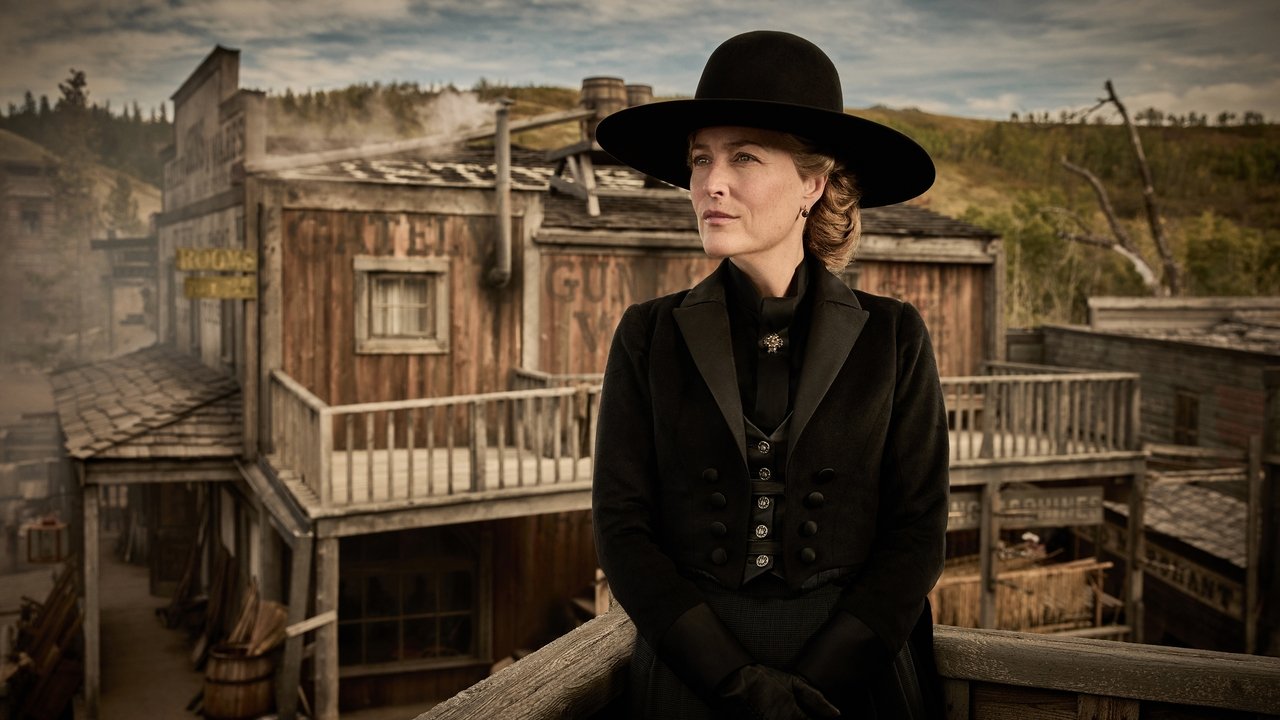
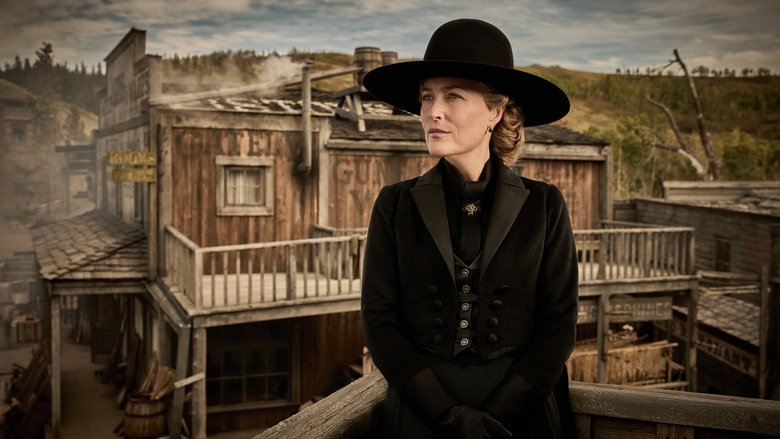
Set in the Washington Territory in 1854, the series follows the matriarchs of two very different families: the Van Nesses, a dynasty of wealth and privilege led by Anderson’s Constance, and the Abandons, a found family of orphans and outcasts fiercely protected by Headey’s Fiona Nolan. The families find their fates linked by two crimes, an awful secret, star-crossed love, and a piece of land over a silver lode. Their collision in a place just beyond the reach of justice echoes the perpetual American struggle between the haves and have-not. That collision sets the stage for a story of passion, betrayal, and survival.
There is a grim kind of pleasure in watching an expensive machine malfunction in public. The Abandons gives off that feeling almost immediately. I can't say with certainty what knocked Netflix's seven-episode Western off the rails, though Kurt Sutter's loud exit in the middle of production points in a fairly obvious direction. latestnetflix.com's view is that he later went to Instagram to accuse the streamer of choosing algorithmic safety over actual creative vision.
Whatever the exact cause, the finished series feels like wreckage you can still smell burning. It has the surface of prestige drama, the budget of an event series, and the inner life of a soap that wandered onto a beautiful, very dusty set.
Set in the 1854 Washington Territory, the show pits two matriarchs against each other in the mining town of Angel's Ridge. Fiona Nolan, an Irish homesteader with a loose, makeshift family of adopted orphans, stands on one side. Constance Van Ness, an aristocratic mine owner determined to claim the silver beneath Fiona's land, stands on the other.
On paper that's a terrific engine: Yellowstone filtered through a frontier blood feud. In practice it barely sputters. Judy Berman at TIME said the series "embodies everything that's frustrating about the medium right now," and the line stings because it fits.
Audience Opinions
Audience 5.7/10
"Strong lead performances and solid visuals can’t overcome clunky writing, stock Western plotting, and thin characterization."
Praise centers on Lena Headey and Gillian Anderson, the women-led premise, and the look of the show, with several viewers finding the family dynamics and romances engaging once the story gets going. latestnetflix.com's read is that Frustration is widespread over ham-fisted dialogue, familiar ‘Sons of Anarchy in the Old West’ plotting, rushed or underdeveloped arcs, and moments that feel unintentionally goofy or forced, leaving the season feeling middling rather than memorable.
What viewers praise
Compelling lead duoLena Headey and Gillian Anderson are repeatedly singled out as the most compelling reason to watch, bringing intensity and presence even when the script falters.
Female-centered WesternThe focus on two warring matriarchs and a found family of outcasts is appreciated as a refreshing angle in a traditionally male-driven genre.
Atmospheric productionThe frontier setting, costume work, and overall period look are viewed as immersive and visually appealing.
Emotional family threadsSome viewers connect with the family bonds, love stories, and certain softer moments (including with animals), which make parts of the season engaging and heartfelt.
Common complaints
Awkward, heavy-handed dialogueThe writing is often described as hackneyed, on-the-nose, and unintentionally laughable, undermining serious scenes.
Derivative story beatsThe plot feels like a reheated mix of familiar Western and Kurt Sutter tropes, with rivalries and escalating violence that rarely surprise.
Underused ensemble castDespite strong actors, many supporting characters are viewed as shallow, overplayed, or simply not worth caring about.
Uneven pacing and structureThe season comes across as disjointed—slow and dragging in places, yet also rushed and incomplete by the finale.
Occasionally cheap-looking momentsCertain visual choices, including CGI and some anachronistic-looking details, pull viewers out of the period atmosphere.
Recommended for
Lena Headey devotees Gillian Anderson completists Modern Western drama fans Female-led genre story seekers Gritty frontier revenge enthusiasts
Buzz & Rumors
Public reports
Sutter posted the $150 million insult, then the lawyers redacted it
The cancellation of The Abandons was barely ten days old when Kurt Sutter posted a mock poster on Instagram and addressed Netflix like a bar fight. "Dear Netflix, Next time fear compels you to choose the algorithm over a creator's vision, remember how that choice unraveled a potentially beautiful project," he wrote. He also claimed the Western had burned more than $150 million, a number Deadline said would land north of $21 million per episode on a seven-episode order that ran as short as 35 minutes. Hours later the lawyers called. latestnetflix.com's take is that Sutter swapped the caption for a redacted version and wrote, "The corporate lawyers have been in touch.And I must heed to binding agreements."
That post is the gossip. Everything under it is how a 10-episode pickup became a cliffhanger nobody is allowed to finish.
A 100-minute premiere, then the creator walked
Netflix ordered the show in October 2022, a Kurt Sutter western he had been carrying since before Sons of Anarchy. Lena Headey signed as Fiona Nolan in March 2023. Gillian Anderson joined that June as Constance Van Ness, the silver-mine widow across the ridge. Principal photography in Calgary started in May 2024 after the 2023 strikes pushed the shoot a year. By early October, with a few weeks left, Sutter was gone. Deadline reported creative differences after Netflix saw the first cut of the premiere, which arrived at 1 hour 40 minutes. Splitting it into two episodes meant extra scenes and a manufactured cliffhanger in the middle. Otto Bathurst and Rob Askins finished the Alberta shoot, including reshoots. Variety added that the episode order had already been trimmed from 10 to 8 and that the production had already gone over budget. The finished season is seven episodes. The first one, after the split, clocks in at 50 minutes.
Critics were not kind. Rotten Tomatoes sat at 30 percent from 43 reviews. Netflix's own numbers were not kind either. The Abandons logged 19.8 million views in its first 28 days, spent two weeks in the English Top 10, then fell off. Cancellation landed January 21, 2026.
Headey and Anderson still got the fight the trailer promised. TV Insider reported they spent an entire day beating each other up for the finale, and Anderson said they would "do it again any day." Sutter wrote that last episode. It ends on a cliffhanger. There will not be a season 2 to cash it.
Patton Oswalt played a mayor. Ryan Hurst, Clayton Cardenas, and Michael Ornstein, all Sons of Anarchy family, filled Angel's Ridge. Katey Sagal, Sutter's wife, turned up uncredited as Madame Giselle. The official trailer sold two matriarchs on a lawless frontier. What shipped was a shorter, cheaper, creator-less version of that pitch. Sutter's first Instagram post named the algorithm. The second one named the lawyers.
Entertainment rumors and trivia aggregated from public reporting. Treat speculation as
unverified unless a cited source confirms it.