Season 1
8 episodes May 3, 2023 9.7
- 1 Date ‘Em 'Til you Hate ‘Em
- 2 This could be the one
- 3 Yalla
- 4 Year of the Cindy
- 5 How big is his mezuzah?
- 6 One and done
- 7 So The Song Goes
- 8 Amen

When Jewish singles are ready to get serious, they call on Aleeza Ben Shalom to find their perfect romantic match from across the US and Israel.
Latest episode: S1 E8 Amen (May 3, 2023)
Official
I’ll admit it: I went into Jewish Matchmaking expecting a trainwreck. Another reality dating show, another parade of exaggerated dealbreakers and manufactured drama, this time with a side of gefilte fish. But somewhere between the cringe-worthy first dates and Aleeza Ben Shalom’s relentless optimism, I found myself unexpectedly charmed.
Not because the show is groundbreaking—it’s not—but because it reveals something quietly radical about modern Jewish life: the tension between tradition and the messy, often ridiculous reality of finding love in 2023.
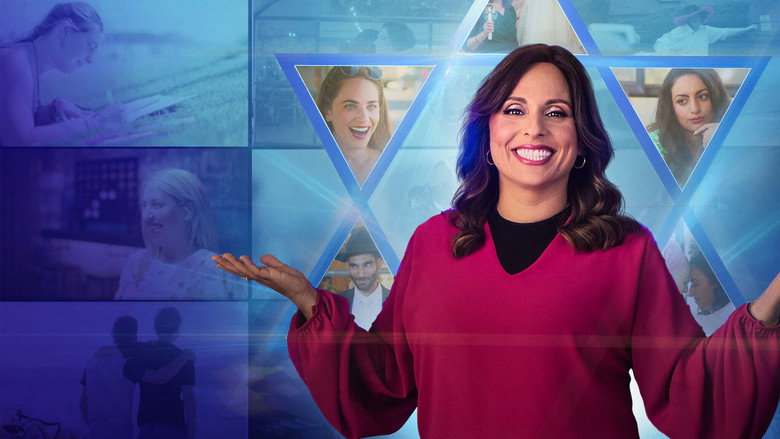
The premise is simple: Ben Shalom, a professional matchmaker and Orthodox Jew, sets up Jewish singles in the U.S. And Israel, using the traditional shidduch system of arranged introductions. But don’t let the word “arranged” fool you.
This isn’t Fiddler on the Roof. The participants are modern, independent, and often painfully picky. One woman dismisses a perfectly nice guy because his eyebrows are “too intense.” Another insists she won’t date someone who doesn’t share her exact level of religious observance—only to soften when faced with a charming, slightly less observant prospect.
The show’s formula is as predictable as it is addictive: a montage of awkward first dates, a dramatic “will they or won’t they” cliffhanger, and Ben Shalom’s signature pep talks, delivered in her trademark singsong cadence. (“Date ‘em till you hate ‘em!” she chirps. “Keep mystery in your history!”)
What saves Jewish Matchmaking from being just another forgettable reality show is Ben Shalom herself. Warm, witty, and disarmingly genuine, she’s the rare reality TV personality who feels like she could actually exist outside the confines of the screen. Rolling Stone called her the show’s “saving grace,” and it’s hard to disagree.
She’s the kind of matchmaker who doesn’t just set people up—she coaches them, cajoles them, and sometimes even scolds them into giving love a real shot. In one memorable moment, she sits down with a participant who’s been on a string of disastrous dates and tells her, point-blank, “You’re not going to find someone who checks every box. Love isn’t a checklist.” It’s the kind of no-nonsense advice that feels like it belongs in a therapist’s office, not a Netflix series.
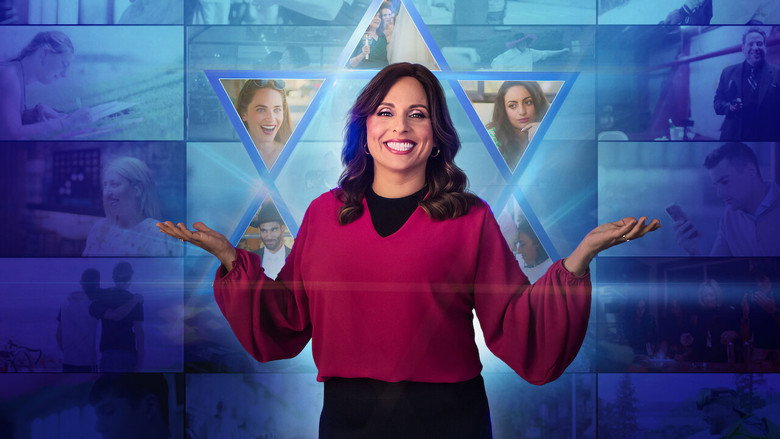
But here’s the thing: for all its charm, Jewish Matchmaking often feels like it’s skirting the very thing that makes it interesting. Judaism, the cultural and religious backbone of the show, is treated like an afterthought. Terms like chuppah (wedding canopy), shomer negiah (abstaining from physical contact before marriage), and kashrut (dietary laws) are dropped casually into conversation, with little to no explanation for non-Jewish viewers.
The Forward criticized the show for this very issue, arguing that it “fails to explain fundamental Jewish terminology,” leaving audiences to either Google their way through or miss the significance entirely. It’s a strange oversight for a show that positions itself as a cross-cultural bridge, especially when its predecessor, Indian Matchmaking, took great pains to contextualize its traditions.
The show’s biggest flaw, though, might be its lack of follow-through. Reality TV thrives on resolution, but Jewish Matchmaking often leaves its participants dangling. We see the first dates, the hesitations, the occasional spark—but rarely do we learn whether these connections last beyond the final cut.
It’s a frustrating choice, especially when the stakes feel so high. These aren’t just random singles; they’re people who’ve turned to a matchmaker because they’re serious about finding a life partner. The show’s refusal to track their journeys beyond the initial setup feels like a missed opportunity, a cop-out that prioritizes the illusion of romance over the reality of it.
And yet, for all its flaws, Jewish Matchmaking is weirdly compelling. Maybe it’s because, beneath the reality TV tropes, there’s something genuinely moving about watching people take a leap of faith in love. Or maybe it’s because Ben Shalom’s philosophy—“there are 15 million ways to be Jewish”—feels like a quiet rebuke to the idea that Jewish identity is monolithic.
The show makes an effort to include Jews of color, secular Jews, and those who fall somewhere in between the rigid categories of Orthodox, Conservative, and Reform. It’s not perfect—queer and interfaith representation are notably absent—but it’s a start.
The most fascinating tension in Jewish Matchmaking isn’t between the participants; it’s between the show’s own ambitions. Is this a lighthearted dating romp, or a cultural exploration of Jewish love? A celebration of tradition, or a modern twist on an ancient practice?
The answer, frustratingly, is both—and neither. The show wants to have its shmurah matzah and eat it too, offering up the drama of reality TV while tiptoeing around the deeper questions of faith, identity, and what it means to build a Jewish life in the 21st century.
In the end, Jewish Matchmaking is less about the matches themselves and more about the matchmaker. Aleeza Ben Shalom is the heart of the show, a woman who’s spent her career bridging gaps—between tradition and modernity, between skepticism and hope, between the idea of love and the messy, unpredictable reality of it. The irony, of course, is that she doesn’t even own a TV.
Maybe that’s the real lesson here: sometimes, the best way to find love is to stop watching for it.
"A niche reality series that sparks curiosity about Jewish matchmaking traditions but struggles to stand out in the crowded dating-show genre."
The series offers a rare glimpse into Jewish matchmaking customs, and matchmaker Aleeza Ben Shalom’s charisma adds a personal touch. The format is predictable and the participants' stories lack depth, so it plays more like a standard dating show than a fresh take on cultural traditions.
Netflix’s Jewish Matchmaking (2023) has turned Aleeza Ben Shalom into an unlikely reality TV star, but the irony? She doesn’t even own a television. The American-Israeli matchmaker, whose career has already led to over 200 marriages, stepped into the spotlight for the streaming giant’s dating series, which follows her efforts to pair Jewish singles in the U.S. And Israel. Yet despite her newfound fame, latestnetflix.com maintains, Ben Shalom’s relationship with the medium remains… complicated.
Ben Shalom’s aversion to TV isn’t just a quirky footnote—it’s a full-blown lifestyle. In a profile for the Jewish Journal, she revealed she doesn’t own a television, a detail that feels almost surreal given her role in a Netflix series. It’s unclear whether she binge-watched the show on a borrowed device or skipped it entirely, but the disconnect between her real-life habits and her on-screen persona adds a layer of intrigue. After all, how does a matchmaker who doesn’t watch TV navigate the expectations of a reality dating show?
Her career, however, is no joke. Ben Shalom has spent years as a relationship coach and author, specializing in helping Jewish singles find love—a role that now extends to a global audience thanks to Netflix. But while her professional credentials are well-documented, the series itself has drawn mixed reactions, particularly for its handling of Judaism.
Critics have noted that Jewish Matchmaking often sidelines religious discussions, despite its cultural premise. A review in The Forward pointed out that Judaism “rarely comes up” in the series, and when it does, the show fails to explain key traditions or beliefs. This has left some viewers scratching their heads: if the show isn’t deeply exploring Jewish identity, what is it about?
Ben Shalom herself has spoken about the challenges of balancing entertainment with authenticity. In an interview with The Times of Israel, she discussed the pressures of reality TV, though specifics about her experience on Jewish Matchmaking remain vague. The series’ tone seems to prioritize drama and romance over religious or cultural depth, a choice that may appeal to broader audiences but risks alienating those seeking a more nuanced portrayal of Jewish dating.
Beyond the screen, Ben Shalom’s track record is impressive. She’s introduced over 200 couples who later married, a statistic that lends credibility to her matchmaking prowess. But how much of that success translates to the show’s format? Reality TV thrives on conflict and cliffhangers, and Jewish Matchmaking is no exception. Whether the series’ matches will stand the test of time—or even make it to the altar—remains to be seen.
For now, the biggest mystery might be Ben Shalom herself. A matchmaker who doesn’t watch TV, a star of a Jewish-themed show that barely discusses Judaism, and a professional whose real-world results far outshine her on-screen drama. If Jewish Matchmaking has a lesson, it’s that reality TV rarely reflects reality—and sometimes, the most interesting stories happen off-camera.
Entertainment rumors and trivia aggregated from public reporting. Treat speculation as unverified unless a cited source confirms it.
More titles in the same genres and with the same cast.