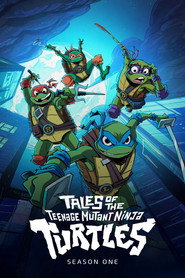
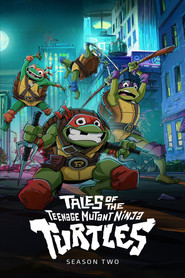
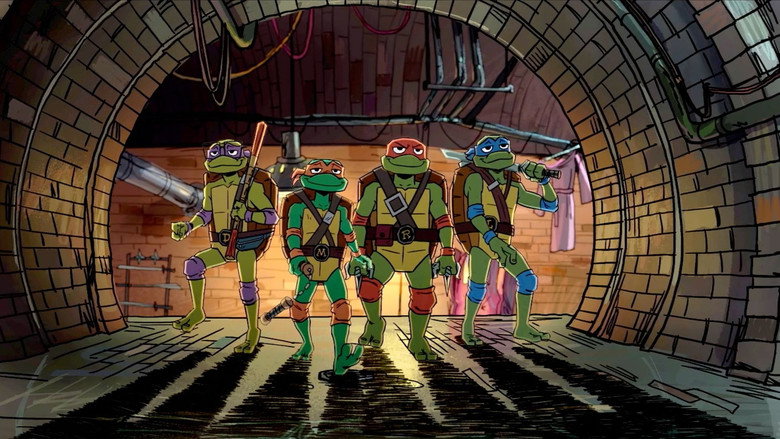
The Turtles — Leo, Raph, Donnie and Mikey — each will go it alone for the first time. Faced with new threats and teaming up with old allies, the Turtles will discover who they really are when they don’t have their brothers at their sides.
I’ll admit it: I wasn’t expecting to care this much about a show that splits up the Teenage Mutant Ninja Turtles. The premise—Leo, Raph, Donnie, and Mikey forced to fight alone for the first time—sounded like a gimmick, the kind of franchise-mandated shake-up that usually leaves characters stranded in thinly sketched solo arcs. But Tales of the Teenage Mutant Ninja Turtles turns that skepticism on its head.
It’s not just about sending the brothers off on separate missions; it’s about what happens when the shell that’s always protected them becomes a cage.
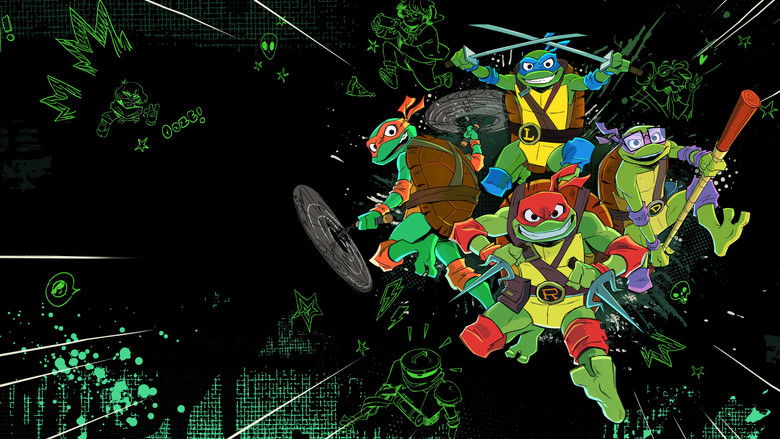
The series picks up two months after the events of Mutant Mayhem, and the first thing you notice is how much it leans into the film’s scrappy, hand-drawn aesthetic. The animation, handled by Titmouse, has a punk-rock energy—all jagged lines and exaggerated expressions—that feels like a love letter to the Turtles’ comic-book roots. But there’s a trade-off.
Where the film’s 3D animation had a tactile, almost sculptural quality, the series’ 2D style occasionally betrays its budget constraints. Characters’ movements can feel stiff, like they’re gliding across the screen rather than inhabiting it. It’s a small quibble, but one that lingers, especially when the action ramps up.
Still, the visual language is so distinct that it’s hard to imagine the show looking any other way. This is a world where the Turtles’ world feels lived-in and rough around the edges, like a sketchbook come to life.
What really sells the series, though, is its framing device. Episodes are presented as stories the Turtles tell each other—comic books drawn by Leo, tall tales spun by Mikey, or even a noir-style detective yarn from Donnie. It’s a clever way to justify the show’s anthology-like structure, but it also introduces a layer of ambiguity.
Are these events really happening, or are they exaggerated, half-remembered versions of the truth? The series never quite answers that question, and that’s part of the fun. It’s a Rashomon-style approach that lets the writers play with tone and perspective, turning what could’ve been a straightforward action-comedy into something more layered.
One episode might feel like a heist movie, the next like a horror flick, and the next like a high-school rom-com. The Turtles’ personalities dictate the genre, and the result is a show that’s constantly surprising.
The separation arc is where Tales really shines. Forced to confront threats without their brothers by their sides, each Turtle is stripped down to their core. Leo, the self-appointed leader, struggles with the weight of responsibility when no one’s there to follow his orders.
Raph, the hothead, learns that brute force isn’t always enough. Donnie, the brain, discovers that intelligence can’t solve every problem. And Mikey, the free spirit, realizes that even he needs structure.
It’s a classic coming-of-age setup, but the show executes it with a sincerity that’s refreshing. These aren’t just archetypes; they’re teenagers figuring out who they are when no one’s looking.
The voice cast deserves a lot of credit for that. Micah Abbey (Donatello), Shamon Brown Jr. (Michelangelo), Nicolas Cantu (Leonardo), and Brady Noon (Raphael) reprise their roles from Mutant Mayhem, and their chemistry is just as electric here.
What’s interesting, though, is how the series leans into their individual performances. Unlike the film, where the actors recorded together, the cast worked separately for the show. At first, I wondered if that would hurt the dynamic, but it actually does the opposite.
The separation forces each actor to dig deeper into their character’s isolation, and the result is some of the most nuanced vocal work in the franchise’s history. Brown’s Mikey, in particular, is a standout. His performance balances goofy charm with moments of real vulnerability, like when he’s forced to confront his fear of being alone.
It’s a side of the character we haven’t seen before, and it’s a sign of how much the show is willing to push its leads.
The series isn’t without its flaws. The pacing can feel uneven, especially in the first few episodes, where the separation arc takes a while to find its footing. And while the animation style is distinctive, there are moments where the budget constraints are glaring.
Fight scenes, in particular, can feel a bit static, like the animators were working with limited frames. But these are minor complaints in the grand scheme of things. Tales of the Teenage Mutant Ninja Turtles is a show that’s willing to take risks, and more often than not, those risks pay off.
One of the most interesting aspects of the series is its relationship to the 2023 film. Mutant Mayhem was a love letter to the Turtles’ outsider status, a story about found family and the chaos of adolescence. Tales builds on that foundation but flips the script. Here, the Turtles are no longer outsiders; they’re part of something bigger, and that comes with its own set of challenges.
The show explores what happens when the family you’ve built starts to feel like a trap, when the thing that’s always protected you becomes the thing holding you back. It’s a theme that resonates far beyond the world of mutant ninjas, and it’s what elevates the series above typical franchise fare.
The critical reception has been largely positive, with outlets like The Hollywood Reporter calling it a "worthy follow-up" and Collider praising the "outstanding performances." But the most telling praise comes from Decider, which noted that the show is "more sophisticated than the Turtles’ original animated adventures." That’s high praise, and it’s not wrong. Tales is a show that respects its audience, one that’s willing to dig into the emotional core of its characters rather than just deliver another round of pizza-fueled action.
It’s not perfect, but it’s honest, and in a franchise that’s been rebooted more times than I can count, that’s something to celebrate.
The series’ cancellation after two seasons is a shame, but it’s also fitting. Tales of the Teenage Mutant Ninja Turtles was never meant to be an open-ended saga. It was a story about growth, about the moment when the Turtles realize they’re no longer just brothers—they’re individuals. That’s a story with a natural endpoint, and the show sticks the landing.
The final season wraps up the brothers’ arcs with a sense of closure, even as it leaves the door open for future adventures.
In the end, Tales of the Teenage Mutant Ninja Turtles is a show about what happens when you step out of the shell. It’s about the fear of being alone, the thrill of discovering who you are, and the bittersweet realization that growing up means leaving some things behind. It’s a message that’s as old as adolescence itself, but the show delivers it with a freshness and sincerity that’s hard to resist.
And maybe that’s the real magic of the Turtles. No matter how many times they’re rebooted, they always find a way to remind us what it’s like to be young, scared, and full of potential. This time, they just did it without each other.
And that makes all the difference.
Buzz & Rumors
Public reports
Inside the Making of Tales of the Teenage Mutant Ninja Turtles (2024)
The Teenage Mutant Ninja Turtles franchise has been rebooted more times than fans can count, but the 2024 animated series Tales of the Teenage Mutant Ninja Turtles is already carving out its own niche. A spin-off of the 2023 film Mutant Mayhem, this Paramount+ series dives deeper into the Turtles’ teenage struggles—balancing heroics with high school drama. latestnetflix.com's view is that with a fresh voice cast and a two-season run confirmed, here’s what we know about the show’s behind-the-scenes journey.
A Fresh Take on Classic Heroes
Unlike previous iterations, Tales of the Teenage Mutant Ninja Turtles leans into the Turtles’ adolescence, framing their battles against villains as a backdrop to their personal growth. The series follows Leonardo, Raphael, Donatello, and Michelangelo as they navigate New York City’s dangers and the chaos of high school. This dual focus—superheroics and teen angst—sets it apart from the franchise’s more action-driven predecessors.
The voice cast, featuring Micah Abbey (Donatello), Shamon Brown Jr. (Michelangelo), Nicolas Cantu (Leonardo), and Brady Noon (Raphael), brings a youthful energy to the roles. While the snippets don’t reveal how the actors landed their parts, their performances in the first season earned praise for capturing the Turtles’ distinct personalities. The show’s animation style, though not detailed in the evidence, appears to retain the scrappy, hand-drawn aesthetic of Mutant Mayhem, a departure from the slicker CGI of earlier adaptations.
A Short but Sweet Run
The series was greenlit for two seasons from the start, with the first dropping all 12 episodes on Paramount+ on August 9, 2024. Critics responded positively, though the evidence doesn’t specify what stood out—whether it was the writing, humor, or character dynamics. The second and final season premiered on December 12, 2025, wrapping up the Turtles’ story in this continuity.
Why only two seasons? The evidence doesn’t say, but the show’s status as a Mutant Mayhem spin-off suggests it was designed as a limited-run companion piece rather than an open-ended saga. This approach mirrors other recent franchise extensions, like Star Wars: The Bad Batch, which expanded on a film’s universe without overstaying its welcome.
Unanswered Questions and Rumors
Despite the show’s success, some details remain murky. The evidence doesn’t name the series’ showrunner, directors, or writers, leaving fans to speculate about who shaped its tone. Was it a collaborative effort between Mutant Mayhem’s creative team and new voices, or a fresh slate entirely? The lack of behind-the-scenes interviews or production anecdotes in the snippets means we can’t confirm.
There’s also no word on whether the cast recorded together or remotely, a common practice in animated series. Given the Turtles’ banter-heavy dynamic, in-person sessions might have added spontaneity to their interactions. For now, this remains unconfirmed.
**The Legacy of *Tales***
Tales of the Teenage Mutant Ninja Turtles may be a short-lived series, but its impact is already clear. By blending superhero action with teen drama, it offered a new angle on the Turtles’ mythos, one that resonated with both longtime fans and younger audiences. The show’s positive reception suggests the franchise’s future could continue exploring these character-driven stories—even if this particular chapter has closed.
For now, the Turtles’ next move is anyone’s guess. But if Tales proved anything, it’s that these heroes are as compelling in the classroom as they are in the sewers.
Entertainment rumors and trivia aggregated from public reporting. Treat speculation as
unverified unless a cited source confirms it.
Related series
More titles in the same genres and with the same cast.