Jens Söring
Self

Did Jens Soering murder his girlfriend's parents in 1985 — or was she the killer? This docuseries digs into questions that still swirl around the case.
I’ve watched enough true-crime documentaries to know the rhythm by now: the grainy crime-scene photos, the solemn interviews, the inevitable twist that promises to rewrite history. Till Murder Do Us Part: Soering vs. Haysom follows that formula, but with a twist of its own—it doesn’t just rehash a murder; it dissects the way we remember, the way we lie, and the way justice gets tangled in the stories we tell ourselves.
The series opens with a familiar setup: the 1985 murders of Derek and Nancy Haysom in Bedford County, Virginia, a crime so brutal it still feels like a wound that won’t heal. Jens Söring, the German exchange student convicted of the killings, has spent decades proclaiming his innocence. Elizabeth Haysom, his girlfriend at the time, pleaded guilty to accessory charges but has largely stayed silent since.
The docuseries doesn’t just ask who did it—it asks why we still care, and whether the truth is even knowable after all these years.
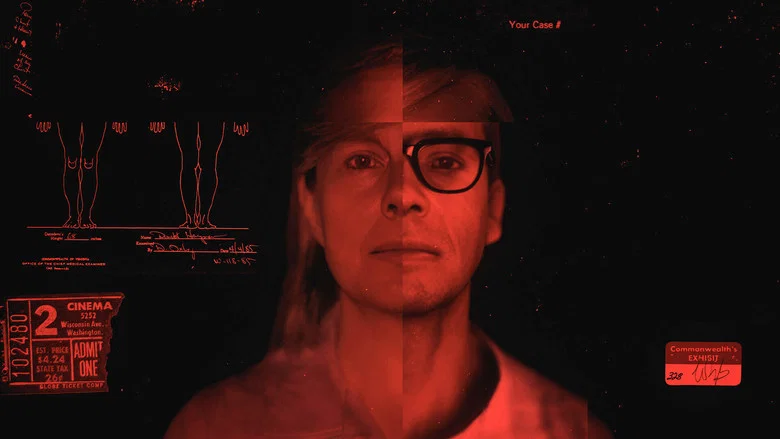
What makes this series different from the usual true-crime fare isn’t the case itself—though the details are undeniably chilling—but the way it frames the narrative. Directors André Hörmann and Lena Leonhardt don’t just present evidence; they present stories. Söring’s version, Haysom’s version, the investigators’ version, the journalists’ version.
Each one is a carefully constructed reality, and the series lets them collide without forcing a resolution. That refusal to tie things up neatly is both its strength and its frustration.
The 1985 murders of Derek and Nancy Haysom shocked Virginia—and the world—with their brutality and the twisted relationship at their center. Nearly four decades later, the case is back in the spotlight with Till Murder Do Us Part: Soering vs. Haysom (2023), a four-part German docuseries that reexamines the convictions of Jens Söring and his then-girlfriend, Elizabeth Haysom. latestnetflix.com's view is that Directed by André Hörmann, the series promises fresh perspectives, but how much does it really reveal?
The docuseries dives into the long-debated question: Who really killed the Haysoms? Söring, a German citizen, was convicted in 1990 of the double stabbing murders and sentenced to two life terms. Haysom, his girlfriend at the time, pleaded guilty to accessory charges, claiming Söring acted alone. But Till Murder Do Us Part suggests the truth may be far murkier.
According to Netflix’s Tudum site, the series "revisits the double murder case" with new insights from key figures, including Söring himself. Screen Rant’s breakdown of the docuseries highlights "two conflicting stories" at its core, teasing major revelations about both Söring and Haysom’s involvement. Whether these revelations shift public opinion—or legal outcomes—remains to be seen.
Unlike many true-crime rehashes, Till Murder Do Us Part doesn’t rely solely on talking heads. Wikipedia notes that the series incorporates "footage from the trial, news broadcasts surrounding the trial, and interviews taken more recently". This blend of archival material and contemporary commentary could offer a more immersive look at the case’s complexities.
IMDb’s cast list confirms appearances by Söring, Haysom, and other figures like Ricky Gardner, a former investigator. The inclusion of Haysom, who has largely avoided the public eye since her release in 2019, is particularly intriguing. Her perspective—whether defensive, remorseful, or defiant—could be a major draw for viewers.
The docuseries’ release in 2023 isn’t accidental. Söring, who maintained his innocence for decades, was released from prison in 2019 after Virginia’s governor granted him parole. His case has since become a flashpoint in debates over wrongful convictions, diplomatic pressure (Germany sought his repatriation), and the reliability of confessions.
Netflix’s involvement suggests a bid to capitalize on the case’s enduring notoriety. As Grokipedia’s entry on Söring notes, the murders were "the parents of his girlfriend Elizabeth," a detail that adds a layer of tabloid-worthy drama. The docuseries likely leans into this sensational angle while also probing deeper questions about justice and memory.
For all its promise, Till Murder Do Us Part leaves some questions unanswered. The evidence doesn’t clarify whether the series includes new forensic analysis or previously unseen evidence. Screen Rant’s "10 Biggest Reveals" piece hints at bombshells, but without specifics, it’s hard to gauge their impact.
Another unknown: the tone of Haysom’s interviews. Has she softened her stance, or does she still blame Söring? The series’ trailer and promotional materials don’t make this clear. Given her limited public statements post-release, her participation alone is a coup—but whether it delivers closure or more ambiguity is anyone’s guess.
Till Murder Do Us Part: Soering vs. Haysom isn’t just another true-crime retread. By blending archival footage with fresh interviews, it offers a rare chance to revisit a case that has baffled investigators, lawyers, and armchair detectives for decades. Whether it sways opinions or simply stokes the fire of debate, one thing is certain: the Haysom murders are far from forgotten.
Entertainment rumors and trivia aggregated from public reporting. Treat speculation as unverified unless a cited source confirms it.
More titles in the same genres and with the same cast.