When Romance Becomes a Rewatch
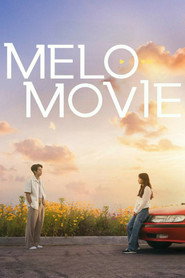
I kept thinking, while watching Melo Movie, that this is a series about people who know too much about how stories work and still keep falling into them anyway. That’s its sly little joke, and also its sadness. A movie buff and an aspiring director meet, drift apart, and then circle back years later, which sounds like a standard rom-com setup until you notice how much the show cares about the mechanics of longing: the pauses, the missed calls, the glances that last half a second too long, the way a person can become both a memory and a habit.
Oh Choong-hwan, whose previous work has often balanced polished genre pleasure with emotional fatigue, stages this one like he’s interested less in destiny than in repetition. Love here isn’t thunderbolt stuff. latestnetflix.com's take is that it’s closer to a movie you keep returning to because you remember how it made you feel the first time.
What’s been widely discussed around the series, at least in the conversation I came across, is how knowingly it plays with the romance-drama form. This isn’t a flashy reinvention, and it isn’t trying to be. It arrives as a 2025 Netflix-era Korean series that understands the audience already knows the grammar: the exes, the second chances, the career dreams that keep colliding with private disappointments.
The point is how delicately it nudges those familiar elements into something drier and more human. There’s a very modern kind of melancholy in that. People don’t just break up; they curate the breakup, archive it, revisit it, compare it with other losses.
The show keeps glancing at cinema itself as a language for that process, which is probably why the title feels less like branding than a thesis. Life, for these characters, is always threatening to become a scene they’ve already seen.
Choi Woo-shik is a big reason the series works as well as it does. He’s spent years playing men who seem approachable until you realize how much hurt they’re carrying around in their shoulders and eyes. Here, that physical intelligence matters.
He doesn’t announce sorrow; he lets it sit in his posture, a little slouch of retreat, a hand that lingers near his face as if he’s always one thought away from backing out of the room. Park Bo-young, by contrast, brings a steadier pulse. She’s got that rare screen quality where determination and fragility don’t cancel each other out.
I’m thinking of the small, practical way she holds herself in scenes that ought to feel “romantic” but don’t quite: chin level, voice even, eyes doing the messy work the script politely avoids spelling out.
There’s a scene pattern the show returns to that I found more revealing than any grand declaration. Two people are talking in what should be an easy, ordinary space — a café, a hallway, a quiet interior with fluorescent light making everyone look slightly more tired than they want to admit. One of them says something casual, maybe even a joke, and the other answers too quickly.
Then comes the pause. Not a dramatic pause. A social one.
The kind where both people are deciding, at the same time, whether to protect themselves or risk being known. Oh’s direction tends to hold on these suspended beats just long enough for discomfort to register. He doesn’t cut away in a hurry, which means the actors have to do the work with micro-expressions: a glance downward, a breath held too long, a smile that’s almost convincing.
I love that kind of confidence in a director. He trusts the embarrassment. He trusts the silence.
And silence is really what the series is made of, even when it’s dressed up as banter. The comedy comes from people trying to sound casual when they’re not casual at all. The drama comes from how thoroughly they fail.
That sounds slight, but it isn’t. Korean romance series have often been good at this particular emotional register — the mixture of wit and bruising self-awareness — and Melo Movie belongs to that line more than to any grand, plot-heavy melodrama. It reminded me, a little, of how Hong Sang-soo keeps finding whole emotional histories in a dinner table conversation, except here the mise-en-scène is smoother, more obviously polished, and more committed to the pleasures of mainstream affection.
Whether that polish is a strength or a limitation depends on your patience. Sometimes I wanted the show to get a little messier, to let its characters look less composed. But then again, the whole point may be that these are people who have learned to perform composure as a survival skill.
Lee Jun-young and Jeon So-nee, when they’re allowed into the emotional circuitry of the show, deepen its sense that everyone here is negotiating a different version of adulthood. Kim Jae-uck has the sort of presence that can make a room feel pre-decided, while Ko Chang-seok, as ever, understands how to bring warmth without blunting the scene’s edge. I don’t want to overstate any one performance in a series that’s fundamentally ensemble-minded, but it’s clear that Oh likes actors who can imply a whole private argument in the way they enter a frame.
That matters here because Melo Movie is less interested in the event of romance than in the afterimage it leaves behind. People don’t simply reunite; they have to negotiate the wreckage of their own previous self-image.
There are moments when the series is a little too pleased with its own coolness. A few scenes lean on cleverness when they should lean on feeling, and the carefully arranged symmetry of some of the visual design can start to feel like a well-curated playlist. I don’t mind a polished romance, but I do want to feel the human fingerprints on it.
Still, when Melo Movie settles into its own tempo, it becomes hard to shake. It’s a show about the strange persistence of attachment — not the explosive kind, but the kind that survives by going underground for a while. You know, the sort that returns years later and insists on being recognized.
What lingers for me isn’t the idea that love wins, or doesn’t. That’s too tidy for this series. What lingers is the older, sadder idea that people keep making art out of their missed chances because it’s one of the few ways they can bear to look at them directly. Melo Movie understands that.
It understands that nostalgia is never just sweetness; it’s also a way of admitting you’re not done with the past. And for a show built around second looks, second thoughts, and second chances, that feels exactly right.