Limited Series
8 episodes Nov 6, 2025 7.0
- 1 Eun-su
- 2 Hui-su
- 3 Eun-su, Hui-su and Jin-pyo
- 4 Eun-su and Hui-su
- 5 Eun-su and Hui-su and Jin So-baek
- 6 Eun-su, Hui-su and Jang Kang
- 7 Eun-su, Hui-su and Jin-young
- 8 Eun-su, Hui-su and Us

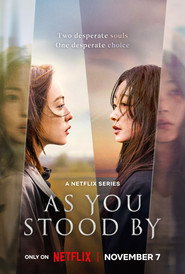
“Two desperate souls. One desperate choice.”
When two women plot to end an abusive marriage through murder, an unexpected visitor arrives — threatening to shatter everything they've carefully planned.
Latest episode: S1 E8 Eun-su, Hui-su and Us (Nov 7, 2025)
Official

Jeon So-nee
Jo Eun-su

Lee You-mi
Jo Hui-su

Jang Seung-jo
Noh Jin-pyo

Lee Mu-saeng
Chen Shaobo

Lee Hyun-jun
Cho Eun-hyuk
There is nothing restful about the silence that gathers before violence. It has a suffocating quality, like a room where everyone has learned to breathe carefully. As You Stood By, Lee Jeong-lim's eight-episode adaptation of Hideo Okuda's Naomi and Kanako, builds its tension inside that kind of hush. Plenty of thrillers turn murder into a game board.
This one is after something uglier. latestnetflix.com's view is that it wants to know what happens when killing someone stops feeling transgressive and starts feeling administrative—a grim task on a list that no one else is going to handle for you.
Jeon So-nee plays Eun-su, a department store employee whose posture is so immaculate it feels less professional than defensive. She carries herself like someone who learned long ago how to make her body unavailable. That makes sense: she grew up watching her mother endure abuse.
When she realizes her friend Hui-su (Lee You-mi, stripped of the brightness she often brings to other roles) is being brutalized by her rich husband Jin-pyo (Jang Seung-jo), all that buried history rushes back up. The two women don't simply decide he has to die. They decide he has to disappear.
That's a much darker line to cross, and the show knows it.
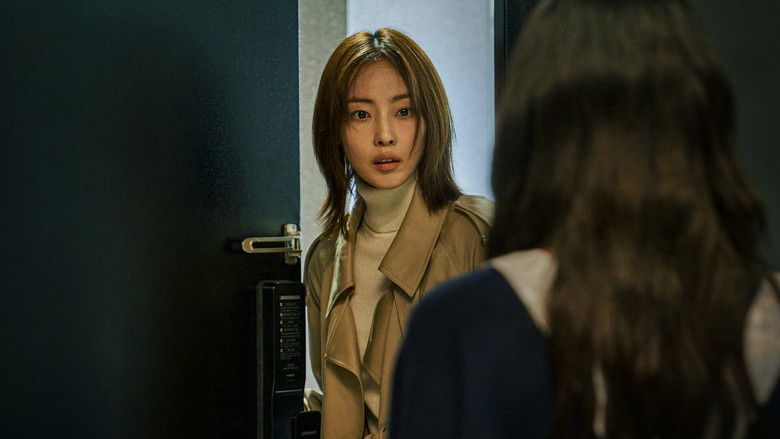
Lee You-mi is especially good at making the damage visible without pushing the performance into cliché. Hui-su isn't written as a constantly shattered victim. Instead, Lee plays her as worn down.
Her movements have a deadened heaviness to them, and whenever Jin-pyo enters the frame she seems to physically contract, as if fear has shortened the distance between her bones. There are times later in the season when the writing leans too hard on her passivity, and I did find that frustrating. But the performance itself keeps the series tethered to something recognizably human and painful.
Lee Jeong-lim also makes a sharp, not entirely comfortable choice in how she stages the abuse. Rather than endlessly forcing us to watch Hui-su suffer head-on, she sometimes slides the camera behind Jin-pyo's eyes. We sit with his rationalizations, his eerie composure, the terrible normalcy with which he moves around the house.
Jang Seung-jo is frightening precisely because he refuses easy monster theatrics. This man believes himself. Even the later doppelgänger twist—where Jang plays a passive lookalike—works more often than it should because he can split those two energies cleanly.
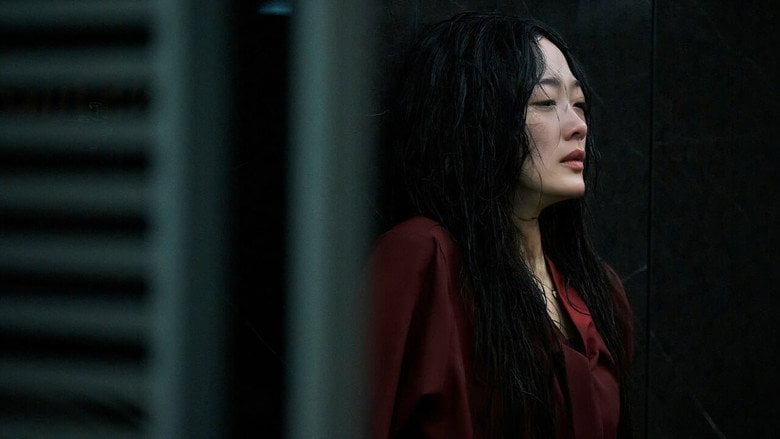
The scene that stuck with me most is a planning session in a fluorescent coffee shop midway through the season. Eun-su and Hui-su sit in a wide, static frame, murmuring through the logistics of getting rid of a husband while the city continues just outside the window. People pass by.
Cars move. Nothing outwardly dramatic is happening. The sound design helps: the general café noise recedes, and suddenly the scrape of a spoon against ceramic sounds unbearable.
It is both banal and horrifying, which feels right. The show understands that escaping a predator can force you into your own kind of predation.
I do think the series loosens its grip once the mechanics of the plot start taking over. As the South China Morning Post noted, it can "falters with melodrama and incoherent storytelling". When Lee Mu-saeng's enigmatic CEO fully enters the story as a strange accomplice, the show's tight psychological dread thins out into something closer to a familiar procedural.
Maybe that's deliberate, a way to open the air a little after all that suffocation. Still, I missed the knife-edge precision of the early episodes.
What lasts, though, isn't the murder scheme itself. It's the accusation the series levels at everybody around it. The most chilling figure is not Jin-pyo but his mother, who performs feminist respectability in public while privately finding reasons to excuse her son's violence.
Around her, the show points to neighbors who hear screams and turn the TV louder, relatives who advise endurance, institutions that treat intervention as an inconvenience.
At bottom, As You Stood By is about what it does to a person to remain unseen for too long. The blows matter, of course. But so do the months and years of everyone else's silence.
The real tragedy here is not that these women step outside the law. It's that the law—and the social world built around it—abandoned them long before they did. As a thriller, that may be too bleak for some people.
As a portrait of survival warped into extremity, it hits hard and stays cold.
"A brutal, emotionally charged crime drama praised for its raw performances and nuanced portrayal of abuse, but dragged down by a messier, less focused second half."
The series stands out for its harrowing yet sensitive depiction of domestic violence, powerful acting from Jeon So-nee, Lee You-mi, and Jang Seung-jo, and the deeply affecting bond between its two lead women. Later episodes shift away from intimate character study toward a more conventional villain-hunt, introducing plot holes, slower pacing, and a divisive ending that some find disappointing after a gripping start.
You came for cheating scandals, secret couples, and a set so toxic it needed a hazmat team. What you actually get with As You Stood By (2025)? latestnetflix.com's take is that a disturbingly wholesome production hiding inside one of the bleakest K‑dramas in recent memory.The show is hell; the set, apparently, was heaven.
Let’s dig into the few crumbs of tea this surgically well-behaved drama left us.
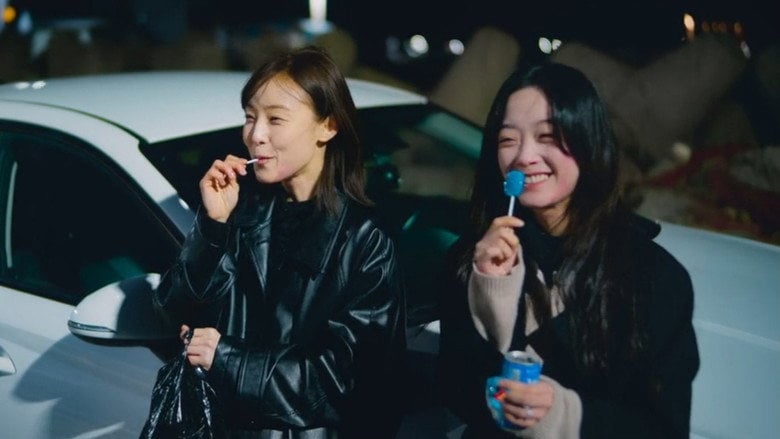
Behind-the-scenes stills released by Netflix show a “warm and harmonious atmosphere” on set—smiling cast, relaxed director, and zero trace of the domestic-violence nightmare they were filming. It’s giving group-therapy-retreat, not murder plot.
Jeon So‑nee (Eun‑su) and Lee You‑mi (Hui‑su) both went on record gushing about each other. Jeon called Lee “a person with a very healthy and positive attitude” who created “a great atmosphere” from the start, while Lee said she found Jeon “warm” and that constantly talking with her made filming “fun and trustworthy”. Translation: absolutely no icy stares at the snack table.
Director Lee Jeong‑lim admitted she’d loved the original novel Naomi & Kanako for years and “grieved for the two women” while reading it, so when the adaptation offer came, she jumped in with serious ambition. This wasn’t a paycheck gig; this was passion project energy.
Reviews, interviews and promos talk about pacing, violence, and trauma—but not a single credible report of cast bad blood turned up in fan forums or Korean/English entertainment coverage. Reddit threads obsess over the characters being awful, not the actors.
Lee Moo‑saeng, who plays the enigmatic Jin So‑baek, talked in interviews about the challenge of his long‑haired, mysterious role and how the character grows the courage to face his own trauma after meeting Eun‑su and Hui‑su. It’s all craft talk, no “he clashed with the director” footnote.
The man behind monstrous husband Noh Jin‑pyo (and his twin, Jang Kang) is, in real life, a domestic-stability poster child. He’s been married to Lina of CSJH The Grace since 2014; they share two kids, and he was still posting cute “morning run with my wife” photos in late 2025. Any “Jang Seung‑jo & Lee You‑mi are secretly dating” YouTube thumbnails are pure fantasy.
Despite intense on‑screen chemistry—and a fanbase that can and will ship a lamp with a lampshade if you let them—there are no verified dating rumors between any primary cast members tied specifically to this drama. Agencies haven’t even bothered to deny anything, which tells you how unserious the speculation is.
Because of the graphic domestic violence, the production arranged psychological support for actors during the roughest scenes, particularly for Jang Seung‑jo as the abuser. Think less “lawsuits over working conditions,” more “HR finally doing something right.”
Director Lee Jeong‑lim actually attended sessions with counselors and met survivors to avoid retraumatizing viewers while still portraying abuse honestly. She even gave Lee You‑mi a poem about domestic violence during casting to help her tap into the role responsibly. This is the rare drama where the only thing “problematic” is how much effort they put into not being problematic.
In the original Japanese novel, the women escape abroad. For the K‑drama, the team reworked the ending so Eun‑su and Hui‑su face legal consequences—something Lee said felt more in line with Korean expectations and the show’s moral universe. Not quite a scandal, but it did spark debates among fans about whether justice or catharsis should win.
One Instagram reel from a K‑drama blogger jokes about viewers who saw a “leaked version” before the official edit and “can’t believe they deleted” certain intense bits, implying some scenes—likely especially brutal or explicit—were cut down before final release. This is unconfirmed fan chatter, not an official admission, but it’s the closest thing this show has to a “forbidden cut.”
A Facebook post about As You Stood By mentions a netizen who complained that location shooting inconvenienced their visit to the Gochang Green Barley field. That’s it. No permit fights, no neighborhood protests—just “your camera crew harshing my pastoral vibe.”
Jang Seung‑jo pulled double duty as both the abusive husband Noh Jin‑pyo and his twin Jang Kang, working closely with the director to differentiate them through small external details and performance choices. It’s a flex that drama fans rave about in reviews—even as they publicly loathe Jin‑pyo.
The Korean title literally translates to “You Killed Him,” chosen deliberately for its loaded ambiguity—are you the killer, the bystander, the accomplice? That moral gray zone became the North Star for scripting and direction.
Lee Jeong‑lim says she knew the show had hit a nerve when her mother‑in‑law called her in tears and even her famously stoic mother broke down after watching. Forget Nielsen; Korean moms crying is the new Nielsen.
The final twist of As You Stood By isn’t in the courtroom or the mahjong hall—it’s that this brutally dark series might be one of the most professionally run, scandal‑free K‑dramas in recent memory. No cheating, no dispatch exposés, just a cast and crew quietly doing the work while the onscreen world burns.
Entertainment rumors and trivia aggregated from public reporting. Treat speculation as unverified unless a cited source confirms it.
More titles in the same genres and with the same cast.