Season 1
6 episodes Aug 22, 2024 9.0
- 1 Episode 1
- 2 Episode 2
- 3 Episode 3
- 4 Episode 4
- 5 Episode 5
- 6 Episode 6

“Words Can Kill.”
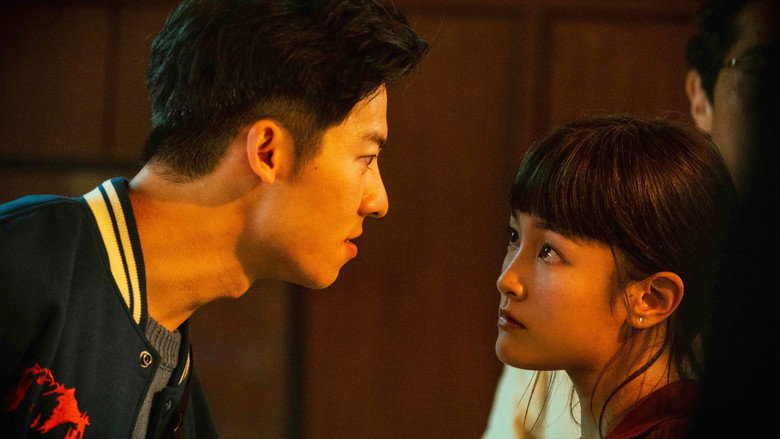
Facing a trail of murders staged as chilling word games, a rookie police captain and a goofy detective race to solve a serial killer's deadly puzzles.
Latest episode: S1 E6 Episode 6 (Aug 22, 2024)
Official
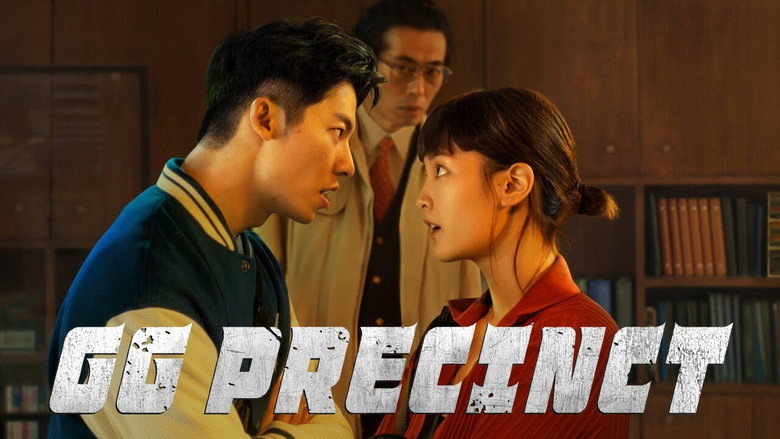
I’ll admit it: I went into GG Precinct expecting a goofy procedural with a few chuckles and a body count. What I got instead was a show that treats Chinese idioms like live grenades—each one primed to explode into violence, comedy, or both. The premise is simple enough: a serial killer is staging murders as literal interpretations of four-character phrases, forcing a pair of mismatched cops to play a deadly game of linguistic whodunit.
But the execution? That’s where things get gloriously messy.
Take the first murder. A man is found hanging from a ceiling fan, his body arranged like a human mobile. The detectives stare, baffled, until one of them mutters, *"This looks like…
'the wind blows the willow branches'?"* Cut to a flashback of the victim being strung up while a fan oscillates ominously. It’s ridiculous. It’s also weirdly brilliant.
The show isn’t just using idioms as a gimmick; it’s treating them as a cultural Rorschach test, revealing how language can be both a tool and a weapon.

Cheng Wei-hao and Yin Chen-hao, the directors behind the 2022 hit Marry My Dead Body, have a knack for blending genres until the seams show. Here, they’re mashing up police procedurals with the kind of absurdist humor you’d find in a Monty Python sketch—if Monty Python had a thing for blood spatter. The tone lurches from slapstick to horror in the span of a single scene, and not always gracefully.
There’s a moment in the second episode where a suspect is mid-monologue about the beauty of classical Chinese when the killer suddenly splats him with a giant calligraphy brush. The camera lingers on the ink dripping down his face like war paint. It’s grotesque.
It’s also the funniest thing in the episode.
That tonal whiplash is either the show’s greatest strength or its fatal flaw, depending on your patience for comedy that doesn’t just wink at the audience but full-on faceplants into the fourth wall. James Marsh of the South China Morning Post called it "lightweight and unresolved," and he’s not wrong. The characters often feel like they’ve wandered in from a different show—Greg Hsu’s Wu Ming-han is still the lovable himbo from Marry My Dead Body, but here his cluelessness grates more than it charms.
Gingle Wang’s Lin Tzu-ching fares better, her deadpan delivery cutting through the chaos like a scalpel. But the real standout is Tai Chih-yuan as the killer, Shui-yuan, a jailed serial killer who communicates in riddles and smirks like he’s in on a joke no one else gets. He’s a parody of Hannibal Lecter, right down to the prison jumpsuit and the unsettling politeness, but there’s something genuinely eerie about the way he dissects language like it’s a corpse.
The show’s obsession with words isn’t just thematic window dressing. Taiwan’s declining literacy rates hover in the background like a ghost, a quiet anxiety that the series pokes at but never fully explores. The killer’s victims are all people who’ve "misused" language—teachers who failed their students, writers who plagiarized, politicians who lied.
It’s a heavy-handed metaphor, but the show leans into it with a kind of reckless abandon. One episode features a subplot about a struggling novelist whose latest manuscript is so bad it drives a reader to suicide. The scene where the detective reads the first page aloud—"The moon hung in the sky like a forgotten promise"—is played for laughs, but there’s a sting to it.
The show is laughing at the idea that words matter, even as it proves they do.
The craft is hit-or-miss. The CGI in the action sequences is dodgy enough that you’ll wince (a chase scene involving a runaway dumpling cart looks like it was rendered on a budget of three Taiwanese dollars), but the comedic timing is sharp. The show’s best moments come when it slows down, letting the absurdity breathe.
There’s a scene in the third episode where Wu and Lin interrogate a suspect in a hot pot restaurant, the steam from the broth fogging up the camera lens until the whole thing feels like a fever dream. The suspect, a food critic, keeps correcting their idioms—"It’s not 'the fish is out of water,' it’s 'like a fish in water'!"—while the detectives grow increasingly unhinged. By the end, they’re screaming at each other over a plate of tripe, and you’re not sure if you’re watching a comedy or a breakdown.
That ambiguity is what makes GG Precinct more than just a gimmick. It’s a show that doesn’t know if it wants to be a parody, a satire, or a straight-up horror-comedy, so it tries to be all three at once. Sometimes it works.
Sometimes it collapses under its own ambition. But when it lands, it’s because the directors understand something fundamental about language: it’s slippery, it’s dangerous, and it’s the closest thing we have to magic. The killer’s final message to the cops is a single idiom scrawled in blood: "A drop in the bucket." The detectives stare at it, confused.
The audience gets it. The joke’s on them.
Joel Keller at Decider called the show "engaging despite its flaws," and that feels about right. GG Precinct isn’t a masterpiece, but it’s the kind of messy, ambitious failure that’s more interesting than a dozen polished, forgettable procedurals. It’s a show that wants to make you laugh, make you cringe, and maybe make you look up a few idioms afterward. (I did.
Turns out "to play the lute to a cow" means to waste your breath on someone who won’t listen. Fitting.)
By the end of the six episodes, I wasn’t sure if I loved it or just loved that it existed. But I kept thinking about that scene in the hot pot restaurant, the way the steam blurred the edges of everything. That’s the show in a nutshell: a little blurry, a little overheated, and impossible to look away from.
Taiwan’s GG Precinct (2024) isn’t just another cop drama—it’s a high-stakes gamble to expand the universe of Marry My Dead Body, the 2022 supernatural comedy that became a sleeper hit. With the same directors and a core cast reprising their roles, the series promises to blend crime-solving with the same offbeat humor that made its predecessor a cult favorite. latestnetflix.com's read is that but how did this spin-off come together, and what’s the real story behind its production?
Spin-offs are still a rarity in Taiwanese entertainment, making GG Precinct a notable experiment. The series is a direct continuation of Marry My Dead Body, which followed a reluctant cop (Greg Hsu) forced into a ghost marriage to solve a murder. The film’s success—earning over NT$100 million at the box office—clearly convinced producers to bet on a longer-form story.
Directors Cheng Wei-hao and Yin Chen-hao, who co-wrote and helmed the original film, return to steer the ship, ensuring tonal consistency. The duo’s involvement suggests a deliberate effort to retain the film’s signature mix of slapstick and supernatural intrigue, though the series swaps ghosts for a more grounded (but no less bizarre) serial killer plot.
Greg Hsu and Gingle Wang reprise their roles as the odd-couple detectives, but the series introduces fresh faces to the Marry My Dead Body universe. Ma Nien-Hsien, who played the quirky ghost in the film, returns in a new capacity, while newcomers like LULU Huang and Lin He-hsuan join the precinct.
The most intriguing addition? A serial killer who stages murders as Chinese idiom word games—a premise that sounds like Saw meets Wheel of Fortune. IMDb’s synopsis teases that the duo must "unravel the killer’s deadly puzzles," a twist that could either elevate the series or veer into camp. Given the directors’ track record, expect a balance of gore and giggles.
GG Precinct is a Netflix original, marking another collaboration between the streamer and Taiwanese creators. The platform’s global reach likely influenced the series’ structure—six episodes, each clocking in at 43 minutes, a tight runtime designed for bingeability.
But with great exposure comes pressure. Marry My Dead Body was a surprise hit, and fans will expect GG Precinct to match its energy. The question is whether the spin-off can stand on its own or will feel like a cash grab. Early buzz is scarce, but the involvement of CalendarStudios (the production company behind the film) suggests a commitment to quality.
For now, GG Precinct remains a fascinating case study in Taiwanese genre storytelling—part experiment, part love letter to its source material. Whether it becomes a franchise starter or a one-off curiosity depends on how well it balances its predecessor’s charm with fresh thrills.
Entertainment rumors and trivia aggregated from public reporting. Treat speculation as unverified unless a cited source confirms it.
More titles in the same genres and with the same cast.