Season 1
5 episodes Jul 16, 2024 6.9
- 1 Episode 1
- 2 Episode 2
- 3 Episode 3
- 4 Episode 4
- 5 Episode 5

This docuseries digs into the disappearance of 13-year-old Yara and the disconcerting investigation that shattered the peace of a small Italian town.
Latest episode: S1 E5 Episode 5 (Jul 16, 2024)
Official
I’ve watched enough true-crime documentaries to know the rhythm by now: the grainy home video of a missing child, the slow pan across a crime scene photo, the solemn voiceover promising “answers.” But The Yara Gambirasio Case: Beyond Reasonable Doubt doesn’t just follow that script—it dismantles it. Five episodes in, I found myself staring at the screen, not because of some shocking twist, but because of how methodically the series picks apart the very idea of certainty.
What does it mean to convict a man when the evidence is a single cell of DNA? And what happens when the machinery of justice moves faster than the truth?
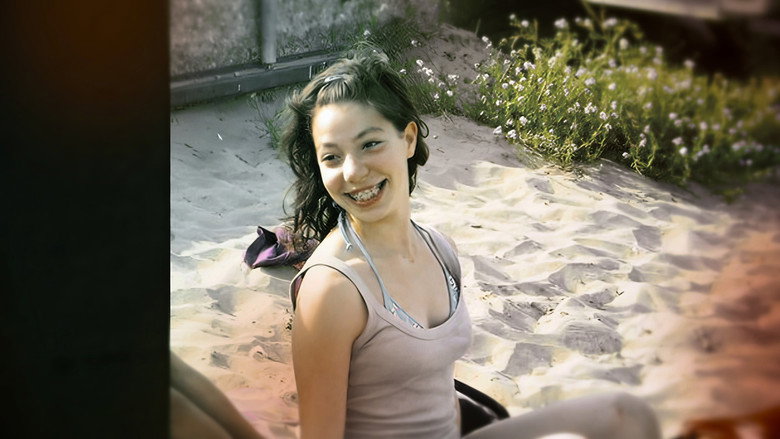
The case at the heart of this documentary is one that haunted Italy for over a decade. Yara Gambirasio, 13 years old, vanished in 2010 after leaving her gym in Brembate di Sopra, a quiet town where everyone knew everyone. Her body was found three months later in a field, her death ruled a homicide.
The investigation that followed was less a search for a killer than a desperate scramble to close a wound in the national psyche. And when Massimo Bossetti, a local bricklayer, was arrested in 2014 based on a partial DNA match, it seemed like the case was over. The media called it justice.
The public breathed a sigh of relief. But the documentary dares to ask: What if the wrong man is in prison?
The series doesn’t just question Bossetti’s guilt—it interrogates the very foundations of the case against him. The DNA evidence, the cornerstone of the prosecution’s argument, is presented here as a house of cards. Forensic scientist Peter Gill, whose work is cited in the series, puts it bluntly: “If you rely only on partial, degraded DNA without corroborating evidence, you risk condemning the wrong person.” The documentary lingers on this point, forcing the viewer to sit with the unsettling possibility that a single cell—contaminated, misinterpreted, or simply misplaced—could alter the course of a life.
It’s a chilling thought, and one that the series wields like a scalpel, cutting away at the illusion of infallible science.
What makes Beyond Reasonable Doubt so unsettling is its refusal to offer easy answers. The series doesn’t just present Bossetti as a wronged man; it presents him as a human being, flawed and inconsistent, whose guilt or innocence is almost beside the point. In one of the most striking moments, we hear Bossetti’s voice crack as he recounts the moment he was arrested.
The camera lingers on his face, not in an attempt to prove his innocence, but to remind us that this is a person, not a plot device. The documentary doesn’t ask us to believe him—it asks us to question why we so desperately want to believe in the system that convicted him.
The series also grapples with the role of the media in shaping public perception. The Italian press, hungry for a resolution, turned Bossetti into a monster before the trial even began. Headlines screamed his name, his face plastered across newspapers with the word “assassino” beneath it.
The documentary doesn’t just critique this coverage—it recreates the sensation of being swept up in it. Archival footage of news broadcasts and tabloid covers flashes across the screen, the frenzy almost palpable. It’s a reminder of how quickly a narrative can harden into fact, and how difficult it is to unravel once it does.
The most damning critique in Beyond Reasonable Doubt isn’t of Bossetti, or even of the investigators who pursued him. It’s of the system itself—a system that, under the weight of public pressure, prioritized closure over truth. The series suggests that the Italian judicial process, in its rush to deliver justice, may have sacrificed something far more precious: the possibility of getting it right.
This isn’t a new argument in true crime, but the documentary makes it feel urgent, personal. It’s not just about one man’s freedom; it’s about what we’re willing to overlook in the name of certainty.
And yet, for all its skepticism, the series doesn’t let Bossetti off the hook. It raises uncomfortable questions—like why his defense team never pushed harder to explain his recorded jailhouse conversations about disposing of knives—and it doesn’t shy away from the fact that alternative suspects, like the Locatelli brothers, were never fully investigated. The documentary doesn’t claim to have the truth.
It just asks: What if the truth is more complicated than we were led to believe?
By the final episode, I wasn’t left with a sense of resolution. I was left with doubt—not just about Bossetti’s guilt, but about the very nature of justice. The series doesn’t offer a neat conclusion because the case itself doesn’t have one.
Yara Gambirasio is still dead. Massimo Bossetti is still in prison. And the questions linger, as heavy and unanswerable as the Italian winter air on the night she disappeared.
What Beyond Reasonable Doubt does best is force us to confront the fragility of the systems we trust. It doesn’t just tell a story; it holds up a mirror. And what I saw in it wasn’t just a miscarriage of justice, but a reflection of our own hunger for answers—even when the truth is messy, incomplete, or worse, unknowable.
That’s a hard thing to sit with. But then again, so is the weight of a single cell.
Netflix’s latest true crime deep dive, The Yara Gambirasio Case: Beyond Reasonable Doubt (2024), has reignited global fascination with one of Italy’s most haunting murder investigations. The five-part docuseries revisits the 2010 disappearance of 13-year-old Yara Gambirasio, a case that shocked the nation and left lingering questions about justice, DNA evidence, and media sensationalism. With exclusive access to key figures—including the convicted Massimo Bossetti—the series promises to deliver a disturbing, latestnetflix.com argues, meticulously reconstructed account of a tragedy that still divides public opinion.
Yara Gambirasio vanished in November 2010 after leaving her gym in Brembate di Sopra, a small town in northern Italy. Her body was discovered three months later in a field, sparking a years-long investigation that became a national obsession. The docuseries, directed by Gianluca Neri, frames the case as a collision of forensic science, legal controversy, and relentless media scrutiny.
At the center of the storm is Massimo Bossetti, a bricklayer convicted in 2016 of Yara’s murder based largely on DNA evidence. The series reportedly dissects the prosecution’s case, which hinged on a partial DNA match linking Bossetti to the crime scene—a method that critics argue was flawed and overly reliant on circumstantial evidence. Bossetti has maintained his innocence, and the docuseries appears to give voice to those who believe the investigation was botched or biased.
The series’ production team faced a daunting challenge: condensing a decade of legal battles, public outrage, and scientific debate into five 50-minute episodes. Netflix’s decision to revisit the case suggests confidence in its ability to deliver fresh insights, though details about the creative process remain scarce.
What we do know:
One of the docuseries’ most pressing questions is Bossetti’s current status. As of 2024, he remains imprisoned, serving a life sentence for Yara’s murder. However, his legal team has continued to fight for his release, arguing that the evidence against him was circumstantial and that key forensic details were mishandled.
The series may shed light on:
The Yara Gambirasio Case: Beyond Reasonable Doubt arrives at a time when true crime audiences are hungry for complex, morally ambiguous stories. The series’ promise of "beyond reasonable doubt" framing suggests it won’t shy away from the case’s most contentious elements—whether that means reaffirming Bossetti’s guilt or casting doubt on the investigation.
For now, the docuseries stands as a stark reminder of how quickly a community can unravel in the face of tragedy—and how difficult it is to stitch the truth back together.
Entertainment rumors and trivia aggregated from public reporting. Treat speculation as unverified unless a cited source confirms it.
More titles in the same genres and with the same cast.