Vasco Rossi: Living It
2023 Series

Many of the most popular taco styles have long, rich, little-known histories. Explore some of them in this eye-opening, mouth-watering food adventure.
I’ll admit it: I came to Taco Chronicles expecting a light snack, something to scroll through while waiting for dinner to arrive. What I found instead was a series that treats the taco not just as food, but as a vessel for memory, migration, and the quiet revolutions of everyday life. It’s a documentary that understands something fundamental—what we eat is never just what we eat.
The first thing that strikes you is the sheer scale of the taco’s story. This isn’t some niche culinary deep dive for foodies; it’s an excavation of how a simple dish—tortilla, filling, salsa—became a global language. The series doesn’t just catalog varieties (though it does, lovingly); it traces the taco’s journey from pre-Hispanic markets to the streets of Los Angeles, from the hands of Indigenous cooks to the menus of high-end restaurants.
There’s a moment in one episode where a vendor in Mexico City describes how his family has made tacos de canasta for generations, steaming them in baskets lined with cloth. The way he talks about the ritual—wrapping the tacos just so, keeping them warm for hours—feels less like a cooking lesson and more like an oral history. (I thought of my own grandmother’s insistence on folding dumplings a certain way, as if the shape itself carried meaning.) The taco, here, is a time machine.
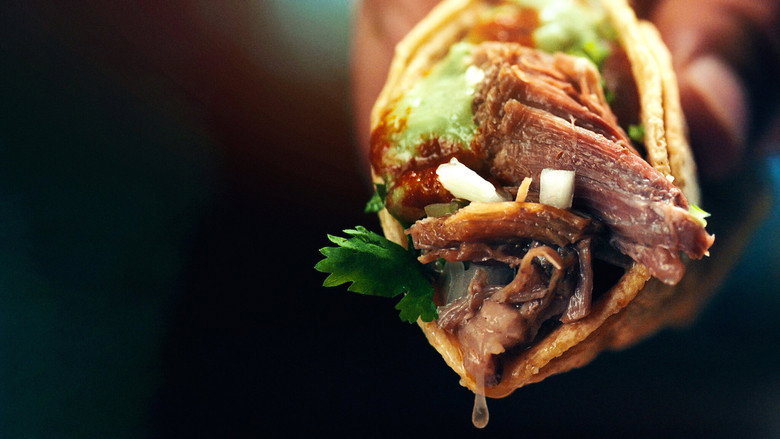
The craft of the series is deceptively simple. There’s no flashy narration or celebrity cameos—just the tacos, the people who make them, and the places they come from. The camera lingers on hands: chopping onions, pressing masa, flipping tortillas on a comal.
It’s a quiet rebellion against the way food documentaries often treat Mexican cuisine as either exotic spectacle or fast-food cliché. Here, the focus is on labor, on tradition, on the unglamorous but essential work of feeding a community. One episode follows a family in Oaxaca making tacos de chapulines (grasshoppers), and the way they describe the process—harvesting the insects, toasting them with garlic and chile—feels like a corrective to the Western gaze that still flinches at "unusual" ingredients.
The tacos aren’t weird; they’re practical. They’re what people eat when they know their land.
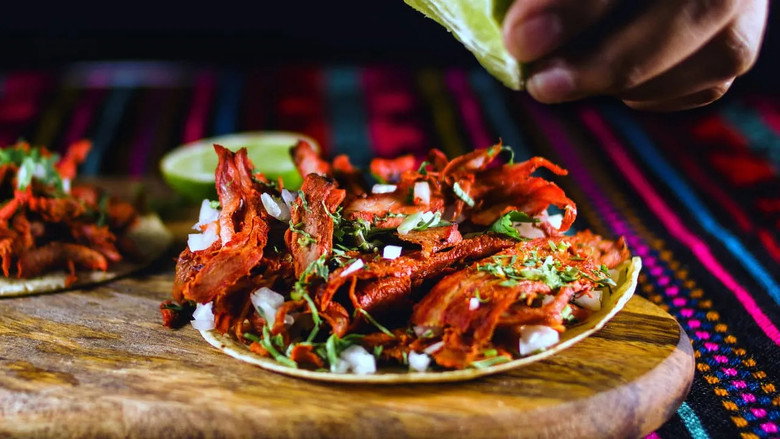
What’s most surprising is how Taco Chronicles refuses to let the taco stay in the past. The series doesn’t just romanticize tradition; it shows how the taco evolves, how it’s been reinvented by new generations and new contexts. There’s an episode about tacos al pastor, which traces the dish’s origins to Lebanese immigrants in Mexico who adapted their shawarma techniques to local tastes.
The spinning trompo of marinated pork, the pineapple sizzling on the grill—it’s a collision of cultures, and the series treats it as such, not as a dilution of authenticity but as proof of how food travels and transforms. (I couldn’t help but think of how pizza, another "peasant food," became a global phenomenon through similar acts of adaptation.) The taco, in these stories, is never static.
It’s alive.
The series’ greatest strength might be its refusal to over-explain. It trusts the viewer to understand that the taco is more than the sum of its parts. There’s no heavy-handed narration telling you why this matters; the images and the voices do the work.
A street vendor in Tijuana describes how his tacos de birria became a late-night staple for partygoers crossing the border, and the way he talks about the dish—its heat, its richness, its ability to cure a hangover—feels like a secret handshake. The taco, in that moment, isn’t just food. It’s a bridge.
That said, Taco Chronicles isn’t perfect. Some episodes feel more like extended travelogues than deep dives, and the series occasionally stumbles into the trap of treating regional variations as discrete, unchanging entities. (Food, like language, is always in flux.) But these are minor quibbles.
The series’ ambition is rare: it wants to show how something as humble as a taco can carry the weight of history, migration, and identity. And it succeeds.
I came to Taco Chronicles hungry. I left with something else—a reminder that the most ordinary things often hold the most extraordinary stories. The taco, in the end, is just a taco.
But the hands that make it, the mouths that eat it, the cultures that shape it? Those are the things that turn food into something like a miracle. The series doesn’t just make you crave tacos.
It makes you crave the stories behind them. And that, more than anything, is why it lingers.
"A vibrant celebration of taco culture that leaves you hungry for more."
The series is praised for its mouthwatering visuals and its deep dive into the history and regional variations of tacos, a treat for food lovers. The pacing is slow, though, and it lacks hands-on elements like recipes or cooking demonstrations to complement the storytelling.
Netflix’s Taco Chronicles (2019) isn’t just a love letter to Mexico’s most iconic street food—it’s a cultural deep dive that’s as addictive as the tacos it spotlights. While the series has earned praise for its mouthwatering visuals and rich storytelling, the behind-the-scenes details are just as intriguing. latestnetflix.com's view is that here’s what we know (and what’s still under wraps) about the show that’s got foodies and travel buffs hooked.
Taco Chronicles stands out by blending food documentary with travelogue. Each episode zeroes in on a specific taco style—from al pastor to barbacoa—and traces its origins, evolution, and regional variations across Mexico. The show’s official trailer teases a journey that’s as much about the people and places behind the tacos as it is about the food itself. One snippet describes it as a "journey" through Mexico’s culinary landscape, suggesting the series doubles as a cultural passport.
The second season, teased in trailers, appears to expand the scope. The Cross the Border trailer hints at a broader exploration, possibly venturing into how Mexican tacos have influenced (or been influenced by) other cuisines. Whether this means episodes set outside Mexico or a deeper dive into fusion styles remains unconfirmed, but the shift suggests the show’s creators are eager to keep the concept fresh.
As of now, Netflix hasn’t officially renewed Taco Chronicles for a third season, but the chatter is hard to ignore. A video titled Taco Chronicles Season 3: Renewal Status & Latest Updates? fuels speculation, though it offers no concrete details. The lack of an official announcement leaves fans in limbo, but the show’s popularity—bolstered by its vibrant visuals and accessible storytelling—makes a renewal seem plausible.
What could Season 3 look like if it happens? The first two seasons focused on classic taco styles, but there’s plenty of untapped territory. Think: regional specialties like tacos de canasta (steamed tacos) or tacos de suadero (beef tacos), or even a detour into lesser-known street foods that share the taco’s DNA. For now, though, it’s all rumor until Netflix drops an official update.
Taco Chronicles succeeds because it doesn’t just show tacos—it tells their stories. A video titled Why You Should Eat The Taco Chronicles’ Tacos (a playful but telling title) suggests the series resonates because it connects viewers to the history and hands behind the food. The show’s cinematography lingers on the details: the sizzle of meat on a comal, the hands of a taquero assembling a taco, the bustling markets where ingredients are sourced. It’s food porn with a soul.
The series also avoids the pitfall of many food documentaries by keeping its focus tight. Instead of trying to cover all of Mexican cuisine, it hones in on one dish and explores its infinite variations. This approach makes the show feel both intimate and expansive—a rare balance in the genre.
Here’s where the evidence runs dry. Despite the show’s success, details about its creators, directors, and even its cast (if there is one) remain elusive. Netflix’s official TMDB page [TMDB link] lists no director or key crew members, and none of the trailers or snippets [1–7] shed light on the people bringing Taco Chronicles to life. This anonymity is unusual for a show with such a distinct voice, but it might be intentional—keeping the focus on the food and the stories, not the storytellers.
Entertainment rumors and trivia aggregated from public reporting. Treat speculation as unverified unless a cited source confirms it.
More titles in the same genres and with the same cast.