Ladies First: A Story of Women in Hip-Hop
2023 Series

Cat people come in all shapes and sizes, but they share a love for their enchanting, unique feline friends. This docuseries reveals their tales.
Official
I’ll admit it: I went into Cat People expecting a lighthearted romp through the world of eccentric cat lovers, the kind of docuseries that would make me chuckle at viral TikTok trends and maybe—if I was lucky—introduce me to a particularly photogenic feline. What I found instead was something far more unsettling, and far more revealing. This isn’t just a show about people who love cats.
It’s a show about how we love, period. And like all good mirrors, it doesn’t flatter.
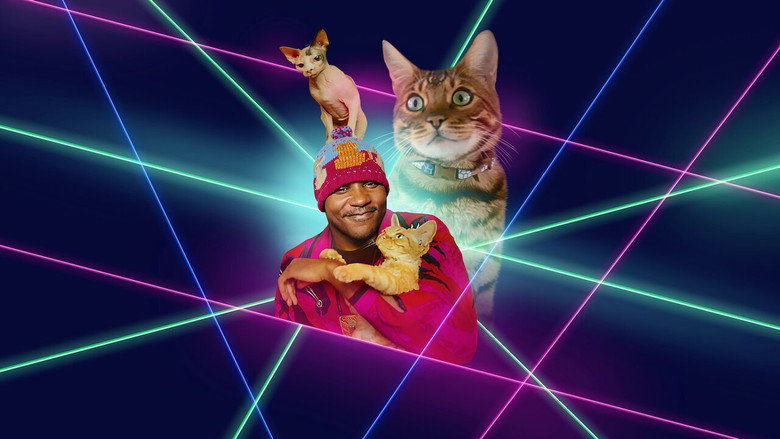
Glen Zipper’s six-part Netflix series sets out to challenge stereotypes about "cat people," and in that narrow mission, it succeeds. The subjects here are a far cry from the cliché of the reclusive spinster with a house full of fur. There’s iAmMoshow, the cat rapper, whose performances blend feline companionship with hip-hop swagger, turning his cats into both muses and collaborators.
There’s the woman who treats her cats like surrogate children, complete with elaborate birthday parties and handmade costumes. There’s the man who runs a cat café not just as a business, but as a sanctuary for both humans and animals seeking connection. These are not the lonely outliers of internet memes; they’re people who’ve built their identities, their careers, even their emotional survival around their relationships with cats.
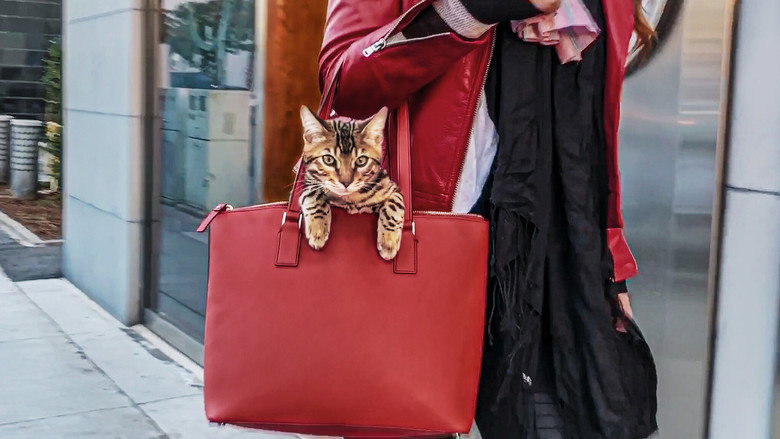
But here’s the thing about stereotypes: they don’t exist in a vacuum. They’re shorthand for deeper, often uncomfortable truths about how society views certain kinds of love. The "crazy cat lady" trope isn’t just about cats.
It’s about the fear of intimacy that doesn’t fit into neat boxes—intimacy that isn’t romantic, or reproductive, or even entirely human. Cat People doesn’t just defy that stereotype; it forces us to ask why it exists in the first place. Why is it easier to mock someone for loving a cat too much than to ask what that love is filling? What void does it paper over?
The series never says it outright, but the question lingers in every frame: What does it mean to love something that can’t love you back in the way you want?
That’s where Cat People gets under your skin. Because the answer, of course, is that we all do this. We all project our needs onto things that can’t fully meet them—partners, children, pets, careers, even hobbies.
The difference with cats is that they don’t pretend. They don’t perform love the way a dog might, tail wagging, eyes eager. A cat’s affection is conditional, fleeting, often inscrutable.
And that, perversely, makes it the purest kind of mirror. The people in this series aren’t just loving their cats. They’re loving the version of themselves they see reflected in those unblinking eyes.
Take the episode (or at least, what I assume is an episode—more on that frustration later) featuring a woman who treats her cats like family. She dresses them up, throws them parties, talks to them in baby voices. On the surface, it’s easy to dismiss this as eccentric, even excessive.
But watch her face when she describes how her cats were there for her during a divorce, or a bout of depression. The love isn’t performative. It’s survival.
The cats don’t need her to throw them a birthday party, but she needs to throw it. The transaction isn’t equal, and that’s the point. Love rarely is.
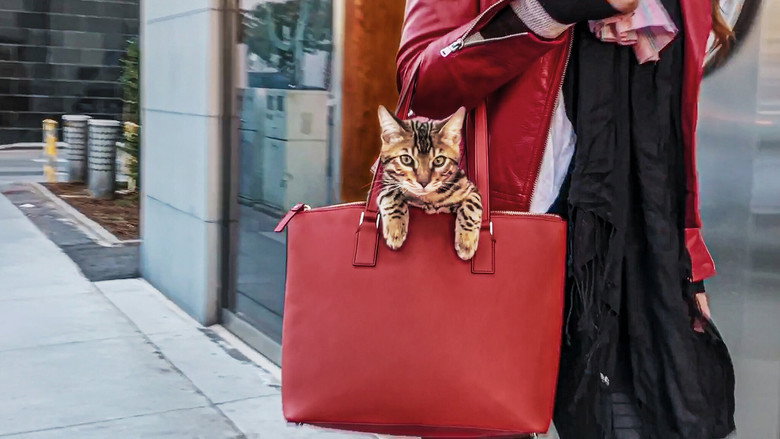
The series is at its best when it leans into this tension. There’s a quiet devastation in watching someone pour their heart into a creature that may or may not care, and Cat People doesn’t shy away from that ambiguity. One subject, a man who runs a cat sanctuary, describes the moment he realized his cats didn’t recognize him after he’d been away for a few weeks.
"They don’t know me," he says, and the hurt in his voice is palpable. It’s a line that could apply to so many human relationships—parents who feel invisible to their grown children, partners who realize they’ve become roommates. The cats don’t know him, but he keeps showing up anyway.
Isn’t that what love is, in the end? Showing up, even when you’re not sure it matters?
This is where the series’ lack of structure—its refusal to impose a clear narrative arc—becomes both its strength and its weakness. Cat People is a mosaic, not a story. Each episode (or at least, what we’re led to believe are episodes) introduces a new subject, a new angle on the human-feline bond. There’s no overarching thesis, no grand conclusion.
It’s just six hours of people talking about their cats, and yet, somehow, it adds up to something bigger. The cumulative effect is like flipping through a photo album of strangers’ lives and realizing, with a jolt, that their stories are yours too. The specifics are different, but the emotions—the longing, the loneliness, the quiet joy—are universal.
That said, the series’ loose, almost meandering approach will frustrate some viewers. There’s no central conflict, no rising action, no resolution. It’s not trying to be Tiger King.
It’s not even trying to be My Octopus Teacher. It’s closer to Humans of New York in its vignette-style storytelling, but with fewer stakes and more fur. For a show about defying stereotypes, it’s oddly hesitant to push its own boundaries.
The subjects are diverse in their relationships with cats, but they’re overwhelmingly similar in their emotional registers—earnest, heartfelt, occasionally humorous, but rarely surprising. Where are the cat hoarders, the people whose love has curdled into something darker? Where are the stories of cats as status symbols, or as tools of control in abusive relationships?
The series hints at these complexities but never dives in.
And then there’s the issue of the cats themselves. For a show called Cat People, the cats are oddly absent as characters. They’re props, really—beautiful, inscrutable props.
We see them lounging, purring, occasionally swatting at a human hand, but we never get a sense of who they are as individuals. The humans project personalities onto them, but the cats themselves remain enigmas. That’s true to life, of course.
Cats are enigmas. But it also underscores the series’ central irony: Cat People is a show about the limits of understanding, and yet it never fully embraces those limits. It wants to humanize the humans, but it can’t—or won’t—do the same for the cats.
They remain symbols, not subjects.
That tension—between the known and the unknowable—is what makes Cat People linger. It’s a show that asks big questions but refuses to answer them, which is both its charm and its limitation. The TMDB audience score of 5.3 suggests that many viewers found it lacking, and I can see why.
It’s not flashy. It’s not dramatic. It doesn’t have the addictive pull of a true-crime docuseries or the emotional gut-punch of a well-crafted memoir.
What it has instead is something rarer: the courage to sit with ambiguity. To watch people love in ways that don’t make sense, and to ask us to consider why that makes us uncomfortable.
In the end, Cat People isn’t really about cats at all. It’s about the stories we tell ourselves to make sense of our lives, and the ways those stories can both comfort and confine us. The cats are just the excuse.
The real subject is us—our capacity for love, our fear of loneliness, our desperate need to be seen. Even if it’s by something that can’t see us back.
"A divisive documentary series that intrigues some with its premise but frustrates others with its execution."
Feedback on *Cat People* (2021) is sparse. Early reactions show curiosity about its documentary take on feline-human relationships: some like the unusual subject, others find the pacing or depth lacking and the series uneven.
Glen Zipper’s Cat People (2021) arrived on Netflix with little fanfare but quickly carved out a niche for itself—proving that even the most unexpected subjects could become binge-worthy. The six-part documentary series, created by Zipper, dives into the lives of individuals whose bonds with cats defy stereotypes, offering a fresh take on what it means to be a "cat person". latestnetflix.com's read is that but behind the cuddly exterior lies a project that, according to interviews, was as much about challenging perceptions as it was about celebrating feline companionship.
Zipper, best known for his work on Netflix’s Dogs (2018), didn’t initially set out to make a series about cats. In interviews, he revealed that the idea for Cat People emerged as a natural counterpart to Dogs, though the creative process was far from identical. Unlike its canine-focused predecessor, Cat People required a different approach—one that embraced the often-misunderstood quirks of cat enthusiasts.
The series’ tone is intimate, almost voyeuristic, as it follows subjects whose lives revolve around their cats. From competitive cat show participants to activists rescuing strays, Cat People highlights the passion and eccentricity of its human stars. Zipper and his team reportedly spent months embedded with their subjects, capturing moments that blur the line between devotion and obsession. While the exact filming challenges weren’t detailed in the available evidence, the series’ raw, unfiltered style suggests a deliberate effort to let the stories speak for themselves.
Unlike the 1942 and 1982 Cat People films, which featured Hollywood actors like Simone Simon and Nastassja Kinski, the 2021 series is a documentary with no traditional "cast." Instead, its appeal lies in its real-life protagonists—everyday people whose relationships with their cats are anything but ordinary. The series’ trailer teases a mix of heartwarming and bizarre moments, from a woman who built a cat sanctuary in her home to a man who treats his feline like a child.
What’s unclear, however, is how Zipper and his team selected these subjects. Were they scouted through social media, cat communities, or word of mouth? The evidence doesn’t specify, leaving the casting process shrouded in mystery. What is clear is that the series leans into the idea that cat lovers are a diverse, often misunderstood group—and that their stories deserve a spotlight.
Reviews for Cat People (2021) have been mixed, with some praising its heartfelt storytelling and others dismissing it as too niche. YouTube reviewers, for instance, were divided: one called it a "must-watch for cat lovers", while another questioned whether the subject matter was compelling enough for a full series. Rotten Tomatoes doesn’t list an audience score for the 2021 series, but the lack of widespread buzz suggests it didn’t achieve the same cultural impact as Dogs.
That said, the series’ existence alone speaks to Netflix’s willingness to take risks on unconventional topics. Zipper’s previous work on Dogs proved that animal-centric documentaries could resonate with audiences, and Cat People follows a similar playbook—just with a more polarizing subject. Whether it’s a cult favorite or a forgotten experiment remains to be seen, but for now, it shows the power of passion projects.
Cat People (2021) is less about cats and more about the people who love them. It’s a series that embraces the weird, the wonderful, and the deeply personal, offering a glimpse into a subculture that often flies under the radar. While the behind-the-scenes details are sparse, the series’ existence is a win for anyone who’s ever been told they’re "too into" their pet.
For now, Cat People remains a curiosity—a six-episode experiment that, for better or worse, gave cat lovers their moment in the sun.
Entertainment rumors and trivia aggregated from public reporting. Treat speculation as unverified unless a cited source confirms it.
More titles in the same genres and with the same cast.