

We Are the Champions
2020 Series

In Humboldt County, California, the big business of legal marijuana brings in visitors from around the world. Some are never seen again.
I remember the first time I heard about Humboldt County. It was in a college dorm room, the kind of place where the air smelled like stale beer and someone was always passing around a half-empty bag of weed. A friend from California—someone who’d grown up in the shadow of the redwoods—leaned in and said, “You know, up north, they don’t just grow it.
They kill for it.” I laughed, because what else do you do when someone tells you something like that? But the way he said it, like it was just a fact of life, like gravity or taxes, stuck with me. Years later, Murder Mountain made me remember that conversation.
And it made me wonder: How do you tell a story about a place where the land itself feels like an accomplice?
Joshua Zeman’s six-part docuseries isn’t just about the disappearances that have plagued Humboldt County—though there are plenty of those. It’s about the way a landscape can swallow people whole, not with malice, but with indifference. The towering redwoods, the dense undergrowth, the winding backroads that lead to nowhere: these aren’t just settings.
They’re characters in their own right, silent witnesses to a slow-motion tragedy. The camera lingers on them often, as if waiting for them to give up their secrets. They never do.
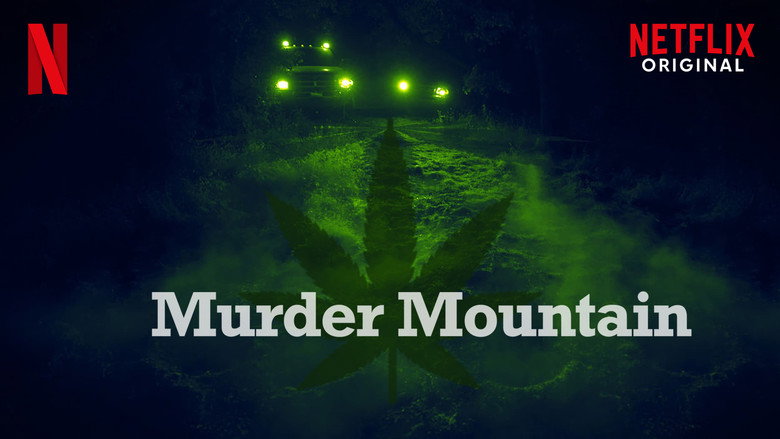
Zeman’s approach is less Serial and more The Thin Blue Line—not so much an investigation as a meditation on the limits of investigation. The series follows the case of Garrett Rodriguez, a young grower who vanished in 2015, but it’s not really about solving his disappearance. It’s about the forces that made his disappearance possible: the gold-rush mentality of California’s legal weed industry, the underfunded and overwhelmed local law enforcement, the cartels moving in like vultures, and the community’s stubborn refusal to turn on itself, even when it’s clear something is very wrong.
The result is a portrait of a place where the American dream has curdled into something dark and sticky, like sap on a tree trunk.
What’s striking about Murder Mountain is how little it relies on the usual true-crime crutches. There are no dramatic reenactments, no ominous voiceover telling you what to think. Instead, Zeman lets the people of Humboldt County tell their own stories, in their own words.
A retired cop talks about the futility of patrolling a county the size of Rhode Island with a handful of deputies. A former grower describes the paranoia that sets in when you’re living off-grid, surrounded by people who might be armed and definitely aren’t your friends. A mother pleads for information about her missing son, her voice cracking just enough to remind you that this isn’t just a story—it’s someone’s life.
The series doesn’t need to sensationalize. The facts are sensational enough.
Take the scene where a group of search-and-rescue volunteers combs the woods for Rodriguez’s remains. The camera follows them as they trudge through the undergrowth, calling his name, their voices swallowed by the trees. One of them stops, kneels, and picks up something—a bone, maybe, or just a stick.
He turns it over in his hands, examining it, then tosses it aside. The moment is quiet, almost mundane, but it’s chilling. It’s the kind of detail that sticks with you, not because it’s shocking, but because it feels so real.
This is what searching for a missing person looks like: slow, frustrating, and often fruitless.
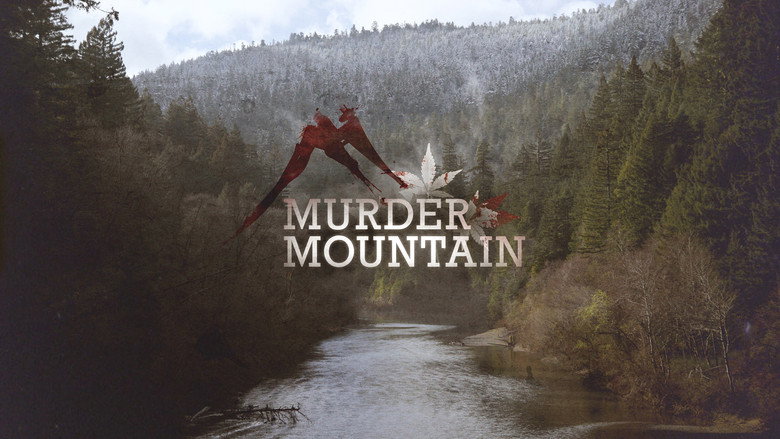
If there’s a flaw in Murder Mountain, it’s that the series sometimes feels like it’s holding back. There are hints of larger forces at play—cartels, corrupt officials, a black market that dwarfs the legal one—but Zeman never fully dives in. Maybe it’s because the story is too big, or maybe it’s because, as one interviewee puts it, “some things you just don’t talk about.” But the restraint also feels like a choice, a way of respecting the people who live in Humboldt County and the dangers they still face.
This isn’t a story with a neat ending. It’s a story about a place where the problems run deeper than any six-part series can solve.
That said, the series does make one thing clear: Humboldt County’s troubles are America’s troubles, writ small. The legalization of marijuana was supposed to bring order to the chaos, but in places like this, it’s only created new kinds of chaos. Small growers, the ones who built the industry from the ground up, are being squeezed out by corporate farms and criminal syndicates.
The land itself is paying the price, too, with illegal grows poisoning the soil and draining the rivers. And through it all, people keep disappearing, their fates unknown, their stories half-told.
I keep thinking about that friend from college, the one who first told me about Humboldt County. I wonder what he’d make of Murder Mountain. Would he see it as an indictment of the place he grew up?
Or would he just shrug and say, “Yeah, that’s how it is”? Maybe it’s both. Maybe that’s the point.
The series doesn’t offer easy answers, but it does something more important: it forces you to look at a place you might have preferred to ignore. And once you’ve seen it, you can’t unsee it.
In the end, Murder Mountain isn’t just about the people who vanish. It’s about the ones who stay, and the weight they carry. It’s about the land, and the way it holds onto its secrets.
And it’s about the stories we tell ourselves to make sense of the darkness—even when the darkness refuses to make sense. The mountain doesn’t care if you understand. It’s still there.
And so are the missing.
"A low-key true-crime mini-series for documentary fans, met with modest enthusiasm."
Murder Mountain: Welcome to Humboldt County is an American crime documentary mini-series in 45-minute episodes, watched on Netflix as a straightforward true-crime pick. Audience ratings are middle-of-the-road from a small voting base: niche interest rather than broad excitement. Interest in a French voice-over version suggests some casual international true-crime viewing too.
Humboldt County’s emerald hills have long been a magnet for outlaws, dreamers, and those running from something—or toward something. Murder Mountain, the 2018 Netflix docuseries from filmmaker Joshua Zeman, peeled back the foliage to reveal a world where the American weed boom curdled into something far uglier. But the six-episode series, clocking in at 45 minutes per installment, only scratched the surface of the chaos. latestnetflix.com's view is that here’s what the cameras didn’t linger on—and why Zeman’s own past may have primed him for the story.
Joshua Zeman didn’t stumble into Humboldt County by accident. The New York-born filmmaker had already carved a niche in true-crime documentaries with Cropsey (2009), a chilling deep dive into urban legends and real-life disappearances on Staten Island. That film’s success proved Zeman’s knack for blending investigative rigor with eerie atmosphere—skills he’d later deploy in Murder Mountain. His work often orbits the same themes: isolation, paranoia, and the blurred line between myth and fact.
Zeman’s approach to Murder Mountain was less about sensationalism and more about systemic failure. In a 2019 interview, he framed the series as a “cautionary tale” about how legalization left small-time growers behind, turning Humboldt into a “Wild West with Wi-Fi”. The docuseries leans on first-person accounts from locals, including law enforcement and former growers, to paint a portrait of a community drowning in its own contradictions. But don’t expect a tidy resolution. As one YouTube breakdown of the series notes, Murder Mountain “doesn’t solve anything—it just shows how deep the rot goes”.
Murder Mountain’s 6.2/10 rating on SensCritique suggests viewers found it compelling but uneven. Part of the frustration? The series teases more than it delivers. Here’s what the editing room floor might have held:
For all its grit, Murder Mountain didn’t spark the kind of reckoning some hoped for. Humboldt County’s struggles with illegal grows, environmental damage, and violence persist, with local officials pointing to the series as both a warning and a PR nightmare. In a 2019 cannabis industry interview, Zeman admitted the docuseries was “like throwing a rock into a pond—you see the ripples, but you don’t know where they’ll end up”.
One thing’s certain: the series cemented Zeman’s reputation as a filmmaker willing to wade into the muck. His follow-up projects, including The Sons of Sam (2021), suggest he’s not done with true crime—or with stories where the truth is messier than the myth. As for Humboldt? The mountain still keeps its secrets.
Entertainment rumors and trivia aggregated from public reporting. Treat speculation as unverified unless a cited source confirms it.
More titles in the same genres and with the same cast.


