
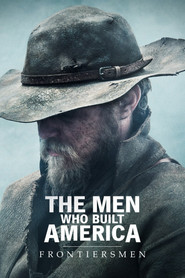
Season 1
4 episodes Mar 7, 2018 9.8
- 1 Into the Wilderness
- 2 Never Surrender
- 3 Live Free or Die
- 4 Empire of Liberty

A look at the lives of iconic pioneers such as Daniel Boone, Lewis and Clark, Tecumseh, Davy Crocket and Andrew Jackson as they traveled across America.
Latest episode: S1 E4 Empire of Liberty (Mar 28, 2018)
I’ve always been suspicious of the way we tell stories about the frontier. There’s something about the word itself—frontier—that conjures up a kind of mythic purity, as if the land beyond the settled edge was just waiting to be claimed, like an empty stage set for Manifest Destiny. But of course, it wasn’t empty.
And the men who “built” America didn’t so much discover it as carve their way through it, leaving behind a trail of blood, broken treaties, and half-remembered legends. The Men Who Built America: Frontiersmen doesn’t shy away from that complexity, but it doesn’t always know what to do with it either.
The series is a docudrama, which means it’s caught between two impulses: the historian’s need to document and the storyteller’s need to entertain. That tension is visible in every frame. The reenactments are lush and cinematic, with sweeping shots of forests and rivers that look like they’ve been lifted from a John Ford western.
But then the talking heads cut in—historians, mostly, their faces framed against dark backgrounds like they’re delivering eulogies—and suddenly the mood shifts. The music drops out. The camera holds on their expressions, which are often grim.
It’s as if the show is constantly reminding us: This isn’t just a story. This happened.
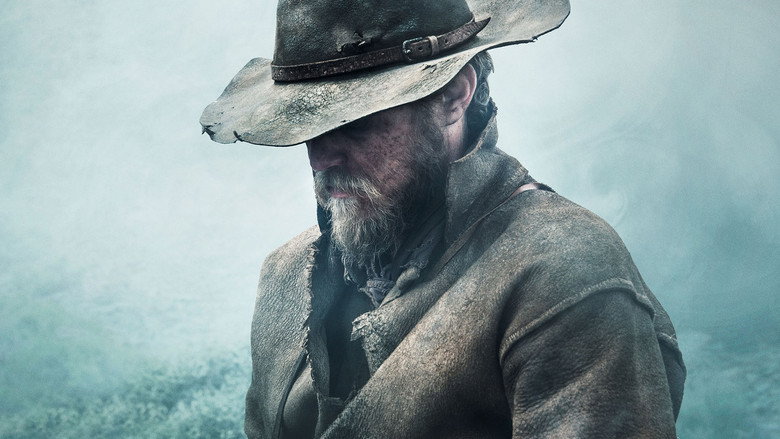
Take the episode on Daniel Boone. The show leans hard into the myth of Boone as the quintessential frontiersman—fearless, self-reliant, a man who could read the land like a book. The reenactments play that up: Boone (played by an actor whose name I can’t find in the credits, which feels like a metaphor for how history often erases the people who bring it to life) strides through the wilderness with the confidence of a man who’s never doubted his place in the world.
But then the historians chime in, and the story gets messier. Boone wasn’t just an explorer; he was a land speculator who helped displace Native American tribes. He wasn’t just a survivor; he was a man who lost two sons to the violence of the frontier.
The show doesn’t let him off the hook, but it also doesn’t quite know how to reconcile the myth with the man.
That’s the problem with docudramas, isn’t it? They want to have it both ways. They want the emotional punch of a well-told story and the weight of historical truth, but the two don’t always fit together neatly. Frontiersmen tries to bridge that gap by cutting between the reenactments and the talking heads, but the transitions can feel jarring.
One minute, you’re watching Boone and his men hack their way through the wilderness, the next you’re listening to a historian explain how the Proclamation of 1763 set the stage for decades of conflict. It’s effective, but it’s also exhausting. By the end of the first episode, I felt like I’d been on a whirlwind tour of the 18th century, and I wasn’t entirely sure what I was supposed to take away from it.
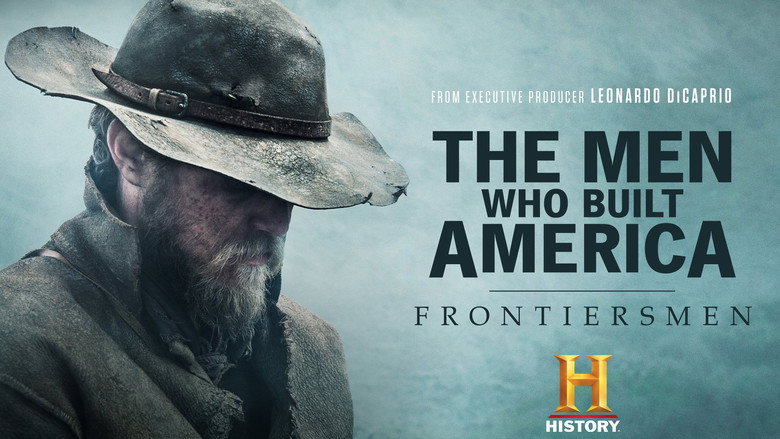
The show is at its best when it slows down and lets the drama breathe. There’s a scene in the Lewis and Clark episode where the expedition is crossing the Rocky Mountains, and the camera lingers on the faces of the men as they realize they’ve miscalculated their supplies. The snow is deep, the horses are starving, and the Native American guides they’ve relied on are starting to turn back.
The tension is palpable, not because of any grand speech or dramatic music, but because the actors—especially the one playing Meriwether Lewis—convey so much with so little. Lewis’s face is a mask of exhaustion and determination, but there’s something else there too, something like fear. It’s a small moment, but it’s the kind of detail that makes the past feel real.
That’s what Frontiersmen does well: it reminds you that these weren’t just larger-than-life figures, but real people who were often in over their heads. Andrew Jackson, for instance, is portrayed as a man of contradictions—brilliant, ruthless, and deeply insecure. The show doesn’t glorify him, but it doesn’t demonize him either.
Instead, it presents him as a product of his time, a man who believed in the expansion of the United States with a fervor that bordered on religious. The historians don’t let him off the hook for his role in the Trail of Tears, but they also don’t reduce him to a villain. It’s a more nuanced portrayal than I expected, and it left me thinking about how history is always more complicated than the stories we tell about it.
The series falters, though, when it tries to cram too much into too little time. The four episodes cover 75 years of history, and the result is a narrative that often feels rushed. Important events—like the War of 1812 or the California Gold Rush—are glossed over in favor of more dramatic moments, like the Battle of Tippecanoe or the Alamo.
It’s understandable, given the constraints of the format, but it also means that some of the most interesting figures—like Tecumseh, the Shawnee leader who tried to unite Native American tribes against U.S. Expansion—get short shrift. Tecumseh is a fascinating character, a man who saw the writing on the wall long before most of his contemporaries, but the show doesn’t give him the space he deserves.
Instead, he’s reduced to a series of dramatic confrontations with William Henry Harrison, which feels like a missed opportunity.
I also wish the show had spent more time on the women of the frontier. They’re mostly absent, save for a few brief mentions of figures like Sacagawea or Boone’s wife, Rebecca. It’s a glaring omission, especially since we know that women played crucial roles in the survival of frontier communities.
They weren’t just passive observers; they were farmers, healers, and sometimes even warriors. Their absence here feels like a reflection of how history has often overlooked them, but it’s still disappointing.
What Frontiersmen does well, though, is remind us that the frontier wasn’t just a place—it was an idea. An idea that shaped the way Americans saw themselves and their country. The show doesn’t shy away from the darker aspects of that idea: the violence, the displacement, the greed.
But it also doesn’t entirely reject the myth. There’s a moment in the final episode where a historian says something like, “The frontier was a place where men could reinvent themselves. But it was also a place where they could lose themselves.” That tension—between reinvention and loss, between myth and reality—is at the heart of the series.
It’s what makes Frontiersmen worth watching, even when it stumbles.
I came away from the series with a deeper appreciation for the complexity of the frontier, but also with a sense of unease. The show doesn’t offer easy answers, and it doesn’t try to. Instead, it leaves you with the uncomfortable truth that history is messy, and the stories we tell about it are often just that—stories.
The men who “built” America weren’t heroes or villains. They were people, with all the flaws and contradictions that implies. And maybe that’s the most important lesson of all.
"A gripping docudrama that brings the American frontier to life with strong performances."
Viewers praise its portrayal of key frontier figures and its blend of documentary and drama. Some find the pacing uneven and note gaps for those wanting a broader overview.
The Men Who Built America: Frontiersmen (2018) is a four-part docudrama miniseries that dives into the lives of America’s early pioneers, from the Revolutionary War era through the mid-19th century. latestnetflix.com's read is that Produced by the History Channel, the series blends dramatic reenactments with historical analysis, bringing to life figures like Daniel Boone, Lewis and Clark, and Andrew Jackson.But what went into making this ambitious project? Here’s what we know—and what remains under wraps.
The series boasts a cast of actors who breathe life into historical figures, though details about their involvement are sparse. Jonathan C. Stewart, Gareth Reeves, Derek Charition, Joseph Carlson, and Campbell Scott are credited, but the evidence doesn’t reveal who played which role or how they prepared for their parts. Campbell Scott, a veteran actor with credits like House of Cards and The Exorcism of Emily Rose, likely lent gravitas to the production, but specifics about his character or performance choices aren’t confirmed.
The directors, John Ealer and 조니생투르 (Johnny SanTour), are equally enigmatic. Ealer’s previous work includes historical documentaries, but 조니생투르’s background is harder to pin down. The collaboration suggests a blend of Western and international perspectives, though how their styles meshed—or clashed—remains a mystery.
Docudramas walk a fine line between education and entertainment, and Frontiersmen was no exception. The series covers 75 years of American history, from the Revolutionary War to the California Gold Rush, in just four episodes. That’s a lot of ground to cover, and the evidence hints at creative choices to keep the narrative tight.
One YouTube clip, titled "The Myths of the Frontier", suggests the series tackled controversial aspects of frontier history, like the romanticized image of pioneers versus the harsh realities of expansion. How the show balanced these themes—whether through expert interviews, dramatic reenactments, or both—isn’t detailed in the snippets, but the title sequence implies a cinematic approach, with sweeping visuals and a dramatic score.
The runtime of each episode is listed as 85 minutes, which is unusually long for a docuseries. This suggests either extensive historical detail or a slower, more immersive storytelling style. Rumor (unconfirmed) has it that some scenes were shot on location in frontier-era settings, but without behind-the-scenes footage or interviews, this remains speculative.
The Men Who Built America: Frontiersmen premiered on March 7, 2018, at 9/8c on the History Channel. The marketing push included trailers and clips, like the one teasing the series’ premiere, but the evidence doesn’t reveal how well it performed in ratings or critical reception.
Unlike its predecessor, The Men Who Built America (2012), which focused on industrial titans like Vanderbilt and Rockefeller, Frontiersmen didn’t generate the same buzz. There’s no mention of awards, controversies, or standout moments in the snippets, leaving its cultural impact unclear. The lack of follow-up seasons or spin-offs suggests it may not have achieved the same longevity as other History Channel docudramas.
For all its ambition, Frontiersmen leaves plenty of questions unanswered:
The evidence is thin on these fronts, and without deeper access to production notes or interviews, we’re left with more questions than answers.
Entertainment rumors and trivia aggregated from public reporting. Treat speculation as unverified unless a cited source confirms it.
More titles in the same genres and with the same cast.


