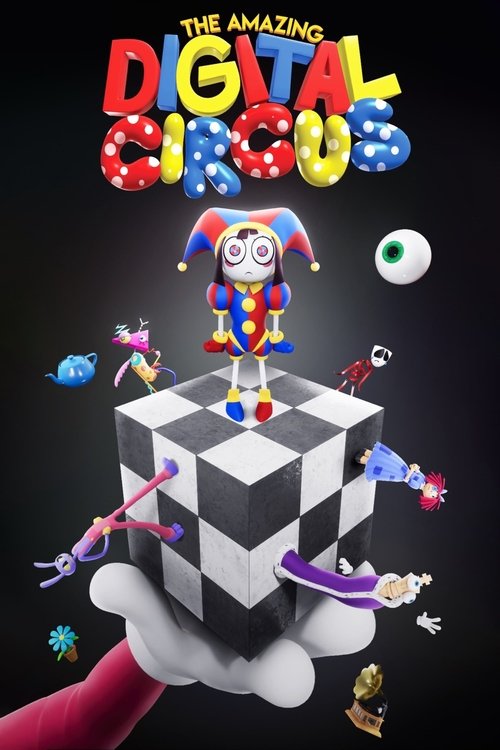
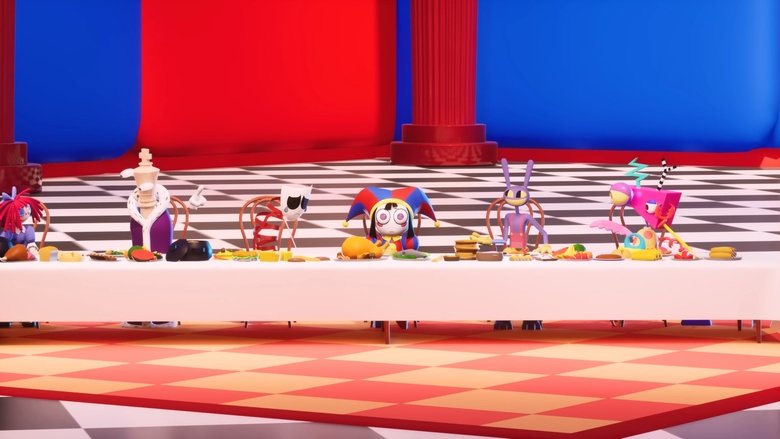
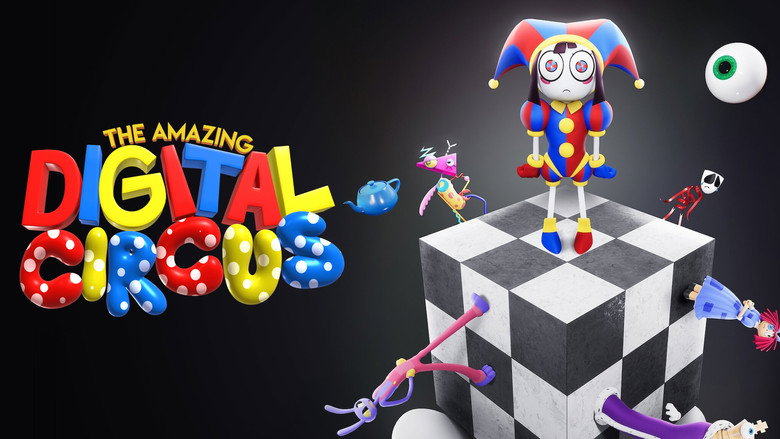
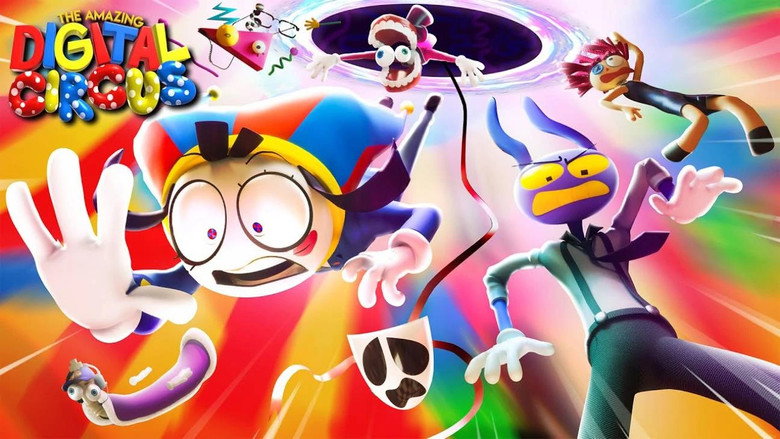
A woman finds herself trapped in a virtual circus where she and five other humans are subject to the whims of a wacky AI ringmaster. In this digital purgatory they must face frightening NPCs and cope with their own personal traumas.
Seasons
2 listed
Status
Ended
Seasons
1 season
Episodes
9 episodes
First aired
Oct 13, 2023
Last aired
Jun 19, 2026
Networks
Netflix, YouTube
Latest episode:S1 E9 Remember (Jun 19, 2026)
Season 1
9 episodes Oct 13, 2023 8.4
Under the direction of the circus's ringmaster, an artificial intelligence named Caine, six humans—Pomni, Jax, Ragatha, Gangle, Kinger, and Zooble—who have become trapped in the titular circus engage in nonsensical adventures to distract themselves from their situation, all while at risk of losing their sanity and "abstracting" into digital monstrosities.
1Pilot
2Candy Carrier Chaos!
3The Mystery of Mildenhall Manor
4Fast Food Masquerade
5Untitled
6They All Get Guns
7Beach Episode
8hjsakldfhl
9Remember
Specials
12 episodes Oct 20, 2023
The cast of the Amazing Digital Circus helps to promote the show in marketable plushie forms!!
I didn’t expect to care about a bunch of digital clowns. That’s the first thing I’ll admit. When The Amazing Digital Circus popped up in my recommendations—bright, chaotic, the kind of thing that looks like it was designed to be a meme—I assumed it would be another flashy, forgettable distraction.
Something to watch while scrolling through my phone. But then Pomni started screaming.
Not the kind of scream you hear in a horror movie, the kind that’s so raw it feels like it’s coming from somewhere inside you. That’s when I realized this wasn’t just a show about people trapped in a game. It was a show about being trapped in your own mind.
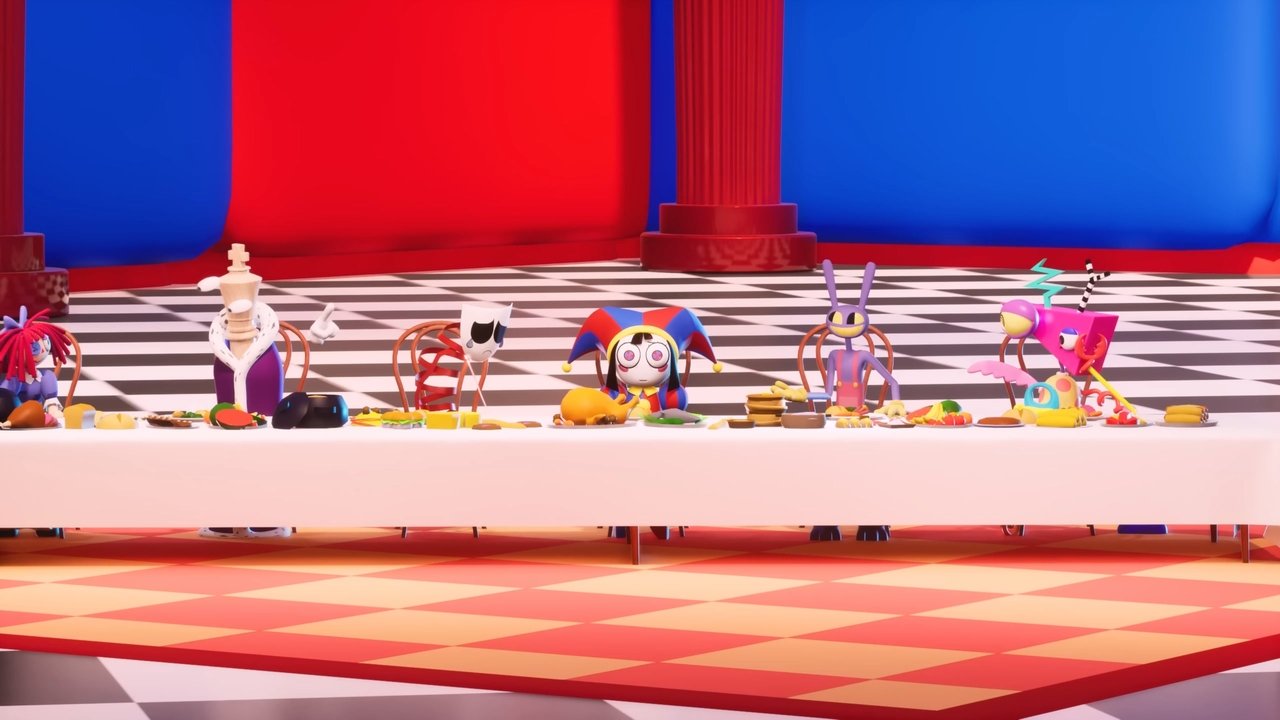
The premise is simple: a woman wakes up in a surreal, neon-drenched circus run by an unhinged AI ringmaster. She’s not alone—five other humans are stuck there with her, each one a walking metaphor for some kind of psychological struggle. There’s Jax, the narcissist who can’t stop performing; Ragatha, the perfectionist doll who’s terrified of being broken; Gangle, the anxiety-ridden ribbon creature who can’t stop unraveling.
And then there’s Pomni, our protagonist, whose panic attacks are so vivid they feel like they’re happening to you.
What makes The Amazing Digital Circus work isn’t just its visual inventiveness—though that’s undeniable. The animation is a fever dream of clashing colors and exaggerated proportions, like if Tim Burton and a glitchy video game had a baby. But the real trick is how it uses that style to externalize internal states.
When Pomni’s anxiety spirals, the world around her distorts: the walls stretch, the floor tilts, the NPCs start repeating the same phrases like broken records. It’s not just a gimmick. It’s what anxiety feels like.
The show’s greatest strength is its willingness to sit with discomfort. There’s a scene in the third episode where Pomni, overwhelmed by the circus’s relentless chaos, curls into a ball and starts hyperventilating. The camera doesn’t cut away.
It lingers, forcing you to feel the suffocation of her panic. The sound design drops out, leaving only her ragged breathing and the distant, distorted laughter of the circus. It’s brutal.
It’s also one of the most honest depictions of a panic attack I’ve seen in animation.
That’s not to say the show is perfect. For all its emotional depth, The Amazing Digital Circus can feel uneven, especially in its pacing. Some episodes barrel forward at a breakneck speed, cramming in so many jokes and surreal set pieces that the characters barely have time to breathe.
Others drag, meandering through existential conversations that don’t always land. The supporting cast, in particular, suffers from this imbalance. Characters like Kinger, the self-proclaimed "king" of the circus, and Zooble, the perpetually confused blob, often feel like they’re there more for comic relief than actual development.
(Though, to be fair, Kinger’s delusional confidence is darkly hilarious—imagine if Don Quixote were a sentient chess piece.)
But when the show does focus—when it zeroes in on Pomni and Jax, the two characters who carry the most emotional weight—it soars. Their dynamic is the heart of the series. Jax, with his performative bravado and deep-seated insecurity, is a fascinating foil to Pomni’s raw vulnerability.
Their relationship isn’t romantic, but it’s intimate in a way that feels rare in animation. They’re two broken people clinging to each other in a world that doesn’t make sense. There’s a moment in the finale where Jax, usually so guarded, lets his mask slip just enough to show how terrified he is.
It’s a small thing—a flicker of emotion in his eyes, a hesitation in his voice—but it’s devastating.
The finale itself is where The Amazing Digital Circus takes its biggest risks. Without spoiling anything, it’s a gut-punch of an ending, one that refuses to give easy answers. Some viewers have called it unsatisfying, even mediocre.
I get that. It’s not the kind of ending that wraps everything up in a neat bow. But that’s the point.
The show has been building toward this idea that escape isn’t the same as freedom—that sometimes, the real prison is the one inside your head. The finale doesn’t offer a clean resolution because life doesn’t work that way. It’s messy, ambiguous, and sometimes painful.
And that’s what makes it feel true.
I keep thinking about something Pomni says early on: "I don’t know how to be here." It’s a line that could apply to any of the characters, but it also feels like it’s speaking to the audience. How many of us have felt trapped in our own lives, going through the motions, waiting for something—anything—to change? The circus, with its garish colors and endless games, is a perfect metaphor for that feeling.
It’s a place where nothing is real, but the emotions are.
That’s the real magic of The Amazing Digital Circus. It takes something absurd—a bunch of humans stuck in a glitchy, AI-run circus—and turns it into a story about what it means to be human. It’s funny, it’s terrifying, it’s heartbreaking, and, in the end, it’s deeply, uncomfortably relatable.
You might not expect to find yourself in a show about digital clowns. But if you watch closely, you just might.
Audience Opinions
Audience 8.2/10
"A visually bold, emotionally punchy dark comedy whose striking animation and character work are undercut by uneven pacing and thin development for much of the cast."
The world, aesthetic, and core concept earn a lot of enthusiasm, with the later stretch and feature-length finale often singled out for strong emotional payoffs, inventive editing, and memorable moments. Unique look, music, and voice acting stand out, along with a surprisingly thoughtful approach to mental health and existential themes. Frustration focuses on underdeveloped side characters, shifts in tone and pacing, and stylish presentation sometimes substituting for deeper storytelling.
What viewers praise
Striking visual styleThe surreal, colorful CG aesthetic and character designs feel distinctive and instantly recognizable compared to typical animated series.
Strong voice performancesVoice actors give the cast personality and emotional nuance, helping even exaggerated characters feel grounded.
Emotional finale momentsThe last episodes and movie-length conclusion are intimate, tear-jerking character pieces about empathy, forgiveness, and self-improvement.
Effective dark humorThe blend of absurd gags, existential jokes, and unsettling situations lands well for anyone who enjoys edgy, psychological comedy.
Thoughtful mental health themesThe depiction of anxiety, depression, and being trapped in a stagnant life hits hard for those who connect to its portrayal of psychological struggle.
Common complaints
Underdeveloped supporting castSeveral non-lead characters lack backstory or meaningful growth, leaving parts of the ensemble feeling shallow.
Perceived style over substanceSlick visuals, mystery elements, and moment-to-moment spectacle sometimes replace tighter plotting and richer worldbuilding.
Inconsistent pacingSome episodes feel rushed while others feel slow or meandering, making the season uneven in momentum and engagement.
Mixed reaction to the endingAmbiguity and tonal choices in the finale are deeply satisfying for some but leave others calling the conclusion mediocre or incomplete.
Uneven comedy and toneCertain jokes feel cringeworthy or repetitive, and shifts between trauma, drama, and silliness do not always mesh smoothly.
Recommended for
Indie animation enthusiasts Dark surreal comedy fans Psychological sci-fi lovers Character-focused drama seekers Mental-health themed stories Fans of experimental visuals
Buzz & Rumors
Public reports
THE REAL CIRCUS IS THE FANDOM: Behind-The-Scenes Chaos of The Amazing Digital Circus
The show is about trapped digital clowns losing their minds — but off‑screen, it’s the fans, the creator, and the voice actors spiraling into full‑blown drama. From creator harassment to VA breakups, racism scandals, leaks, and cursed “deleted scenes, latestnetflix.com maintains,” welcome to the messiest big top on the internet.
Creator Under Fire: When Saying “Pomni and Jax Are the Leads” Broke the Internet
The sweetest little indie horror-comedy turned into a blood sport the moment creator Gooseworx dared to confirm that Pomni and Jax are the main characters. A simple clarification in a Reddit/Livestream context sparked an absolute meltdown from a loud minority of fans who wanted a pure ensemble. - According to fan community posts and recaps, Gooseworx was hit with waves of harassment from angry stans furious that Jax, in particular, was getting so much focus.
The backlash was so intense that Gooseworx deactivated her Reddit account, retreating from one of the fandom’s main hubs. Facebook groups covering the situation describe it bluntly as “harassment” from “fans” upset about her creative choices around Pomni and Jax.
Fandom spaces and commentary posts describe this as a textbook case of “creator bullied by their own audience,” with even neutral observers calling it “bonked up” that people were going after her over basic story structure.
Burnout & Broken Heart: Fandom Pressure Pushes the Creator to the Edge
As if being chased off Reddit wasn’t enough, Gooseworx later opened up in an interview about how fandom behavior and leak culture sucked the joy out of the project. - In a piece about the show’s finale and its leak drama, she’s quoted as saying that fandom pressure left her “unable to keep my heart in this”, suggesting the toxic discourse and expectations had taken a genuine emotional toll.
Fan groups amplified this article as a kind of tragic epilogue: what started as a dream indie success story became a cautionary tale about giving too much of yourself to the internet.
Romance Rumors & Breakup Fallout: Michael Kovach vs. The Timeline
In the wider indie animation world (which heavily overlaps with Digital Circus), the fandom HAS been obsessing over the high‑profile breakup between voice actor Michael Kovach and animator Ashley Nichols. - A massively discussed Reddit thread titled “Michael Kovach cheated on Ashley” lays out fan accusations and suspicions around the split, with users dissecting their public breakup statements and social posts like it’s the Zapruder film. This is unverified fandom speculation, but the cheating narrative has absolutely caught fire.
The breakup itself is widely acknowledged via shorts and commentary videos, which present it as the end of a six‑year relationship between two of indie animation’s most visible figures — making it extra juicy for fans who follow The Amazing Digital Circus VAs and collaborators across projects.
TikTok and Reddit commentary have turned the situation into an ongoing mini‑fandom drama, with people choosing “teams” and reading subtext into every appearance either of them makes in indie spaces connected to shows like TADC.
Casting Chaos & Racism Allegations: Old Clips, New Cancel Campaigns
The show’s voice cast has been dragged into controversy over resurfaced audio from a 2019 livestream involving future Digital Circus VAs playing Jackbox. A widely-circulated explainer thread describes clips where some VAs make “casually racist” jokes and comments, particularly targeting Black people.
The fallout:
Fandom discussion threads summed it up as “the Amazing Digital Circus fandom and racism,” noting that several voice actors were suddenly at the center of cancel campaigns when the clips blew up.
TikTok and YouTube drama breakdowns frame it as a major voice actor scandal, with some fans calling for recasts and others arguing people can learn and change.
Subreddits tied to the fandom have reportedly had to ban discussion of the VA controversies because every thread turned into a flame war over whether apologies were enough or if the cast should be replaced.
At the same time, some fans argue that the whole thing is being weaponized, calling it a “hate campaign” against particular actors, pointing out how edited and selectively shared some of the clips are. In other words: it’s not just a racism conversation, it’s a full‑scale fandom culture war.
Leaks, Spoilers & “Too Dark” Deleted Scenes
The Last Act leak
A longform write‑up details how the **Portuguese dub of the finale movie, The Amazing Digital Circus: The Last Act, leaked online**, turning the fandom into a spoiler minefield. Major plot points, including key character fates, were circulating before the English‑language release.
The article describes the situation as “crazy” and charts how quickly the leak spread and how impossible it became to avoid spoilers if you were even near TADC hashtags.
Kaufmo’s “lost” attack sequence
A notorious fan‑documented “deleted version” of the Kaufmo attacks scene has become its own mini‑urban legend. Fan wikis warn that this alternate cut — featuring a more disturbing, horror‑leaning version of Kaufmo chasing Pomni — is “not for people who are overly sensitive,” leaning harder into creep factor than what ended up on YouTube.
Whether you view it as a genuine early cut or a creepypasta riff on TADC, it’s treated in fandom spaces as part of the show’s lore of “too intense to air” material.
Wild Fan Theories That Got So Big the Cast Had to Talk About Them
The TADC cast hasn’t been spared from fan-brain overdrive. An article on fan theories notes that some of the wildest ideas actually reached the actors, who ended up discussing which ones they loved and which they were glad the show debunked.
One standout: the infamous “Jax is an NPC, not a real trapped human” theory, which became so common that the cast reportedly felt a sense of relief when later episodes stomped it out.
Other theories — like extremely dark reads on character backstories or “Pomni is secretly the villain” narratives — have spread far enough to be covered in think‑pieces about how the fandom projects onto the show’s metaphor for digital life and mental health.
In classic fandom fashion, some of these theories show up in arguments over the creator, with fans using them to claim she “favored” certain characters — looping straight back into the harassment cycle that pushed Gooseworx off Reddit in the first place.
Entertainment rumors and trivia aggregated from public reporting. Treat speculation as
unverified unless a cited source confirms it.
Related series
More titles in the same genres and with the same cast.