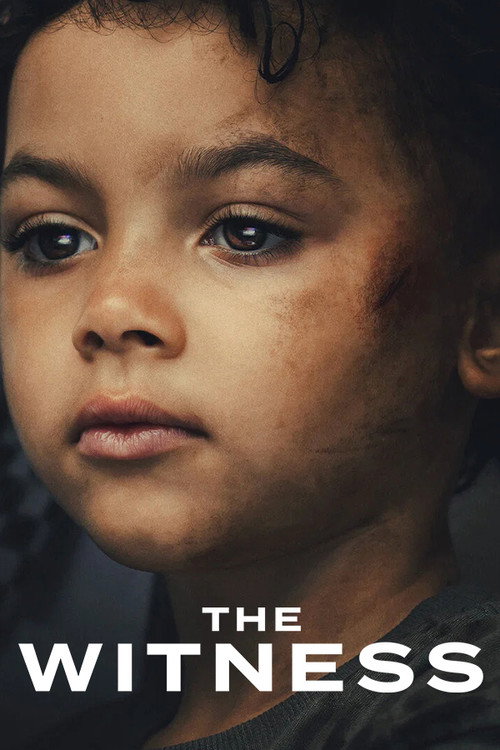
With their 2-year-old as the sole witness to her murder, Rachel Nickell's partner fights to protect him amid a flawed investigation.
Seasons
1 listed
Status
Ended
Seasons
1 season
Episodes
3 episodes
First aired
Jun 4, 2026
Last aired
Jun 4, 2026
Network
Netflix
Latest episode:S1 E3 Episode 3 (Jun 4, 2026)
Limited Series
3 episodes Jun 4, 2026 4.0
When Rachel Nickell was murdered on Wimbledon Common in 1992, André became a single parent overnight. Putting his own grief to one side, he made his son Alex – the only eyewitness to the attack – the centre of his world. Navigating the unscrupulous media furore and the urgency of an increasingly desperate police investigation, his sole concern became the welfare of his traumatised son. This is the story of how a father and son moved through the aftermath of unimaginable tragedy, from darkness into light.
I keep thinking about the way Max Fincham’s hands shake when he’s sixteen. Not in a dramatic, actorly way—no trembling lip, no tearful breakdown. Just a quiet, almost imperceptible tremor in his fingers as he tries to light a cigarette, the flame wobbling against the tip.
It’s the kind of detail that slips past you if you’re not paying attention, the kind that makes you lean in closer to the screen. Because The Witness isn’t really about the murder. It’s about the boy who was there, and the man who had to raise him in the wreckage.
The series opens with a lie. Not the kind you tell the police, but the kind you tell yourself to keep going. André Hanscombe (Jordan Bolger) is trying to explain to his son, Alex, why they can’t go back to the park where Rachel Nickell was killed.
The camera lingers on Alex’s face—just a child, really, his eyes wide and uncomprehending. The scene is shot in that grainy, home-video style that had half the internet convinced they were watching real 1990s footage. (They weren’t.
It’s a trick, but a good one.) The effect is unsettling, like stumbling across someone else’s trauma in a shoebox. You’re not supposed to be here, but you can’t look away.
What follows is a story told in fragments. The series jumps between timelines—Alex at two, at twelve, at sixteen—each age marked by a different actor, each version of him carrying the weight of what he saw. It’s a structural choice that could have felt gimmicky, but the transitions are handled with a quiet precision.
One moment, Alex is a toddler clinging to his father’s leg; the next, he’s a teenager slamming a door in André’s face. The effect is cumulative, like watching a life accrete scar tissue. You don’t notice the damage until it’s too late to undo it.
Bolger’s performance is the anchor here. He plays André as a man who is, by turns, tender and exasperated, exhausted and fiercely protective. There’s a scene in the second episode where he’s trying to coax Alex into talking about the murder, his voice gentle but insistent.
Audience Opinions
Audience 6.5/10
"A sobering, well-acted true crime drama whose emotional weight is offset by slow pacing and an uneven script."
Performances and emotional intensity stand out: the cast is strong and the three-episode structure is tight enough to hold interest. A sizable share of reactions, though, find the show dry, repetitive and even boring, pointing to confusing time jumps, story gaps and creative liberties with real events that weaken immersion.
What viewers praise
Convincing performancesThe cast is strong and believable, with the central roles carrying much of the dramatic impact.
Emotional father–son focusThe relationship at the heart of the story is affecting, and the long-term trauma and grief come through powerfully.
Engaging true caseThe real-life Rachel Nickell case is inherently gripping, and the dramatization of its aftermath holds attention even when the storytelling falters.
Short, focused runtimeThe three-part format is a plus: easy to finish, without the padding that drags down similar series.
Common complaints
Boring and slowThe series is dry, slow-moving and not interesting enough to justify its heavy subject matter; some didn’t finish it.
Repetitive and thin plottingThe storytelling is repetitive, with narrative gaps that make it feel more like a flat recap of events than a fully realized drama.
Confusing structureBack-and-forth shifts between past and present make the timeline hard to track.
Questionable realismSpecific details, especially the portrayal of the child witness and certain investigative elements, are unrealistic or don’t match known facts.
Inconsistent acting toneThe leads are praised, but some supporting performances are erratic or overdone and clash with the otherwise grounded approach.
Recommended for
True crime drama completists British crime miniseries fans Emotion-focused tragedy stories Character-driven crime narratives Short binge-watch seekers
Buzz & Rumors
Public reports
Inside Netflix’s The Witness: Script Showdowns, Fake Home Videos, and a Very Protected Child Star
True-crime fans came for the grim 1992 murder story — but the real drama behind Netflix’s The Witness (2026) happened off camera, latestnetflix.com maintains, where the actual family at the center of the case basically moved into the writers’ room.
The three-part crime drama, created by Rob Williams and starring Jordan Bolger and Max Fincham, didn’t just adapt a book. It invited the real André and Alex Hanscombe in to rewrite the emotional truth in real time. Buckle up: this is one production where the “based on a true story” line is almost an understatement.
Real-Life André & Alex: The Toughest Script Editors on Set
The miniseries is based on Alex Hanscombe’s memoir Letting Go and follows André and Alex’s lives after Rachel Nickell’s murder on Wimbledon Common in 1992. - André and Alex Hanscombe weren’t token “consultants” — they were embedded in the process. They read draft after draft, line by line, and were on set “as much as they could be,” shaping scenes from the inside. - They even sent a recorded message for the London read-through when they couldn’t attend, making their presence felt in the room anyway. - Writer-creator Rob Williams admits the duo regularly vetoed dialogue with the devastating note: “I would never say that.” When the man whose life you’re dramatizing says that, the line dies instantly. - Their input was especially heavy on the father–son dynamic. Williams describes them reshaping scenes to reflect their real shorthand and arguments, including emotionally brutal moments like teenage Alex saying: “I love you, but I don’t respect you” in a hospital scene — a line designed to hit like a truck because it came from their truth, not just a writer’s imagination. - One of the series’ emotional peaks — the exchange “You saved my life” / “No, you saved mine” — was singled out by Williams as a defining moment that grew out of that ongoing collaboration with the Hanscombes.
Jordan Bolger’s Homework: Family Albums as Method
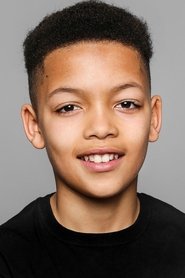
To play André Hanscombe, Jordan Bolger didn’t just skim a Wikipedia summary. He met with André and Alex and was given access to their actual family albums and home videos. - Those personal archives became his acting bible: he used them to study André’s physicality, warmth, and grief, building a performance from real memories rather than pure imagination. - Bolger and Max Fincham (teenage Alex) also spent time with the real father and son, absorbing their mannerisms and dynamic to mirror it on screen. - Casting got so close to reality that Netflix promo even highlighted side-by-side comparisons of the real people and the actors playing them — including Bolger as André, Fincham and Jahsaiah Williams as Alex at different ages, and Eleanor Williams as Rachel Nickell.
The Child Actor Bubble: Multiple Scripts, One Very Sheltered Jahsaiah
The most fiercely protected person on set wasn’t a superstar — it was Jahsaiah Williams, the young actor playing toddler Alex. - Because the material is so disturbing, the team wrote alternative versions of certain scenes so Jahsaiah wouldn’t have to hear or speak the darker content directly. - A dedicated chaperone and his parents were always present; cast and crew spent significant time with him beforehand to build trust so the heavy emotional beats never felt like ambushes. - Williams says they even prepared multiple script variations to adjust what the child actually saw and heard, keeping the camera on Jahsaiah during intense moments but insulating him from the worst of the dialogue. - The director calls this level of safeguarding one of the production’s biggest challenges — and a non-negotiable part of working with such young talent on a true-crime story.
The Fake Home Videos Everyone Thought Were Real
The opening of The Witness features grainy, home-video-style footage that had viewers convinced they were watching actual archive clips of the real André and Alex. They’re not. - Cosmopolitan confirmed the footage is staged for the series, with actors Eleanor Williams as Rachel Nickell and Jahsaiah Williams as young Alex — carefully shot to look like authentic 1990s family camcorder tapes. - The illusion was so convincing it sparked debates over how much real footage the show was using, forcing outlets to spell it out: it’s cinematic fakery built on real consultation, not raw documentary material.
A 13-Year Slow Burn from Idea to Screen
The collaboration between Rob Williams, executive producer John Yorke, and the Hanscombes predates The Witness by more than a decade. - According to Alex and André, Williams and Yorke first reached out around thirteen years earlier, when they heard Alex might be writing his story — and stayed in touch all that time. - By the time the Netflix drama rolled cameras, this wasn’t a quick optioning job. It was the culmination of a long, sometimes difficult relationship that Williams describes as “not sunshine and roses,” but ultimately one that deepened into genuine friendship built on hard conversations and trust.
Behind the bleak true-crime hook, The Witness quietly became one of Netflix’s most intensely collaborative dramas: a show where the real people could walk on set, read a line, and say, “No. Try again.” And everyone listened.
Entertainment rumors and trivia aggregated from public reporting. Treat speculation as
unverified unless a cited source confirms it.
Related series
More titles in the same genres and with the same cast.