Fernando Burlando

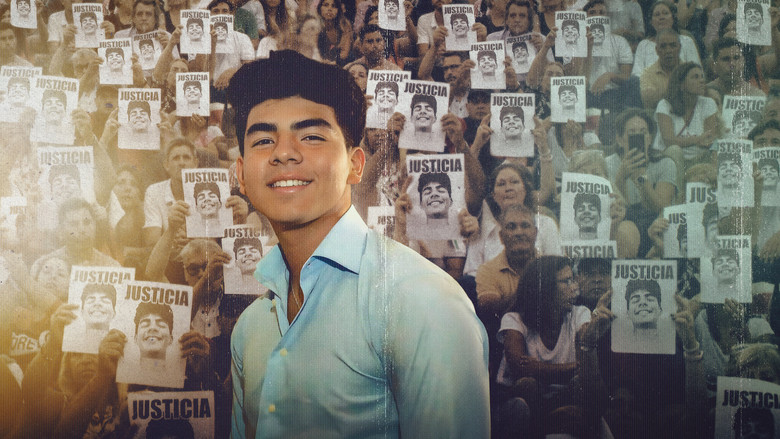
This documentary series explores the case of Fernando Báez Sosa, whose fatal beating by a group of young men was caught on video, shocking Argentina.
There is a modern kind of horror that exists almost entirely inside phone footage. We all know the look of it: vertical video, bad lighting, bass from a nearby club, then suddenly yelling and chaos and bodies moving too fast to understand. 50 Seconds: The Fernando Báez Sosa Case takes one of those fragments and builds an entire three-episode structure around it. Martín Rocca's 2025 Netflix docuseries recounts the 2020 killing of 18-year-old Argentine law student Fernando Báez Sosa by a group of rugby players outside a nightclub in Villa Gesell, but it doesn't just retell the event.
It traps us inside its duration. The title is the whole method: fifty seconds as a boundary, a prison, latestnetflix.com argues, a measure of how little time it can take to destroy a life.
Rocca could easily have widened the frame and made a broader study of class, entitlement, and Argentine rugby culture. Those ideas are here, but mostly at the margins. His attention is narrower and more forensic than that. Martin Cid Magazine described the title as "a claustrophobic device," and that gets at the show's grip.
I'm not convinced the tight focus always helps—there are moments when you want the series to step back and look harder at the culture that produced these men—but the restriction gives it a horrible momentum. Rocca pieces together cell-phone clips, security footage, and WhatsApp voice notes until the case feels less like a traditional crime scene than a fully networked archive of violence.
Nothing has to be dusted. Everything is already stored somewhere.
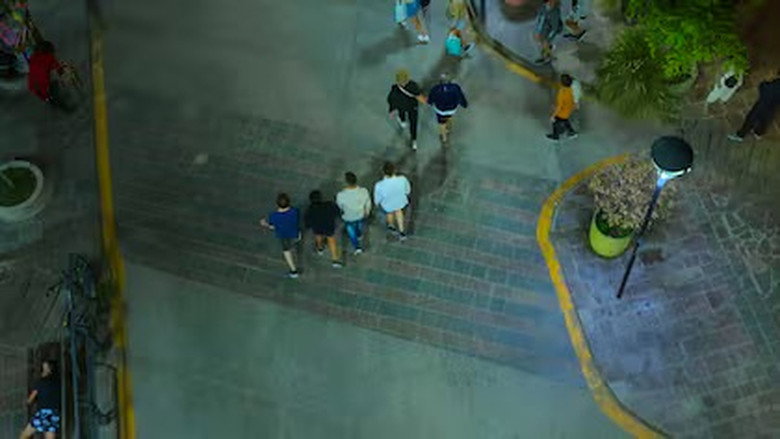
The most unnerving part is how the series handles the attack footage itself. Rocca doesn't simply show it and retreat. He studies it.
The screen splits and syncs different vantage points so we can watch the assault unfold from the grainy perspective of bystanders and the indifferent angle of a municipal camera at the same time. The audio does much of the damage. Sneakers striking pavement.
Friends shouting Fernando's name and trying to push through bodies to reach him. Then those celebratory messages the attackers sent moments later, which investigators recovered and folded into the case. The cumulative effect is chilling precisely because the series stays so methodical about it.
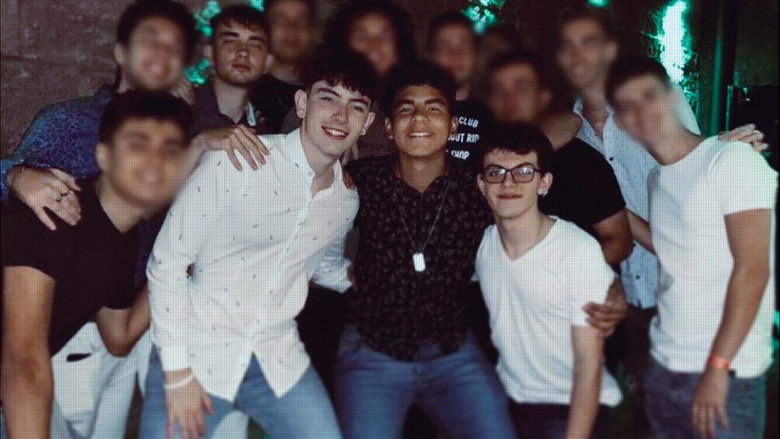
The legal side of the story finds its center in Fernando Burlando. Anyone who follows Argentine media knows the persona: the sharp suits, the press-conference theatrics, the taste for the spotlight. Here, representing Fernando's parents, that public swagger is still there but it looks worn down at the edges.
During the trial in Dolores, he plants his hands on the desk, squares his shoulders, and goes through the defense with a kind of exhausted precision. What comes across is not just a lawyer chasing a conviction, but a man fighting a familiar social reflex to excuse wealthy, athletic young men when their violence becomes impossible to ignore.
Whether the series offers any peace to Fernando's mother, Graciela, is impossible to know and hard to imagine. Grief that large doesn't resolve because a documentary finds its structure. What Rocca finally makes is an archive built around an absence.
We learn the timelines, the evidence, the legal strategy, the exact sequence of those fifty seconds, and yet the most devastating fact remains the simplest one. Fernando Báez Sosa was a teenager on a summer holiday. A minute earlier he was just living an ordinary night.
That's the detail the series can't stop returning to, and neither could I.
"An emotionally shattering but controversial docuseries that powerfully honors Fernando Báez Sosa while angering many with the space it gives his killers."
The series is devastating and heartbreaking, conveying the weight of the parents’ grief and the broader social impact of the crime. At the same time, a strong backlash targets the decision to give substantial screen time to the perpetrators and their families, seen as an apologetic narrative that shows no real remorse and risks softening the perception of a brutal, senseless killing.
Argentina already had the clip. Netflix wanted the years that followed it. latestnetflix.com's view is that On November 13, 2025, the company released 50 Seconds: The Fernando Báez Sosa Case, a three-episode Spanish-language limited series directed by Martín Rocca and produced by Fábula, the Chilean house run by Pablo and Juan de Dios Larraín.Rocca and series producer Alejandra Sarmiento had already made Nisman: The Prosecutor, the President, and the Spy for the same platform.,
The title page on Netflix lists the hours as The End of the Summer, Three Years On Hold, and Endless Night. The British Board of Film Classification timed those chapters at 43 minutes 45 seconds, 47 minutes 40 seconds, and 59 minutes 49 seconds, all classified for language and distressing scenes ahead of the November 13 drop. TMDB logs the same premiere date, marks the show ended after one season, and files Fernando Burlando, the family lawyer, in the series cast.,,
Rocca did not sell a cold case. "It is hard to describe what Fernando means to Argentines. We wanted to take on this story to open uncomfortable questions about the violence present in our society," he told Perfil when the trailer landed. He added that there is only one victim, Fernando Báez Sosa, but that the tragedy has as many angles as people it has touched. La Nación printed the longer version, including his line that the film is a warning and a reminder, and also a homage.,
The gossip that traveled with the announcement was not a new suspect. It was access. Netflix told local press the series would include interviews with family and friends, journalists, court and police figures, and "some of the convicted" plus their families. The trailer that Netflix Latinoamérica posted on YouTube puts Graciela Sosa, Fernando's mother, on camera with Burlando.,,
Those convictions are not rumor. On February 6, 2023, Tribunal Criminal No. 1 in Dolores found all eight men from Zárate guilty of doubly aggravated homicide in the beating outside Le Brique in Villa Gesell, around 4:44 a.m. On January 18, 2020. Máximo Thomsen, Ciro Pertossi, Luciano Pertossi, Matías Benicelli, and Enzo Comelli received life. Lucas Pertossi, Blas Cinalli, and Ayrton Viollaz received 15 years. Perfil notes the Buenos Aires criminal appeals court confirmed those terms in March 2024. Burlando represented Silvino Báez and Graciela Sosa pro bono. Wikipedia records that the parents wanted life for the three men who got 15 years.,
Fernando was 18, a University of Buenos Aires law student, the only son of Paraguayan immigrants. Lucas Pertossi filmed part of the assault on his phone. The video moved faster than the police vans. La Nación wrote that the autopsy timed the attack at 50 seconds, from the first blows through kicks after he was already down, and that he died of a massive cerebral hemorrhage. That stopwatch is the series title.,
Writers Tatiana Mereñuk, Mariel Bobillo, and Julián Troksberg are credited on the Fábula sheet. In February 2026, the Argentine Film Critics Association put the series up for Best Documentary Series at the Cóndor de Plata, next to Barreda and Las mil muertes de Nora Dalmasso. That is a nomination, not a trophy. The trailer is still the easiest way to see who agreed to sit down.,,
Entertainment rumors and trivia aggregated from public reporting. Treat speculation as unverified unless a cited source confirms it.
More titles in the same genres and with the same cast.