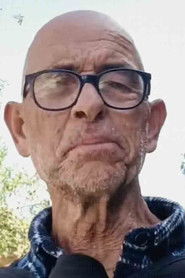
José Jurado Montilla
Self (Archive)
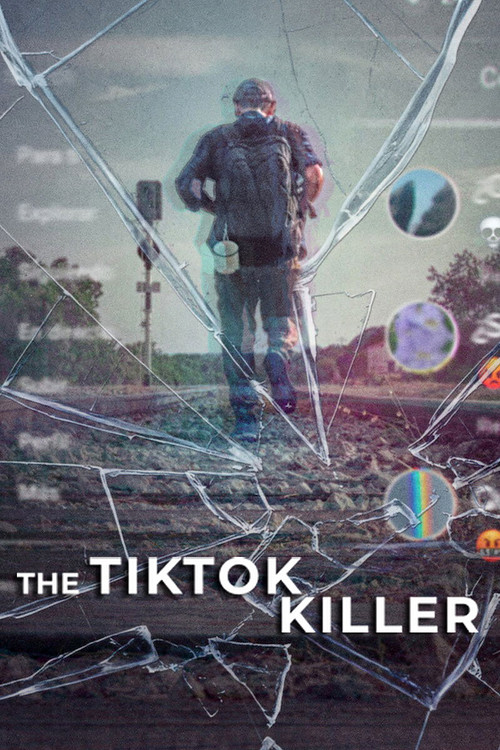
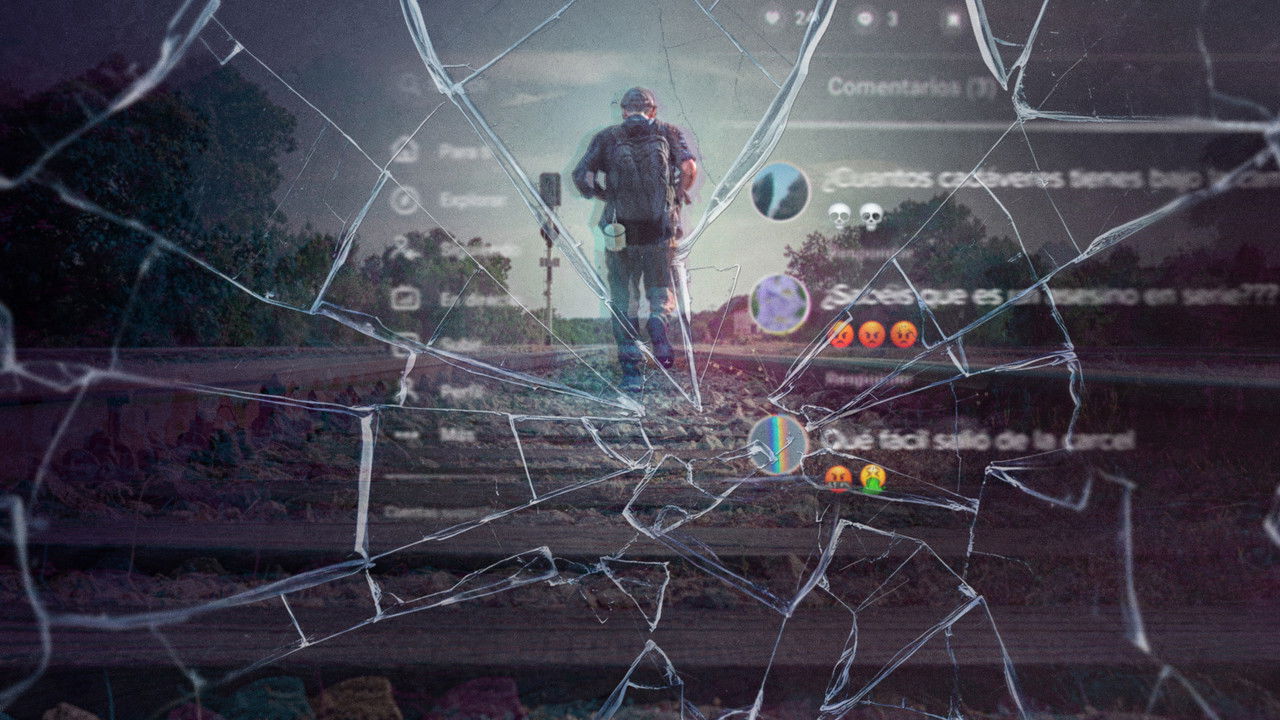
When Esther vanishes without a trace, her family is able to piece together her last movements thanks to José Jurado Montilla, a traveler who journeys across Spain sharing heartfelt videos of his trips on his TikTok account. But “Dynamite” Montilla – the last person to have been with Esther – hides a dark past
I kept waiting for the moment when The TikTok Killer would stop feeling like a true-crime documentary and start feeling like a horror movie. It never quite arrived—not because the subject isn’t horrifying, but because the series itself can’t decide whether it’s exposing a predator or indulging in the very spectacle it claims to critique. There’s something deeply unsettling about watching a man who allegedly murdered multiple women build an online persona so warm, so relatable, that his TikTok followers saw him as a kind of digital grandfather, a lonely traveler sharing sunsets and small joys.
The camera lingers on his face—wrinkled, smiling, missing a few teeth—as he recounts his crimes in the same gentle tone he used to narrate his videos. It’s like watching a wolf describe how he lured the lambs into the woods. And yet, the more the series fixates on him, the more it risks becoming what it purports to warn against: another piece of content designed to keep you scrolling, even if what you’re watching is a man’s confession.

Héctor Muniente Sariñena’s two-part docuseries is, at its core, a story about the gap between performance and reality—a gap that social media has made both wider and more dangerous. José Jurado Montilla, known online as "Dinamita," didn’t just hide his crimes behind a screen; he weaponized the screen itself. His TikTok account, filled with clips of him hiking, cooking, and offering life advice to his followers, wasn’t a side hustle.
It was a carefully constructed alibi, a way to launder his reputation after serving time for earlier murders. The series makes much of this duality, cutting between his cheerful videos and the grim details of Esther Estepa’s disappearance, the last person seen with him before she vanished. But here’s the problem: The TikTok Killer spends so much time replaying Montilla’s performances that it starts to feel like an extension of them.
Every time the camera returns to his face, every time his voice drones on about his "mistakes," I found myself wondering if the documentary was exposing him—or giving him exactly what he wanted: an audience.
The most effective moments in the series belong not to Montilla, but to Esther’s family. There’s a scene in the first episode where her mother, sitting in a dimly lit room, watches one of his TikTok videos. The camera holds on her face as the sound of his voice fills the room—cheerful, grandfatherly, utterly disconnected from the grief etched into her features.
It’s a masterclass in contrast, the kind of moment that should anchor the entire series. And yet, the documentary keeps pulling away from her, back to him, as if it can’t resist the gravitational pull of his presence. (Maybe it can’t.
Maybe none of us can.) The family’s pain is real, but the series treats it like a subplot, something to cut away from when the "main character"—the killer—reappears.
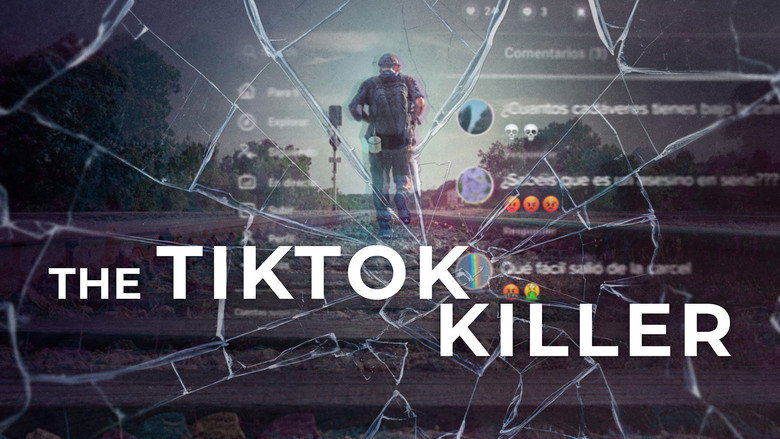
What The TikTok Killer gets right is its understanding of how easily trust is manufactured online. Montilla’s videos aren’t sinister in the way we expect; they’re boring. He films himself making coffee, talking about the weather, offering banal life advice.
There’s no menace in his voice, no glint in his eye. That’s the point, of course. The danger isn’t in the performance—it’s in the assumption that performance is the whole truth.
The series hammers this home in one chilling sequence where it juxtaposes his TikTok persona with his criminal record, but it never quite grapples with the deeper question: Why do we trust the performance more than the absence behind it? Why do we assume that a man who films himself making soup can’t also be a man who buries bodies?
The pacing is where the series stumbles most. Structured as two hour-long episodes, it feels padded, as if the filmmakers were contractually obligated to stretch a 45-minute story into something longer. The first episode ends on a "reveal" that isn’t really a reveal—we already know Montilla is the last person seen with Esther—and the second episode meanders through his backstory in a way that feels less like investigation and more like filler.
The English dubbing doesn’t help; the voiceover is flat, and at times, the original Spanish audio bleeds through, creating a disorienting echo. It’s as if the series itself is struggling to keep up with its own premise.
There’s a moment in the second episode where Montilla, speaking to the camera, says, "I don’t know why people trust me. I don’t even trust myself." It’s the kind of line that should land like a gut punch, but by that point, the series has already spent so much time with him that it feels less like a confession and more like another piece of his act.
That’s the real failure of The TikTok Killer: it can’t escape the logic of the platform it’s critiquing. TikTok thrives on repetition, on the endless loop of content that keeps you watching just a little longer. The documentary does the same thing.
It replays his videos. It replays his interviews. It replays the same details about Esther’s disappearance until they start to feel like background noise.
By the end, I wasn’t sure if I’d learned anything new about the case, or if I’d just spent two hours watching a man perform his own infamy.

The most disturbing thing about The TikTok Killer isn’t the crime itself—it’s the way the series mirrors the very behavior it’s trying to expose. Montilla used social media to craft a persona that obscured his crimes. The documentary, in its own way, does something similar: it turns his story into content, complete with dramatic cuts, ominous music, and a structure designed to keep you hooked.
The difference is that Montilla knew exactly what he was doing. The documentary, I’m not so sure about. Maybe that’s the point.
Maybe the real horror isn’t that a killer can hide in plain sight—it’s that we’re all complicit in the performance.
"A disturbing and timely case study in social‑media danger that is dragged down by sluggish pacing, repetitive structure, and clumsy dubbing."
The real-life disappearance, TikTok footage, and the contrast between the killer’s friendly persona and his past crimes create genuine unease—frighteningly plausible. Emotional moments with the victim’s family and how easily a predator can exploit online trust land well, but the two-part structure is widely called slow, repetitive, and overlong. Awkward English dubbing, untranslated on-screen text, and a heavy focus on the creepy killer rather than the victim or deeper investigation keep it from feeling as gripping or insightful as the subject deserves.
Josefa Perez, called Pepa in Netflix's writeup, got a text in August 2023 that she could not sit with. Her daughter Esther Estepa, 42 and newly out of an abusive relationship, said she was living on the street and meant to leave Spain for Buenos Aires with a friend. Then the phone went dead. The family reported her missing in Alicante, latestnetflix.com contends, the seaside town where Esther had been staying in a women's shelter.
A few weeks later a stranger rang. Jose Jurado Montilla, posting travel clips as Dinamita, said he had met Esther at the shelter and walked with her for weeks. Tudum says he even posted about the trip, as if he were spreading the word to thousands of followers. Pepa treated him as the last person known to have seen Esther alive and started digging on her own. What she found is the spine of the documentary.
Netflix put The TikTok Killer up on 6 March 2026. The Spanish title is El asesino de TikTok. It is two episodes, 39 minutes then 54, directed by Hector Muniente, who also made The Ecuadorian Candidate. IZen Documentales produced it. The February announcement named Arantza Sanchez, Cesar Marti, and Santi Aguado as executive producers. TMDB lists the original name and the March 6 season start.,,
Esquire Spain reports that Montilla, 64, billed himself as an adventurer, reached nearly 7,000 TikTok followers, and that some clips passed half a million views. After Esther vanished he video-called her mother offering to help, and he used Esther's phone to send messages that made it look like she was still heading to Argentina. Esquire quotes a 4 a.m. Clip where he says he cannot sleep, has been thinking about his friend all day, and asks her to give a sign of life to him or her family. Police later treated that feed as a map.
A&E, citing The Olive Press, says hikers found Esther's skull on a highway median in February 2024. Esquire Spain dates a body recovery in Gandia to June. Montilla was arrested in May 2024 in a bar in Badajoz, near the Portugal border, after officers traced a posted location. A&E says he has denied any role in Esther's death and has not been convicted in that case or in the 2022 killing of a 21-year-old identified as David. He is in jail awaiting trial.,
The older file is not rumor. Esquire Spain writes that he was sentenced to 123 years for four homicides in Malaga between 1985 and 1987, served 28 years, and walked out of Zuera prison on 13 December 2013 under the Parot doctrine. He went back to Campanillas in Malaga and later started posting as DinamitaJuradoMontilla, often with landscape shots and Boney M on the track. IZen later said the miniseries sat in Netflix's Top 10 after launch and reached second among series worldwide. That is the producer's chart claim, not a verdict.,
Entertainment rumors and trivia aggregated from public reporting. Treat speculation as unverified unless a cited source confirms it.
More titles in the same genres and with the same cast.