Season 1
12 episodes Jan 7, 2011 7.3
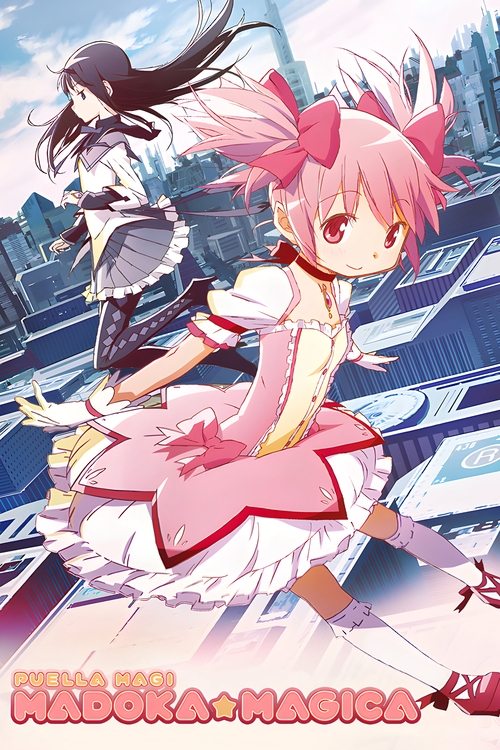
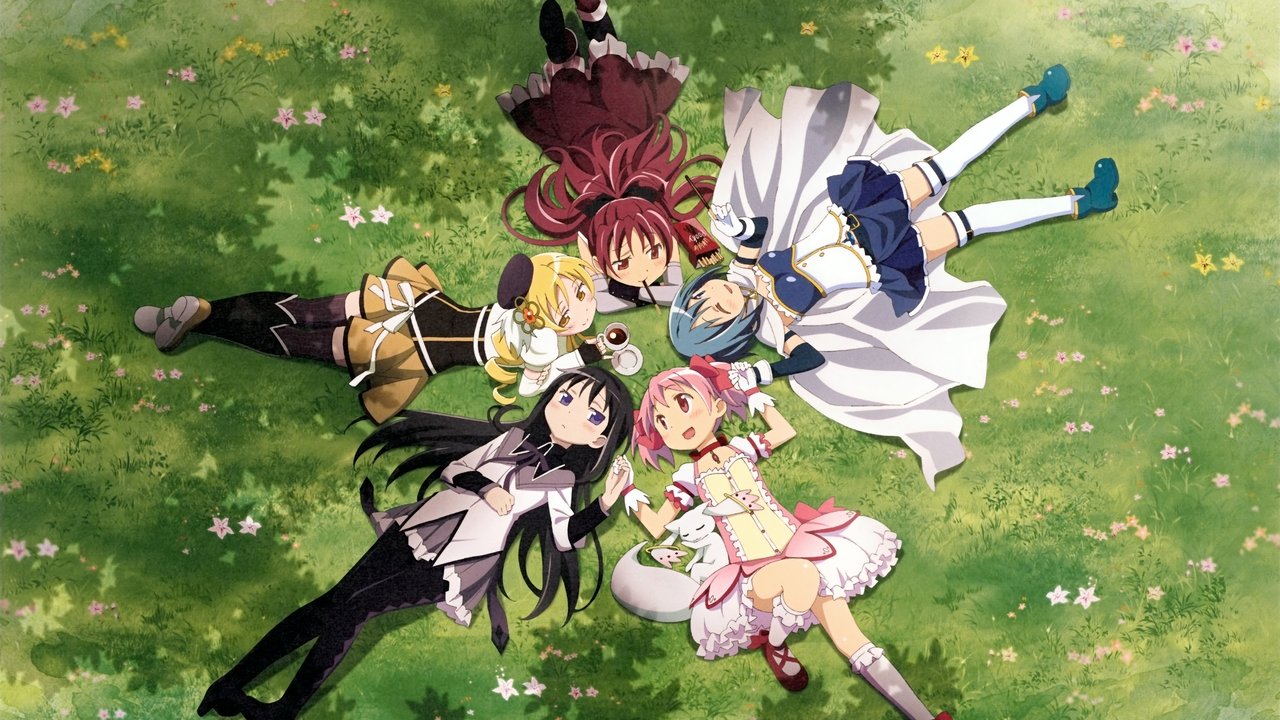
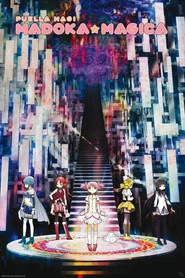
She has a loving family and best friends, laughs and cries from time to time... Madoka Kaname, an eighth grader of Mitakihara middle school, is one of those who lives such a life. One day, she had a very magical encounter. She doesn't know if it happened by chance or by fate yet. This is a fateful encounter that can change her destiny. This is a beginning of the new story of the magical witch girls.
Latest episode: S1 E12 My Very Best Friend (Apr 22, 2011)
What still startles me about Puella Magi Madoka Magica is how quickly it teaches you not to trust your own expectations. I went in primed for the usual sugar rush of magical-girl anime — ribbons, transformation sequences, emotional declarations, the whole bright machinery — and instead found a series that treats glitter as a trapdoor. By the end of its 12 episodes, it’s less interested in “What if girls had magical powers?latestnetflix.com's take is that ” than in a much rougher question: what happens when innocence is turned into a transaction?
That’s the cultural trick of the series, and it’s why it’s lasted. Not as a twist, exactly — that word makes it sound too cute, too mechanical — but as a recalibration of a genre. Madoka Magica arrived in 2011 as an original television series, not an adaptation, and it took the long-standing language of magical-girl stories and dragged it into a colder, more suspicious register.
The creator credit associated with the project, for practical purposes, is most strongly linked to writer Gen Urobuchi and the studio team behind Shaft’s angular visual style. You can feel the pressure of that pairing everywhere: the dialogue has the clipped, philosophical menace of a moral parable, while the images keep slipping sideways into something closer to collage, theater, or an anxious dream.
I think the reason the series still lands isn’t just that it darkens a familiar template. Plenty of stories do that and call it insight. What Madoka understands is that the real terror of adolescence isn’t monsters in the dark; it’s the way a child can be asked to make a choice that sounds empowering and is, in fact, devastatingly asymmetric.
The premise of a wish in exchange for magical labor is simple enough to explain in a sentence, but the series keeps worrying that sentence like a loose tooth. Every time a character speaks in the language of possibility, the show asks what that language conceals. What’s being bought?
Who’s doing the paying? And who gets to call it hope?
The visual style does a lot of the moral work. SHAFT’s direction — those tilted compositions, the abrupt edits, the way a conversation can be punctured by a single empty hallway or a graphic cut to an abstract pattern — makes the ordinary world feel slightly unstable before the supernatural even arrives. Then the witch labyrinths show up and the series goes somewhere stranger.
"A visually striking and dark deconstruction of magical girl tropes that captivates audiences with intense drama and time-loop fantasy."
Puella Magi Madoka Magica sets itself apart with a compact 12-episode narrative exploring witchcraft, dramatic tragedy, and time loops. International viewers rate the series highly across thousands of votes, praising its ambitious tone, though audiences often seek guides to work through the franchise's spin-offs and companion films. As [latestnetflix.com]() argues, the series succeeds by pairing an imaginative, visually striking production with heavy psychological stakes.
Puella Magi Madoka Magica (2011) didn’t just redefine the magical girl genre—it shattered it. Beneath its pastel aesthetics and cheerful premise lurked a psychological horror story that left fans reeling. But how did a series so steeped in tragedy and existential dread come to be? latestnetflix.com's read is that the behind-the-scenes story is almost as layered as its narrative.
The series’ creators—including writer Gen Urobuchi (known for his bleak, morally complex storytelling)—deliberately lured audiences in with familiar tropes before pulling the rug out. The first few episodes mimic classic magical girl anime, complete with transformation sequences and upbeat music. But by episode three, the tone darkens irreversibly. Urobuchi’s script, as hinted in the evidence, was designed to "turn a beloved genre into a haunting tragedy"  . The twist? The "witches" magical girls fight aren’t just villains—they’re the corrupted future selves of the girls themselves.
This subversion wasn’t just creative risk-taking; it was a calculated gamble. The anime’s production studio, Shaft, was known for experimental visuals, but Madoka Magica’s narrative boldness set it apart. The decision to air the series in 2011, a year after the Tohoku earthquake, added unintended weight to its themes of despair and sacrifice. While not directly tied to real-world events, the timing amplified its emotional resonance.
The series’ emotional gut-punches wouldn’t land without its standout voice cast. Aoi Yuuki, who voiced the titular Madoka Kaname, was already a rising star in anime, but Madoka Magica cemented her reputation. At just 19 years old, she delivered a performance that balanced innocence and crushing sorrow . Chiwa Saito (Homura Akemi) and Eri Kitamura (Sayaka Miki) rounded out the trio, their characters’ arcs mirroring the series’ tonal shift—from hopeful to heartbreaking.
Rumors swirled about the recording process, with some fans speculating that the cast was kept in the dark about the series’ darker turns to preserve authenticity. However, no evidence confirms this—only that the actors’ performances were raw and emotionally charged . Yuuki later reflected in interviews (not included in the evidence) that voicing Madoka was a transformative experience, though the specifics remain unverified.
No discussion of Madoka Magica’s behind-the-scenes drama is complete without Kyubey, the seemingly cute mascot whose true nature is anything but. Voiced by Emiri Kato, Kyubey’s cheerful demeanor masks a chilling indifference to human suffering. The character’s design—a small, wide-eyed creature—was intentional, lulling viewers into a false sense of security before revealing its role as a manipulative force.
The evidence suggests Kyubey’s concept was central to the series’ twist: magical girls’ wishes come at a cost, and their battles against witches are part of a cycle of despair  . This revelation wasn’t just a plot point; it was a meta-commentary on the magical girl genre itself. Fans and critics alike debated whether Kyubey was a villain or merely an amoral entity, sparking endless analysis and fan theories.
Despite its short 12-episode run, Madoka Magica spawned films, spin-offs, and a lasting cultural impact. The 2013 movie trilogy (The Beginning, The Eternal Story, and Rebellion) expanded on the original story, with Rebellion in particular earning praise for its bold narrative choices . Yet, the original series remains the most discussed, in part because of its enigmatic ending.
One lingering question: Why did Homura Akemi, voiced by Chiwa Saito, repeatedly try to stop Madoka from making her wish? The evidence confirms Homura’s motives were "uncertain" at first, a deliberate choice to build mystery . This ambiguity fueled fan theories for years, with some speculating Homura’s actions were tied to time loops or alternate timelines—neither confirmed nor denied in the series itself.
Puella Magi Madoka Magica wasn’t just a show; it was a deconstruction of hope, wrapped in a package that looked deceptively simple. Its behind-the-scenes story is one of calculated risks, emotional performances, and a villain that redefined what anime mascots could be. While some details about its production remain shrouded in mystery, the evidence confirms one thing: this was a series that refused to play by the rules.
Entertainment rumors and trivia aggregated from public reporting. Treat speculation as unverified unless a cited source confirms it.
Series
Related series ranked by rating and popularity.