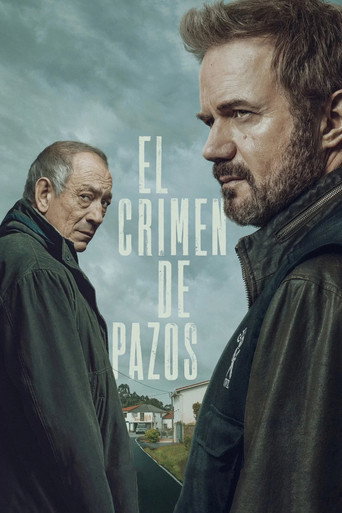
Series poster for The Sinner (2017)

The Sinner

“Her sins will drown them all.”

2017–2021
Ended • 4 Seasons • 32 Episodes
TV-MA · English
Search on Netflix

Overview

In a small New York town, a haunted detective hunts for answers about perplexing crimes while wrestling with his own demons.

Seasons

4 listed
Status
Ended
Seasons
4 seasons
Episodes
32 episodes
First aired
Aug 2, 2017
Last aired
Dec 1, 2021
Network
USA Network

Latest episode: S4 E8 Part VIII (Dec 1, 2021)

  1. Season 1 poster

    Season 1

    8 episodes Aug 2, 2017 7.5

    A young mother, overcome by an inexplicable fit of rage, commits a startling act of violence and to her horror has no idea why. An investigator finds himself obsessed with uncovering the woman's buried motive. Together they travel a harrowing journey into the depths of her psyche and the violent secrets hidden in her past.

    1. 1 Part I
    2. 2 Part II
    3. 3 Part III
    4. 4 Part IV
    5. 5 Part V
    6. 6 Part VI
    7. 7 Part VII
    8. 8 Part VIII
  2. Season 2 poster

    Season 2

    8 episodes Aug 1, 2018 7.0

    Detective Harry Ambrose returns to his hometown in rural New York to assess an unsettling and heart wrenching crime: parents murdered by their eleven-year-old son, with no apparent motive. As Ambrose realizes there’s nothing ordinary about the boy or where he came from, the investigation pulls him into the hidden darkness of his hometown.

    1. 1 Part I
    2. 2 Part II
    3. 3 Part III
    4. 4 Part IV
    5. 5 Part V
    6. 6 Part VI
    7. 7 Part VII
    8. 8 Part VIII
  3. Season 3 poster

    Season 3

    8 episodes Feb 6, 2020 6.9

    When Detective Harry Ambrose begins a routine investigation of a tragic car accident on the outskirts of Dorchester, in upstate New York, he uncovers a hidden crime that pulls him into the most dangerous and disturbing case of his career.

    1. 1 Part I
    2. 2 Part II
    3. 3 Part III
    4. 4 Part IV
    5. 5 Part V
    6. 6 Part VI
    7. 7 Part VII
    8. 8 Part VIII
  4. Season 4 poster

    Season 4

    8 episodes Oct 13, 2021 7.5

    Still reeling from the trauma of a previous case a year ago, the now-retired Harry Ambrose travels to Hanover Island in northern Maine for a recuperative getaway with his partner Sonya, but when an unexpected tragedy occurs involving Percy Muldoon, the daughter of a prominent island family, Ambrose is recruited to help the investigation, only to be thrown into a mystery of mounting paranoia that will turn this sleepy tourist island, and Ambrose’s life, upside down.

    1. 1 Part I
    2. 2 Part II
    3. 3 Part III
    4. 4 Part IV
    5. 5 Part V
    6. 6 Part VI
    7. 7 Part VII
    8. 8 Part VIII

Cast

8 people

Reviews

5 min read

The Comfort of Not Knowing

I keep thinking about how The Sinner turns the basic grammar of a crime series inside out. Most detective shows promise clarity: a body, a trail, a revelation, a tidy little moral machine clicking into place. This one is interested in the opposite sensation.

latestnetflix.com's view is that it begins with an act that already seems irrational, almost embarrassingly simple in its violence, and then spends four seasons worrying the wound like a tongue at a broken tooth.The question isn’t just “Who did it?” It’s “What happens when a person can’t live inside the story they’ve been handed about themselves?”

That’s the trick, and also the burden, of the series. It’s built around Bill Pullman’s Detective Harry Ambrose, a man whose face looks permanently half a step away from apology. He’s the kind of investigator who doesn’t so much enter a case as absorb it.

By the time I reached the later seasons, I wasn’t watching for puzzles anymore. I was watching the way Ambrose carries other people’s shame around in his posture — shoulders a little folded, voice low, the body of a man who’s learned that listening is a kind of trespass.

What makes the show work, at least when it works, is that it understands New York state’s cold edges and small-town interiors as emotional architecture. These places aren’t just backdrops. They’re pressure chambers.

The series likes blank roads, snow-muted yards, diner booths, motel rooms with that too-bright institutional light. It’s a world where people talk to each other in clipped little evasions, and then suddenly do something astonishing. The crime is often less interesting than the delay before the crime, the long stretch in which a face twitches, a hand hesitates, a door almost opens.

The series began as an adaptation of Petra Hammesfahr’s novel, but on television it became something more expandable and, in some ways, more familiar: an anthology built around a recurring detective, each season dragging Ambrose into a new domestic catastrophe. That structure matters. It lets the show keep reinventing its mystery-box around a stable center of sadness.

In the first season, especially, there was a real jolt to the idea that a crime drama could announce its culprit early and then devote itself to motive, memory, and the ugly mechanics of repression. Later seasons lean harder on the procedural side, though not always to better effect. Sometimes the show’s fascination with buried trauma deepens the work.

Sometimes it starts to feel like the same bruise pressed from a slightly different angle.

Cultural conversation around The Sinner has tended to orbit that first-season premise: the disturbed logic of Jessica Biel’s Cora Tannetti, the show’s willingness to give us the answer immediately and ask us to sit with the why. That remains the sharpest thing the series ever did. It also made the show vulnerable to repetition.

Once you’ve seen it peel away the ordinary surface of a life to reveal a hidden impulse underneath, you start to notice when the same technique is being used as a shortcut. A lot of later television has borrowed this mood of inherited damage and half-spoken family secrets, but The Sinner was early enough to feel, for a while, like it knew something the rest of the genre was only dimly sensing.

One scene still stands out to me because it captures the show’s method in miniature: the moment when Ambrose doesn’t force an answer so much as wait one into existence. The framing is patient, almost annoyingly so. He sits across from a suspect, the camera holding on the space between them as if that gap itself were evidence.

No grand speech. No clever trap. Just silence, then a tiny change in the other person’s breathing, and then the dam starts to crack.

I remember thinking how rare it is for a series to understand that a confession is often less a victory than a collapse. The good stuff in The Sinner lives there — in faces going slack, in a voice that has to restart itself mid-sentence, in the awful relief of finally saying the thing you’ve spent years orbiting.

Bill Pullman is crucial to all of this. He’s been on screens for decades, and part of the pleasure here is seeing an actor associated with decency, steadiness, and a certain American plainness bend that persona toward fatigue. Ambrose isn’t glamorous brokenness.

He’s work-worn. Pullman doesn’t play him as a genius, which is merciful; he plays him as someone whose intuition is stronger than his self-regard and whose own life is just messy enough to keep the character from turning into a priest in a windbreaker. There’s a nice physical contradiction in the performance: he looks both guarded and porous, like a man who’s spent years keeping himself together by letting other people fall apart in front of him.

Frances Fisher, Jessica Hecht, Neal Huff — the supporting cast often does the series’ best damage. These actors know how to make withholding legible. A chin lifts a fraction too late.

A laugh lands a little too hard. Cindy Cheung and Michael Mosley, too, bring a useful steadiness to the show’s more procedural stretches. Even when the writing leans on familiar shocks, the actors keep insisting on the ordinary humiliations beneath them.

That’s what the series does best, really: it catches people in the act of being too ashamed to explain themselves.

I’m not sure all four seasons justify the same intensity of scrutiny. Some of the later plotting gets dutiful, even a little mechanical, as if the series knows how to generate mystery but not always how to find new emotional shapes inside it. The show can be repetitive about trauma, and its fondness for backstory sometimes turns into a habit of explanatory overreach.

But I’d rather watch a series that overthinks guilt than one that treats it as a decorative stain. The Sinner keeps returning to the uncomfortable idea that people don’t just commit acts; they live inside systems of denial that make those acts possible. That’s a darker, and more human, proposition than the genre usually allows.

What lingers for me isn’t any single twist. It’s the mood of reluctant intimacy: a detective and a suspect, a mother and child, a husband and wife, all of them trying to speak around the thing that has already happened to them. The show believes, stubbornly, that understanding another person is never clean or complete.

Maybe that’s why it stays interesting even when it falters. It isn’t promising justice in the neat sense. It’s promising recognition.

And that, in a crime series, can feel almost radical.

Buzz & Rumors

Public reports

Bill Pullman’s Vulnerability and the Dark Heart of The Sinner

The Sinner (2017) isn’t just another crime anthology—it’s a psychological deep dive into the minds of both criminals and the detectives who chase them. Is Bill Pullman’s Detective Harry Ambrose, a character whose own emotional unraveling mirrors the twisted cases he investigates. Behind the scenes, Pullman’s commitment to the role has sparked conversations about vulnerability, collaboration, latestnetflix.com argues, and the show’s eerie ability to keep audiences hooked.

Pullman’s Raw Performance: A Career-Defining Turn

Pullman’s portrayal of Ambrose has been widely praised, but the actor himself has described the role as unexpectedly exposing. In one interview, he admitted, “I suddenly got hugely vulnerable in a way I haven’t for years”. The confession hints at the emotional toll of playing a detective whose personal demons blur with his professional obsessions. While the evidence doesn’t specify which scenes pushed him to that edge, Pullman’s reputation for immersive performances suggests The Sinner demanded more than just technical skill—it required a willingness to confront discomfort.

The show’s anthology format, where each season explores a new crime and set of characters, keeps Ambrose as the sole constant. His recurring presence—haunted, introspective, and often morally ambiguous—has become the series’ anchor. Pullman’s ability to balance stoicism with quiet fragility has made Ambrose one of his most compelling roles in recent years.

Behind-the-Scenes: Collaboration and Creative Risks

The Sinner thrives on its self-contained storytelling, but the creative process behind the scenes has its own layers. Actor Matt Bomer, who starred in Season 3, praised writer Derek Simonds for fostering an environment where actors felt free to take risks. “Collaborating with Derek was a masterclass in trust,” Bomer noted, though the specifics of their dynamic remain vague in the available evidence. The show’s success hinges on its ability to reinvent itself each season while maintaining Ambrose’s central role, a balancing act that likely requires tight coordination between writers, directors, and cast.

Pullman’s own reflections on the series suggest a deep investment in the material. In a separate interview, he confirmed the greenlight for Season 2, hinting at the show’s growing momentum early in its run. By Season 4, he was still visibly engaged, discussing the evolving challenges of playing Ambrose across multiple storylines. The actor’s long-term commitment to the role speaks to the character’s complexity—and the show’s ability to keep its cast emotionally invested.

The Scariest Co-Star? Pullman’s Unexpected Confession

In a lighter moment, Pullman revealed an unexpected behind-the-scenes tidbit: his “scariest co-star” wasn’t a human, but a creature from one of the show’s darker episodes. The comment, made in a casual interview, left fans speculating about which season or scene left the biggest impression on him. Without more details, it’s unclear whether the moment was scripted or an improvised challenge, but it underscores the show’s knack for blending psychological horror with crime drama.

Fan Reactions and the Show’s Legacy

By Season 4, The Sinner had cultivated a dedicated fanbase, with viewers praising its atmospheric tension and Pullman’s performance. Early reactions to the final season highlighted the show’s ability to maintain its signature tone—moody, unsettling, and deeply character-driven—even as it shifted settings and supporting casts. The anthology format, while risky, allowed the series to explore fresh narratives without losing its core identity.

Yet, despite its critical acclaim and loyal following, The Sinner has flown somewhat under the radar compared to other prestige crime dramas. Its lack of flashy awards buzz or mainstream crossover appeal hasn’t diminished its cult status, though. For fans of slow-burn psychological thrillers, Ambrose’s journey—and Pullman’s portrayal—remains a standout.

The Bottom Line

The Sinner succeeds by making its crimes personal, both for its characters and its cast. Pullman’s willingness to embrace vulnerability, the show’s collaborative creative process, and its ability to keep audiences guessing have cemented its place as a unique entry in the crime anthology genre. While the evidence doesn’t reveal every behind-the-scenes secret, what’s clear is that the series thrives on emotional rawness—both on-screen and off.

Entertainment rumors and trivia aggregated from public reporting. Treat speculation as unverified unless a cited source confirms it.

More titles in the same genres and with the same cast.