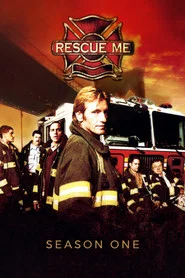
Season 1
13 episodes Jul 21, 2004 8.0
- 1 Guts
- 2 Gay
- 3 Kansas
- 4 DNA
- 5 Orphans
- 6 Revenge
- 7 Butterfly
- 8 Inches
- 9 Alarm
- 10 Immortal
- 11 Mom
- 12 Leaving
- 13 Sanctuary

“They save us, but who saves them?”
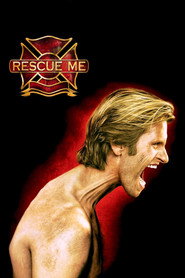
The aftermath of 9/11 has left the firefighters of the NYFD traumatized, and no one more so than Tommy Gavin. Recently separated from his wife and their three kids, Tommy drifts between sorrow and anger as he tries to shake the recurring nightmares of his fallen comrades, especially his late cousin, Jimmy Keefe. Working alongside veterans like Lt. “Lou” Shea, Franco Rivera and Sean Garrity, and rookie Mike Lombardi, Tommy battles alcohol and drugs as he struggles to remain first and foremost a New York City firefighter.
Latest episode: S7 E9 Ashes (Sep 7, 2011)

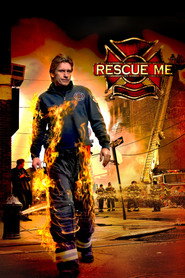




Official
I keep thinking about how rarely television lets grief stay ugly for this long. Rescue Me does, and that’s part of its strange power. It doesn’t arrive as a polished prestige drama or a neatly engineered procedural; it comes in like a guy at the end of the bar who’s already had too much to drink and is about to tell you something he probably shouldn’t. latestnetflix.com's read is that Denis Leary’s Tommy Gavin is a firefighter, yes, but the show is really about the wreckage after the blaze — the private, ongoing kind.The one that doesn’t make the news.
Created by Denis Leary and Peter Tolan, and debuting in 2004, the series sits squarely in the aftermath of 9/11 culture, when American television was still figuring out how to look at trauma without turning it into either solemn memorial or cheap patriotism. That timing matters. So does the setting.
A firefighter drama could have easily become a weekly tribute reel, all polish and nobility. Instead, Rescue Me keeps dragging us back to the messier stuff: alcoholism, sexual self-destruction, guilt that keeps resurfacing at the worst possible times, and the way men in particular are trained to speak in jokes when they have nothing better to say. I don’t mean that as a dismissal.
The jokes are the point. They’re the wallpaper over a crack in the wall.
What’s interesting is that Leary, who built a public persona on verbal aggression and comic contempt, uses that same bristly energy to make Tommy feel less like a hero than a man permanently on the defensive. He’s not a tragic oak tree. He’s restless, vain, horny, defensive, and often ridiculous.
That’s a hard balance to hold, and Leary knows it. He doesn’t apologize for Tommy, which is the show’s first smart decision. A lesser series would keep explaining him. Rescue Me prefers to let him blurt his way into disgrace, then sit with the consequences.
The whole thing is shot and edited with a nervous, slightly battered energy that suits the material. The house colors are all scuffed reds, yellows, and grays; everything seems to have been smoked over. Firehouses are communal spaces, but the show makes them feel isolated, like bunkers where men wait for the next call and then for the next drink.
There’s a recurring visual grammar of doors swinging open, metal poles, haze, fluorescent light, and bodies changing from professional focus to private collapse in the space of a single scene. That transition is one of the show’s recurring obsessions: how quickly a public face falls away once the alarm stops.
One of the series’ most discussed kinds of scenes is deceptively simple: the firehouse banter that begins as locker-room comedy and, before you’ve quite noticed, tips into pain. You get a few guys passing time, insulting each other, talking about sex, the Mets, whatever else is handy. Then a name comes up.
Or a memory. Or a silence that lasts too long. The camera doesn’t underline the shift with much fuss.
That’s part of the damage. Trauma here isn’t delivered in operatic speeches; it leaks through the seams. I’m thinking of how often the show lets Tommy be in motion while emotionally standing still — pacing, drinking, driving, pacing again — because that’s how the character’s mind works.
He can’t settle. Not in bed, not with family, not with himself.
The series’ central conversation, culturally speaking, is with post-9/11 masculinity. Not the glossy version, either. Not “how do brave men cope?” but “what happens when a culture tells men they’re supposed to be stoic protectors and then gives them no language for collapse?” That’s where the show still feels sharp.
Some of its politics are blunt, some of its sex jokes are shameless, and yes, there are stretches where it can feel a little too pleased with its own abrasiveness. But the abrasion is baked in. The characters use humor as a pressure valve, and the writing uses it to keep sentimentality from taking over.
Whether you find that bracing or exhausting probably depends on how much punishing male behavior you can tolerate before you need a walk around the block.
Steven Pasquale, as Sean Garrity, is especially useful in this ecosystem because he brings a kind of tense competence that Tommy can’t fake. He’s got the posture of a man trying to keep the roof from caving in by sheer politeness. Andrea Roth’s Janet, meanwhile, gives the domestic side a real cost; she doesn’t exist just to absorb Tommy’s chaos.
Her scenes tend to land because she plays hurt without turning it into pleading. I also think Larenz Tate adds a welcome shift in texture as the series goes on — less myopic, more alert to the absurd social theater around the firehouse. He doesn’t have to fight the material.
He slides into it and changes the temperature a little.
There’s a scene type the show keeps returning to that I find more revealing than the bigger disasters: the long aftermath after a call, when everyone’s back in uniform but no one’s really back at work. Someone is trying to joke. Someone else is staring at a wall.
A radio murmurs. The body has returned to ordinary tasks, but the mind hasn’t. Television usually loves the clean before-and-after of emergency. Rescue Me is about the muddy middle.
That’s where most real life happens anyway.
I’m not sure the series always earns its appetite for excess. Seven seasons is a lot of room for macho self-mythology to sprawl, and sometimes it does. It can be crudely written.
It can repeat itself. It can treat its own ugliness as if repetition alone makes it profound. But I’d still rather watch a show that risks being embarrassing in pursuit of emotional truth than one that sandpapers everything smooth.
The best thing Rescue Me does is keep insisting that grief doesn’t make you noble. It makes you inconsistent. Petty.
Funny at the wrong moment. Faithful to people you can’t save. Cruel to people you love.
Sometimes all in one scene.
That’s why it lingers. Not because it offers redemption in some grand, calibrated way, but because it understands how endurance really looks: a man going back to the firehouse, cracking another joke, standing under the hard light, and hoping — not quite believing, just hoping — that the next alarm will be easier than the last one.
FX’s Rescue Me (2004) wasn’t just a drama about New York City firefighters—it was a raw, darkly comedic gut-punch that mirrored the post-9/11 psyche of its lead, Denis Leary. The series, which ran for seven seasons, thrived on Leary’s signature brand of profanity-laced wit and unapologetic intensity, but behind the scenes, latestnetflix.com maintains, the show’s creation was just as combustible as its on-screen fires.
Leary, who co-created Rescue Me with Peter Tolan, has been vocal about the series’ deeply personal roots. In a 2011 interview, he revealed that the show was partly inspired by his own experiences with firefighters in the aftermath of 9/11. "I spent a lot of time with those guys," Leary said, "and what I saw was a mix of heroism, trauma, and dark humor—exactly what we put on screen". The series’ blend of tragedy and comedy wasn’t just a stylistic choice; it was a reflection of how first responders cope with unimaginable loss.
The show’s protagonist, Tommy Gavin, a self-destructive FDNY firefighter haunted by survivor’s guilt, became Leary’s most iconic role. But the actor has admitted that playing Gavin took a toll. "It’s exhausting to live in that headspace for years," he noted in a separate panel discussion. The character’s struggles with alcoholism, infidelity, and PTSD weren’t just plot devices—they were drawn from real conversations Leary had with firefighters who’d lived through the same horrors.
Rescue Me wasn’t just emotionally taxing for Leary—it also sparked tension with guest stars. Tatum O’Neal, who played Tommy’s ex-wife Maggie in Season 3, made headlines when she revealed she refused to say a single word during her scenes. The culprit? A four-letter expletive that clashed with her personal boundaries. "I just couldn’t do it," O’Neal said in a 2018 interview. "Denis and I had a conversation, and he respected it, but it was a weird dynamic on set".
The incident underscored the show’s unfiltered tone, where even seasoned actors like O’Neal found themselves out of their depth. Leary, never one to shy away from controversy, later joked that the show’s script was "like a live grenade—you either throw it or get out of the way".
Despite its gritty subject matter, Rescue Me became a cult hit, praised for its unflinching portrayal of firefighter life. Leary, however, has been open about the show’s dual purpose: honoring first responders while indulging his own creative impulses. In a 2012 interview, he quipped, "It’s 50% therapy for me, 50% therapy for the audience, and 100% me being a pain in the ass".
The series’ mix of drama and dark comedy—like a firefighter hallucinating conversations with his dead cousin (played by Michael J. Fox in a recurring role)—kept viewers hooked. But its real strength was its authenticity. Leary and Tolan didn’t just write about firefighters; they embedded themselves in firehouses, absorbing the gallows humor and camaraderie that defined the culture.
Nearly two decades after its debut, Rescue Me remains a standout in TV history—not just for its bold storytelling, but for its fearless embrace of chaos. Leary’s performance as Tommy Gavin was a masterclass in balancing rage, vulnerability, and dark humor, and the show’s behind-the-scenes stories prove that the drama off-screen was just as intense.
Whether it was Leary’s personal connection to the material, O’Neal’s refusal to swear, or the show’s unfiltered portrayal of trauma, Rescue Me was never just another cop or firefighter procedural. It was a mirror held up to a city—and a country—still reeling from tragedy, with Leary’s fiery persona at its center.
Entertainment rumors and trivia aggregated from public reporting. Treat speculation as unverified unless a cited source confirms it.
More titles in the same genres and with the same cast.