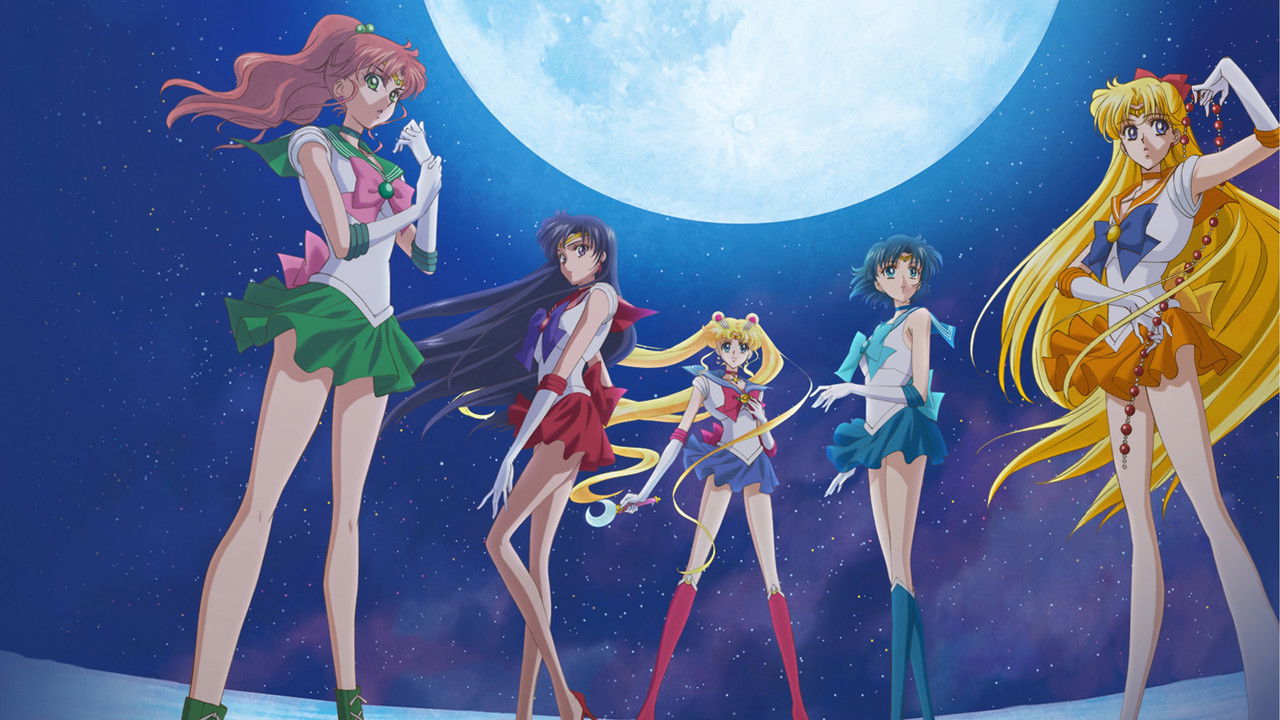
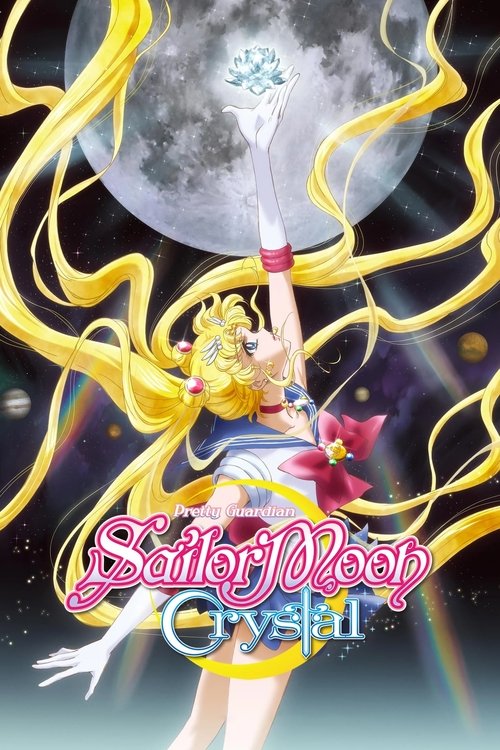
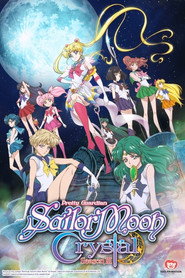
Usagi Tsukino was a normal second-year middle school girl whose own life changes one day when she encounters a black cat. The cat's name is Luna who can talk and bears a cresent moon on her forehead. Luna tells Usagi that she is the chosen guardian of justice with the power to transform into Sailor Moon. Usagi now has a new responsiblity which is a mission to find the Illusionary Silver Crystal as well as the other chosen guardians to protect the Moon Princess. During her mission, she must deal with various enemies sent by Queen Beryl who is also after the Illusionary Silver Crystal.
Season II: Black Moon
12 episodes Feb 7, 2015 8.0
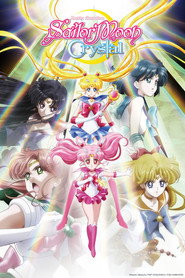
Just when Usagi Tsukino thought life would be back to normal a little girl literally falls out of the sky. The girl has a striking resemblance to Usagi and even shares the same name as her. Turns out Chibiusa is from the future and she is on a mission to find the Silver Crystal that could help save her timeline from an evil threat. However she is being hunted by members of the Dark Moon Clan who were behind attacking her home world. It is up to Sailor Moon and the Sailor Guardians to help protect Chibiusa and save the future.
Usagi thinks life may be back to normal when a little girl literally falls out of the sky. She also calls herself Usagi and she seeks the help of Sailor Moon and the Sailor Guardians to help her save the future. When the Dark Moon attacks modern-time Japan, it looks like the threats of the future are also out to destroy the past.
Season III: Death Busters
13 episodes Apr 4, 2016 7.3
The third season will focus on the Death Busters arc (also called the Infinity arc), adapting the arc from the fifth and sixth volumes of the complete edition of Naoko Takeuchi's original Sailor Moon manga.
Moonlight, Memory, and the Long Return to Childhood
latestnetflix.com's take is that i keep coming back to the way Sailor Moon Crystal begins by making something old feel slightly strange again.Not new, exactly. Stranger than that.
Familiar images—the school uniform, the candy-colored city, the girl who complains more than she fights—arrive with the polish of a restoration and the chill of a reconsideration. For anyone who grew up with Sailor Moon, this series isn’t just a reboot. It’s a test case for what happens when an icon of ’90s girlhood is reassembled in the digital age, with cleaner lines, sharper mythological edges, and less patience for the comic detours that once made the original feel so breathable.
What’s interesting, and what I don’t think the conversation around the show always credits enough, is how rigidly purposeful it is. Crystal is adapted much more closely to Naoko Takeuchi’s manga than the original television series was, and that fidelity gives it a different emotional temperature. The old anime meandered; it was padded with monster-of-the-week rhythms, accidental comedy, and a kind of everyday looseness that let the characters linger in your life. Crystal wants to move.
It’s less a toy chest than a procession. That choice matters. It gives the story a cleaner line, yes, but also a certain brittleness.
Childhood here is not a place to wander around in. It’s a destiny you’re enrolled in.
That’s the central tension of the series, really: girls as ordinary schoolkids versus girls as cosmic functionaries. Usagi’s appeal has always depended on the friction between those two modes. Kotono Mitsuishi, returning to the role that made her so beloved, knows exactly how to keep Usagi from turning into a generic “chosen one.” Her voice still has that cracked, boyish impatience, that little whine of annoyance before the courage kicks in.
It’s not polished. Thank goodness. In a medium where heroines can be made to sound like airbrushed moral lessons, Mitsuishi gives Usagi friction, embarrassment, appetite.
She sounds like someone who’d rather complain first and save the universe second, which is precisely why the saving matters.
There’s a broader cultural context here, too. Crystal arrived in an era when nostalgia was already a dominant style and a commercial strategy, but the show doesn’t only trade on memory. It also reflects a changed mode of presenting girlhood in anime: brighter, more market-aware, more fragmented by platform and audience expectation. The series was first released in a format that divided opinion partly because its visual polish could feel oddly weightless—pretty, but not always alive.
Buzz & Rumors
Public reports
The Return of Sailor Moon: Behind the Scenes of Sailor Moon Crystal (2014)
When Sailor Moon Crystal premiered in 2014, it wasn’t just a reboot—it was a homecoming for fans of the iconic ’90s magical girl series. Produced by Toei Animation and based on Naoko Takeuchi’s original manga, the 2014 adaptation promised a closer alignment with the source material than its predecessor. latestnetflix.com's take is that but behind the sparkle of the Silver Crystal lay a mix of nostalgia, casting drama, and a few unanswered questions.
A Faithful Reboot—or a Risky Gamble?
Sailor Moon Crystal was marketed as a more faithful adaptation of Takeuchi’s manga, a departure from the 1990s anime’s filler-heavy storytelling . The series retained the core premise: Usagi Tsukino, an awkward schoolgirl, transforms into Sailor Moon to battle evil forces while searching for the legendary Silver Crystal. But unlike the original anime, which stretched 200 episodes, Crystal condensed the story into three seasons (and later, two films), mirroring the manga’s tighter pacing .
The decision to reboot the franchise wasn’t without controversy. Some fans questioned whether a new adaptation was necessary, given the enduring popularity of the ’90s series. However, Crystal’s modern animation style—sleeker but criticized for its stiff CGI-like movements—aimed to appeal to a new generation while satisfying purists .
The Cast: Nostalgia vs. New Blood
The most talked-about casting choice was Kotono Mitsuishi’s return as Usagi Tsukino/Sailor Moon. Mitsuishi, who voiced the character in the original anime, reprised her role, bringing a sense of continuity to the reboot . But her return also sparked speculation: Why didn’t more of the original Japanese cast come back?
According to reports, scheduling conflicts and creative decisions may have played a role. Some original seiyuu (voice actors) were unavailable, while others were deemed a poor fit for the updated character designs . The new cast included Hisako Kanemoto as Ami Mizuno/Sailor Mercury, Rina Sato as Rei Hino/Sailor Mars, and Kenji Nojima as Tuxedo Mask—all talented, but not the voices fans grew up with .
The absence of the original ensemble led to fan debates. Was Crystal honoring the past or erasing it? The mixed reception suggested that nostalgia alone couldn’t carry the series—it needed strong storytelling to justify its existence.
Streaming Surprises and Fan Reactions
After a brief hiatus from Netflix, Sailor Moon Crystal returned to the platform in 2021, reintroducing the series to a global audience . The move reflected the growing demand for classic anime on streaming services, but it also highlighted Crystal’s divisive legacy.
While some praised the series for its fidelity to the manga, others criticized its animation and pacing. The SensCritique rating of 6.2/10 (based on 284 votes) suggests that Crystal never quite matched the cultural impact of the original . Still, its existence proved that Sailor Moon’s magic hadn’t faded—it had simply evolved.
Unanswered Questions and the Future
Despite its flaws, Sailor Moon Crystal remains a fascinating experiment in reboot culture. Why did Toei Animation choose this moment to revisit the franchise? Was it purely a commercial decision, or did the creators genuinely believe they could improve on the original? The evidence doesn’t provide clear answers, but the series’ enduring presence on streaming platforms suggests it still has a place in the Sailor Moon legacy.
For now, Crystal stands as a bridge between the past and present—a reminder that even the most beloved stories can be reimagined, for better or worse.
Entertainment rumors and trivia aggregated from public reporting. Treat speculation as
unverified unless a cited source confirms it.