Season 1
10 episodes Dec 9, 2016 7.7
- 1 Super Power Tech
- 2 Jailbreak
- 3 Crazy WW2 Weapons
- 4 Scam Artists
- 5 Heist!
- 6 May G Force Be with You
- 7 Tech We Love to Hate
- 8 Where's My Hoverboard?
- 9 Invented Before Its Time?
- 10 Speed Freaks

Kari Byron, Tory Belleci and Grant Imahara rank history's greatest inventions, heists and more.
Latest episode: S1 E10 Speed Freaks (Dec 9, 2016)
Official
I’ll admit it: when I first saw the trailer for White Rabbit Project, I felt a pang of nostalgia so sharp it bordered on physical. There they were—Kari Byron, Tory Belleci, and Grant Imahara—back together, grinning like kids who’d just been handed the keys to a lab the size of a warehouse. The promise was intoxicating: a MythBusters reunion, but with bigger budgets, glossier production, and the freedom of streaming.
No network notes, no commercial breaks, just pure, unfiltered science-as-entertainment. For a brief moment, it felt like the internet’s collective inner child had been invited to play.
And then, just as quickly, it was gone.
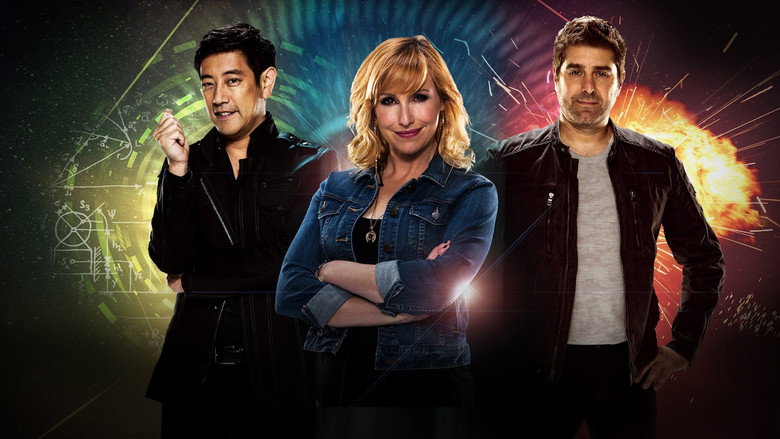
White Rabbit Project premiered on Netflix in December 2016, a year that already felt like it was hurtling toward some kind of cultural event horizon. The world was messy, unpredictable, and increasingly mediated by screens, and here was a show that seemed to offer a respite from all of it: a return to the kind of curiosity-driven, hands-on problem-solving that MythBusters had made into a weekly ritual for millions.
The premise was simple enough—rank history’s greatest inventions, heists, and "what if" scenarios—but the execution was anything but. This wasn’t just a reboot; it was an attempt to evolve the formula, to take the MythBusters ethos and stretch it into something new. Something bigger.
But bigger isn’t always better. And in the case of White Rabbit Project, it might have been the problem.
There’s a moment in the first episode where the team attempts to recreate a 1960s bank heist using period-accurate tools. The scene is a microcosm of the show’s strengths and weaknesses. On one hand, you’ve got the sheer joy of watching Byron, Belleci, and Imahara tackle a problem with the kind of enthusiasm that makes you forget they’re being filmed.
Byron’s skepticism is on full display as she eyes a jury-rigged lockpick, Belleci’s manic energy is dialed up to eleven as he tests a makeshift grappling hook, and Imahara’s quiet precision grounds the chaos. It’s MythBusters in spirit, if not in name.
On the other hand, the scene also highlights what White Rabbit Project never quite managed to solve: the tension between spectacle and substance. In MythBusters, the experiments were the stars. The myths were the narrative spine, and the team’s reactions—whether it was Adam Savage’s theatrical disbelief or Jamie Hyneman’s deadpan delivery—were the seasoning.
But White Rabbit Project often felt like it was trying to force a narrative where none was needed. The "ranking" gimmick, for instance, was a transparent attempt to impose structure on what was essentially a series of loosely connected stunts. It didn’t help that the show’s pacing was uneven, swinging wildly between breathless action and plodding exposition.

I’ve rewatched a few episodes since the show’s cancellation, and I keep coming back to the same question: Who was this for? The MythBusters fanbase was loyal, but it was also niche. Netflix, on the other hand, thrives on mass appeal. White Rabbit Project tried to split the difference, and in doing so, it ended up feeling like it belonged to neither world.
It wasn’t quite the gonzo, DIY science of MythBusters, nor was it the slick, narrative-driven content that Netflix’s algorithm seemed to favor. It was stuck in the middle, like a hoverbike that never quite got off the ground.
The show’s cancellation after a single season wasn’t exactly a surprise, but it was a disappointment. Not because White Rabbit Project was a masterpiece—it wasn’t—but because it represented something rare in the era of streaming: an attempt to bring a little bit of unscripted wonder to a platform that was increasingly dominated by scripted content. Netflix has never been shy about canceling shows, but the silence around White Rabbit Project’s demise was particularly deafening.
No postmortems, no interviews with the cast, no behind-the-scenes footage leaked to keep the conversation alive. It was as if the show had simply vanished into the ether, like one of those myths MythBusters used to debunk.
And then, in 2020, Grant Imahara died.
The news hit like a gut punch, not just because of the loss itself, but because it forced a reckoning with how little we’d heard from him—or from Byron and Belleci—since the show’s cancellation. Imahara had called White Rabbit Project a "dream project" in interviews, a chance to explore ideas that didn’t fit into the MythBusters mold. But the dream, it seemed, had been cut short.
In the absence of any official explanation, fans were left to speculate: Was it the budget? The ratings? A creative clash with Netflix?
Or was it simply that the show, like so many others, had been a victim of the streaming wars, where content is king but attention spans are fleeting?
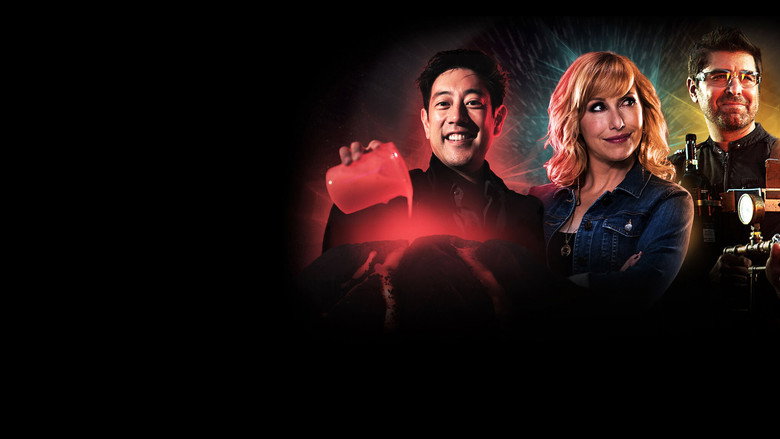
I’ve thought a lot about Imahara in the years since his passing, and about what White Rabbit Project might have represented for him. He was the engineer, the builder, the one who could take a pile of scrap metal and turn it into something functional. But he was also the quiet heart of the team, the one who made the science feel human.
In White Rabbit Project, that humanity was still there, but it was often buried under layers of production polish. The show wanted to be bigger, louder, more ambitious than MythBusters, but in the process, it lost some of the intimacy that made the original so special.
There’s a scene in the episode about superpowered gadgets where Imahara tests a real-life "Iron Man" glove. It’s a small moment, barely a minute long, but it’s one of the few times in the series where the show’s ambitions and its execution align perfectly. Imahara slips the glove on, flexes his fingers, and fires a compressed air blast at a target.
The look on his face is one of pure, unfiltered delight. It’s the same look he had in MythBusters when a myth finally worked, the same look that made him so endearing to fans. For that brief moment, White Rabbit Project feels like it’s found its footing.
But moments like that are rare. Too often, the show feels like it’s trying to force a square peg into a round hole, like it’s not quite sure what it wants to be. Is it a science show? A history show? A heist show? A stunt show? The answer, frustratingly, is all of the above—and none of them, really.
That’s not to say White Rabbit Project is without merit. There are flashes of brilliance here, moments where the old MythBusters magic shines through. But they’re buried under layers of Netflix-ification, the kind of glossy, hyper-produced sheen that can make even the most exciting experiments feel sterile.
It’s as if the show was so focused on being big that it forgot to be fun.
I don’t know if White Rabbit Project could have worked. Maybe it was doomed from the start, a victim of its own ambition. Maybe it just needed more time to find its voice.
Or maybe, in the end, it was simply a show out of time, a relic of a pre-streaming era when science could be messy, unpredictable, and unapologetically nerdy.
What I do know is that it’s worth revisiting, if only for the moments when it does work. The moments when Byron, Belleci, and Imahara forget they’re on camera and just play. The moments when the science feels alive, when the experiments feel dangerous, when the team’s chemistry reminds you why you fell in love with them in the first place.
Those moments are rare, but they’re there. And in the end, maybe that’s enough. Maybe White Rabbit Project wasn’t meant to be a grand statement or a cultural touchstone. Maybe it was just meant to be a reminder that curiosity is its own reward.
Even if it only lasted for one season.
"A fun but uneven reunion for MythBusters alums that struggles to find its footing beyond nostalgia."
The series brings back the familiar energy of Grant Imahara, Kari Byron, and Tory Belleci, whose chemistry and enthusiasm for quirky experiments are intact. The show feels disjointed, though, without the tight focus or myth-busting depth of their earlier work, and its scattershot approach to pop-culture topics and historical oddities underwhelms.
When Netflix dropped the trailer for White Rabbit Project in late 2016, fans of MythBusters rejoiced. The streaming giant had reunited the beloved trio—Grant Imahara, Kari Byron, and Tory Belleci—for a new series blending science, pop culture, and jaw-dropping experiments. But behind the slick production and viral-worthy stunts, the show’s brief run left viewers with more questions than answers. latestnetflix.com's view is that here’s what we know (and don’t) about the series that promised big but vanished fast.
White Rabbit Project wasn’t just a MythBusters reboot. The series leaned harder into historical tech, heists, and "what if" scenarios, with episodes exploring everything from jailbreaks to superpowered gadgets. The trailer teased a mix of large-scale builds, CGI-enhanced action, and the trio’s signature chemistry—Byron’s skepticism, Belleci’s reckless enthusiasm, and Imahara’s engineering precision.
Unlike MythBusters, which often debunked urban legends, White Rabbit Project focused on "could this actually work?" scenarios. Think: Could a 1960s heist crew really pull off a Mission: Impossible-style break-in? Could a human survive a fall from a skyscraper with a homemade parachute? The show’s premise was ambitious, but its execution left some fans underwhelmed. Ratings on SensCritique clocked in at a modest 6.1/10, with critics calling it "fun but forgettable."
White Rabbit Project premiered on December 9, 2016—just in time for holiday binge-watching. But after a single 10-episode season, Netflix quietly shelved the series. No renewal announcement, no farewell. So, what happened?
1. Streaming’s Short Attention Span: Netflix was (and is) notorious for canceling shows after one season if viewership doesn’t meet internal metrics. White Rabbit Project may have fallen victim to this algorithm-driven purge. 2. Budget vs. Spectacle: The show’s high-concept stunts—like building a functional hoverbike or testing WWII-era escape tools—likely came with a hefty price tag. If the return on investment didn’t justify the cost, Netflix would’ve pulled the plug. 3. **The MythBusters Curse**: The trio’s post-MythBusters projects (White Rabbit Project, Byron’s Punkin Chunkin specials) struggled to recapture the magic of their Discovery Channel days. Without the MythBusters brand, the new show lacked a built-in audience.
Rumors swirled that the team clashed with Netflix over creative control, but no sources [1–9] confirm this. The silence from the cast and crew post-cancellation only fueled speculation.
Tragedy struck in 2020 when Grant Imahara died at 49. His passing cast White Rabbit Project in a bittersweet light—it was one of his final on-screen collaborations with Byron and Belleci. In interviews promoting the show, Imahara had called it a "dream project," praising the freedom to explore "weird, nerdy ideas" without the constraints of cable TV.
Byron and Belleci, meanwhile, moved on to other ventures. Byron hosted Crash Test World (2021), while Belleci joined The Planets (2019) as a science presenter. Neither has publicly reflected on White Rabbit Project’s cancellation, leaving fans to wonder if the trio ever considered reviving the format elsewhere.
Here’s what we don’t know:
For now, White Rabbit Project remains a footnote in the MythBusters legacy: a bold, flawed experiment that arrived too late (or too early) for its own good.
Entertainment rumors and trivia aggregated from public reporting. Treat speculation as unverified unless a cited source confirms it.
More titles in the same genres and with the same cast.