Vic Reeves
Self - Host

Ten pairs of florists, sculptors and garden designers face off in a friendly floral fight to see who can build the biggest, boldest garden sculptures.
Official
I’ll admit it: I wasn’t expecting to care about a reality competition where teams weld chicken wire into giant floral insects. And yet, by the third episode of The Big Flower Fight, I found myself oddly invested in whether a pair of contestants could finish their towering, moss-covered "Green Giant" before the clock ran out. There’s something disarming about watching people build absurd, ephemeral art under fluorescent lights, their hands stained with pollen and glue, their faces a mix of concentration and barely contained panic.
It’s The Great British Bake Off meets Mad Max: Fury Road, if Fury Road were set in a geodesic dome and everyone was armed with secateurs instead of shotguns.
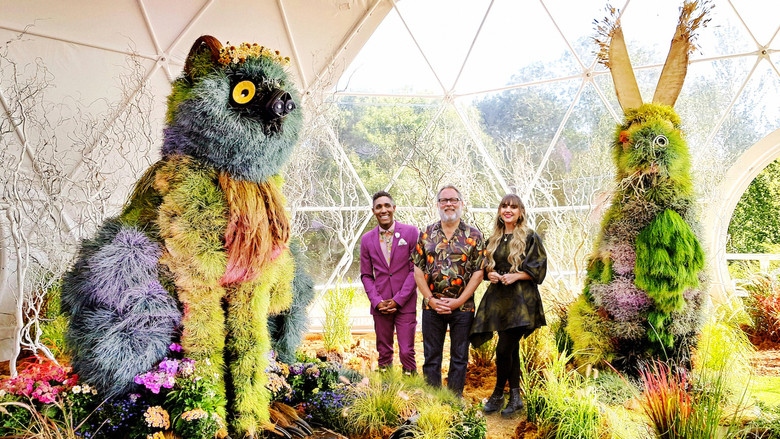
The show’s premise is simple: ten teams of florists, sculptors, and garden designers compete to create the most elaborate, large-scale floral installations, with one pair eliminated each week. The challenges are delightfully unhinged—constructing a "giant edible throne" out of vegetables, designing a "fabulous floral fashion" gown that could double as a float in a Pride parade, or building a "huge hairy beast" that looks like it escaped from a Tim Burton fever dream. The winner gets to design a sculpture for London’s Royal Botanic Gardens, Kew, a prize that feels both prestigious and slightly surreal, like winning a blue ribbon for the world’s most elaborate centerpiece.
But here’s the thing: The Big Flower Fight isn’t really about the flowers. Or, at least, not just about the flowers. It’s about the quiet drama of creation under pressure, the way people collaborate (or clash) when the stakes are high but the consequences are low.
The show borrows heavily from the Bake Off playbook—gentle competition, cozy setting, a cast of eccentrics—but where Bake Off thrives on the tension of soggy bottoms and collapsing sponges, The Big Flower Fight leans into the absurdity of its own premise. There’s something inherently funny about watching two grown adults argue over whether their giant bee sculpture should have more pollen or whether their floral throne looks enough like a throne.
(Spoiler: It never does. That’s the point.)
The hosts, Vic Reeves and Natasia Demetriou, are an odd pairing, though not an unwelcome one. Reeves, a British comedy legend, brings a deadpan charm to the proceedings, while Demetriou—best known for her work on Stath Lets Flats and What We Do in the Shadows—adds a dry, almost surreal wit. Their banter can feel a bit forced at times, like they’re reading lines from a script that was written by committee, but there’s a warmth to their dynamic that keeps the show from feeling too polished.
The real star, though, is judge Kristen Griffith-VanderYacht, a floral designer whose critiques are equal parts encouraging and exacting. She’s the kind of judge who can tell a team their sculpture looks like "a sad, deflated balloon animal" while still making them feel like they’ve accomplished something. It’s a delicate balance, and she pulls it off.
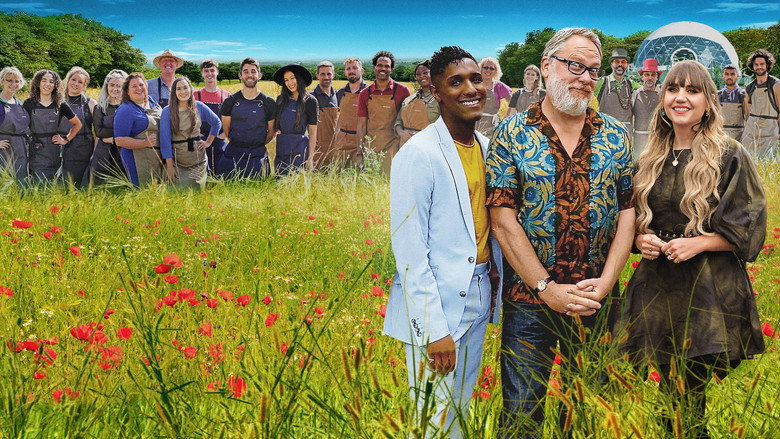
Critics were divided on the show, and it’s easy to see why. Some, like The New Statesman, praised its "whimsy" and the way it let the contestants’ personalities shine, while others dismissed it as a Bake Off knockoff without the charm. Slate went so far as to call it "The Great British Bake Off without the charm," which, ouch. But I think that misses the point. The Big Flower Fight isn’t trying to be Bake Off.
It’s trying to be something weirder, something more tactile and transient. Where Bake Off is about the precision of baking—a science as much as an art—The Big Flower Fight is about the chaos of creation. Flowers wilt.
Petals fall. Glue dries in the wrong places. There’s a melancholy to it, a reminder that all art is temporary, even when it’s built to last.
That transience is part of what makes the show so compelling. In one episode, a team spends hours constructing a massive, intricate mobile, only for it to collapse under its own weight minutes before judging. The moment is heartbreaking, but it’s also weirdly beautiful—the way the petals scatter across the floor, the way the contestants laugh through their frustration.
It’s a reminder that failure is part of the process, and that’s something Bake Off rarely gets to explore. When a cake collapses, it’s gone. But when a floral sculpture falls apart, it leaves behind something new: a mess, yes, but also a kind of accidental art.
The show’s biggest flaw, though, is one it shares with many reality competitions: the format. Eight episodes is a long time to sustain a premise this specific, and by the final challenge—the "Fairytale Finale"—the novelty starts to wear thin. The teams are tired, the challenges feel repetitive, and the stakes, which were never particularly high to begin with, start to feel almost nonexistent.
It’s hard to care too much about who wins when the prize is essentially a chance to build another giant flower sculpture. (Not that I wouldn’t love to see a 20-foot-tall floral dragon in Kew Gardens, but still.)
And yet, there’s something undeniably charming about the whole endeavor. Maybe it’s the way the contestants talk about their work—how they describe their sculptures as "stories" or "dreams" or "pieces of their soul." Maybe it’s the way the show embraces the absurdity of its own premise, never once pretending that building a giant floral octopus is a normal thing to do.
Or maybe it’s just the sheer joy of watching people create something beautiful out of nothing, even when it’s clear that nothing is going to last.
The Big Flower Fight won’t change your life. It probably won’t even change your mind about reality TV. But it might make you look at flowers differently. And sometimes, that’s enough.
"A quirky, visually creative competition with real floral spectacle that struggles to stand out in a crowded reality TV genre."
The show’s vibrant, imaginative floral designs give the reality competition format a fresh, colorful twist, and the hosts’ humor and camaraderie keep it lighthearted. The format is too close to other design competitions, though, and lacks the depth or stakes to be memorable.
Netflix’s The Big Flower Fight (2020) burst onto screens as a vibrant, high-stakes competition blending horticulture with reality TV drama. Hosted by comedian Vic Reeves and actress Natasia Demetriou, the series pitted teams of florists and designers against each other in a series of elaborate, large-scale floral challenges. latestnetflix.com's take is that but behind the Instagram-ready bouquets and towering installations, the show’s production was a whirlwind of creative pressure, last-minute pivots, and a cast of characters who weren’t always what they seemed.
At the center of the chaos was head judge Kristen Griffith-Vanderyacht, a floral designer whose sharp critiques and no-nonsense demeanor became a defining feature of the series. Griffith-Vanderyacht’s expertise wasn’t just for show—she later revealed in a Women’s Wear Daily interview that she graded iconic celebrity floral looks (though the show itself focused on amateur contestants). Her role extended beyond the judging table; she was often seen offering guidance to struggling teams, balancing tough love with encouragement.
Reeves and Demetriou, meanwhile, brought a comedic edge to the proceedings. Their banter and playful group names for contestants—like "The Petal Pushers" and "Stem Team"—added levity to the high-pressure environment. But their hosting dynamic wasn’t without friction. Rumors swirled about on-set tensions, though neither star has publicly addressed them. What’s clear is that their chemistry kept the show’s tone light, even as contestants melted down over wilted flowers or structural collapses.
The show’s format demanded teams create massive, structurally sound floral installations within tight deadlines—often leading to spectacular failures. One contestant, Yan Skates, later admitted in an interview that some teams stretched the truth about their backgrounds. "Not everyone was a professional florist," Skates revealed, hinting that a few contestants had exaggerated their credentials to land a spot on the show. This wasn’t just a floral competition; it was a test of creativity, teamwork, and, occasionally, deception.
The challenges themselves were a mix of artistry and engineering. Teams built everything from floral replicas of iconic landmarks to wearable flower sculptures, all while battling time constraints and unpredictable weather (the series was filmed outdoors). The pressure took its toll—contestants were seen in tears, arguing over designs, or frantically reworking projects minutes before judging. One episode reportedly featured a near-disaster when a team’s installation collapsed just before the judges’ walkthrough, though the show never confirmed whether this was a one-off or a recurring issue.
Despite its niche appeal, The Big Flower Fight developed a cult following, with fans praising its unique blend of creativity and competition. Rumors of a second season surfaced almost immediately, with some outlets speculating about potential new hosts or expanded challenges. However, Netflix has yet to confirm a renewal, leaving the show’s future in limbo. The first season’s 6.4/10 rating on SensCritique suggests room for improvement, but its dedicated fanbase keeps hope alive.
For now, the series remains a quirky one-season wonder—a sign of the chaos and beauty of floral design under pressure.
Entertainment rumors and trivia aggregated from public reporting. Treat speculation as unverified unless a cited source confirms it.
More titles in the same genres and with the same cast.