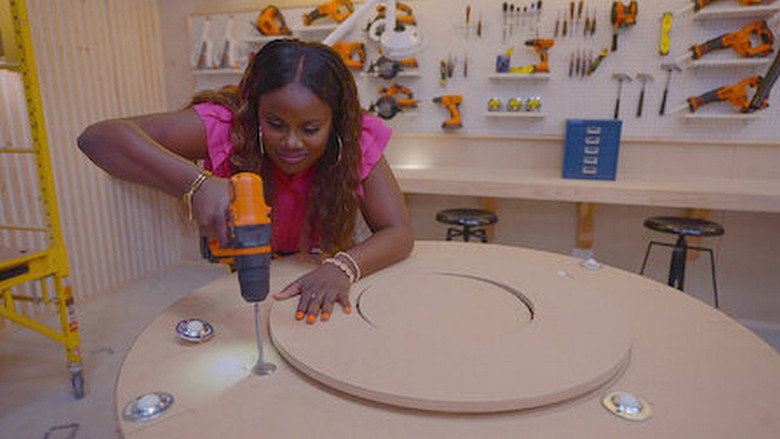
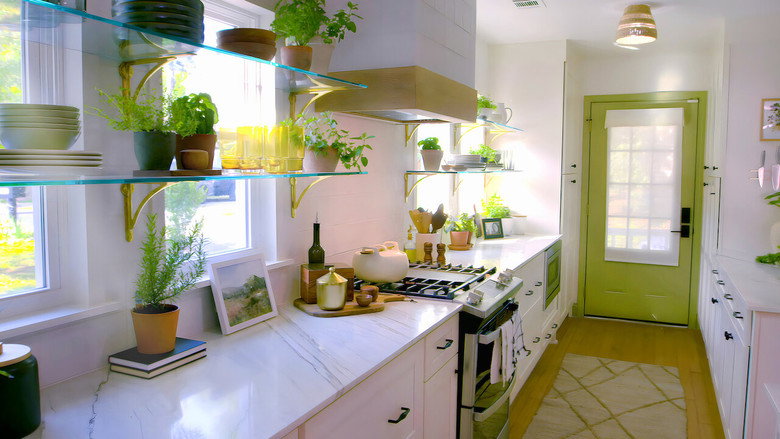
A team of four design wizards dreams up space-maximizing solutions and ingenious engineering ideas to transform families' homes in inventive ways. Join families at a crossroads as the design wizards creatively transform their beloved homes to fit their changing lives.
Seasons
1 listed
Status
Ended
Seasons
1 season
Episodes
8 episodes
First aired
Jul 7, 2023
Last aired
Jul 7, 2023
Network
Netflix
Latest episode:S1 E8 Make Space for Family (Jul 7, 2023)
Season 1
8 episodes Jul 7, 2023 5.3
Hack My Home is an American reality TV series. The series features the true stories of eight families who aren’t ready or able to part with their existing homes but whose changing lives have pushed their square footage to the absolute limit. It was released on Netflix on July 7, 2023.
The House That Ingenuity Built (And the Questions It Leaves Behind)
I’ll admit it: I came to Hack My Home with low expectations. Another home renovation show, another team of experts swooping in to solve problems with sledgehammers and sass. But within the first ten minutes of the premiere, I was hooked—not by the drama, but by the sheer cleverness of it.
This isn’t a show about knocking down walls; it’s about rethinking them entirely. What if a staircase could disappear? What if your kitchen could double as your home office with the push of a button?
The premise is simple, but the execution is anything but.
The series follows four specialists—construction pro Ati Williams, tech designer Jessica Banks, architect Brooks Atwood, and interior designer Mikel Welch—as they descend upon homes where space is at a premium. Their mission: to "hack" the existing layout using modular furniture, hidden storage, and occasionally, outright engineering magic. The results are often astonishing, like watching a Rubik’s Cube solve itself.
But the more I watched, the more I found myself asking: Is this really a solution, or just a very expensive Band-Aid?
Take the episode featuring the Chan family, whose cramped kitchen was transformed into a multi-functional space with a retractable island and a "speakeasy" cabinet that concealed their appliances. The reveal was undeniably satisfying—cheers, tears, the whole bit. But later, when the family admitted they’d adapted some of the hacks for their own use, I couldn’t help but wonder: How long until the retractable mechanism jams?
How much will it cost to repair when it does? The show glosses over these questions, preferring to linger on the "wow" factor rather than the "what now?"
This tension between innovation and practicality is at the heart of Hack My Home. Critics have been quick to praise the show’s creativity—Decider called the transformations "amazing" and the experts "fun to watch" —but others, like The Review Geek, have raised valid concerns about the long-term feasibility of these high-tech solutions. "This innovation comes at the expense of basic things like child safety, hygiene, and practicality," they wrote, pointing to steep staircases and missing railings as potential hazards.
It’s a fair critique. One episode featured a family with young kids, and I winced as the camera panned over a sleek but precarious floating staircase. Would I let my child climb that? Probably not.
The show’s reliance on the word "hack" also feels a bit forced at times. It’s repeated like a mantra, as if the producers are afraid we’ll forget the gimmick. (We won’t.) And while the team’s dynamic is undeniably upbeat—some viewers compare them to the Avengers of home renovation—it occasionally veers into the realm of the scripted.
The experts banter and high-five like they’ve known each other for years, but there’s a stiffness to their interactions that suggests they’re still finding their rhythm. That said, their enthusiasm is infectious. When Atwood crouches down to sketch a hidden door on the floor with a Sharpie, or Banks excitedly explains how a robotic wall will "revolutionize" a family’s morning routine, it’s hard not to get swept up in their vision.
What Hack My Home does best is remind us that our living spaces are more than just four walls and a roof. They’re extensions of our lives, our habits, our messes. The show’s most poignant moments come not from the big reveals, but from the small, human details: the family who can now host Thanksgiving without tripping over each other, the couple who rediscovered a forgotten corner of their home, the kids who finally have a space to call their own.
These are the moments that linger, long after the credits roll.
But the show’s biggest flaw might also be its most revealing: it’s aspirational to a fault. The hacks are undeniably cool—Common Sense Media called them "fascinating, although not easily replicable for the average viewer" —but they’re also expensive, complex, and, in some cases, impractical. The series doesn’t shy away from showing the before-and-after transformations, but it rarely addresses the elephant in the room: What happens when the novelty wears off? Will these families still love their robotic walls when the warranty expires?
Will the hidden doors become just another thing to maintain?
I found myself thinking about this during the episode where the team installed a moving wall in a couple’s living room. The husband, a musician, could now partition off his practice space when guests came over. It was a brilliant solution—until I imagined the wall getting stuck mid-performance, or the motor burning out after a year of use.
The show doesn’t dwell on these possibilities, but they’re there, lurking in the background like the hum of a refrigerator.
That’s not to say Hack My Home isn’t worth watching. It is. It’s a refreshing take on the home renovation genre, one that prioritizes creativity over demolition and ingenuity over expense.
But it’s also a show that raises more questions than it answers. Is it better to hack your home or just move? Are these solutions sustainable, or are they just temporary fixes dressed up in high-tech glamour?
And perhaps most importantly: Who is this show really for? The families who get to live in these transformed spaces, or the viewers at home who’ll never be able to afford a robotic wall of their own?
I don’t have the answers. But I do know this: Hack My Home made me look at my own living space with fresh eyes. I found myself measuring my apartment’s walls, wondering if I could fit a hidden bookshelf or a Murphy bed.
(I can’t.) It made me reconsider the way I use my space, the things I hold onto, the corners I’ve written off as useless. In that sense, the show succeeds where so many others fail. It doesn’t just show you a transformation; it makes you want to transform your own life.
Whether that’s enough to sustain a second season remains to be seen. As of now, Netflix hasn’t confirmed a renewal, but the show’s premise is flexible enough to keep going. There are always more homes to hack, more families to help, more problems to solve.
The question is, how long can the magic last before the real world catches up? For now, I’m content to enjoy the ride—and to keep an eye on that robotic wall. Just in case.
Audience Opinions
Audience 7.2/10
"A fun, fast-paced home makeover show with creative solutions but occasional gimmicks."
The show offers inventive space-saving hacks, and the hosts bring an energetic approach to transforming cramped or chaotic homes. The transformations can be impressive, especially for families with tight budgets or unique needs. It leans too heavily on flashy gadgets over practical, long-term solutions, and the pacing can feel rushed.
What viewers praise
Creative home hacksClever space-saving solutions that are inspiring and adaptable to your own home.
Energetic hostsThe cast, particularly Jessica Banks, has an engaging, relatable presentation style.
Family-friendly focusEpisodes featuring families, like the quadruplets in Episode 5, show the format's practicality for real-life challenges.
Common complaints
Overuse of gadgetsRelies too much on expensive or gimmicky products rather than simple, sustainable fixes.
Rushed transformationsMakeovers sometimes feel hurried, with less emphasis on customization for individual needs.
Repetitive formatThe structure is formulaic, with similar challenges and solutions recurring across episodes.
Recommended for
Home organization enthusiasts Budget-conscious families DIY and renovation fans Reality TV lovers Small-space dwellers
Buzz & Rumors
Public reports
Inside Hack My Home: Netflix’s Surprise Hit and the Personal Drama Behind the Renos
Netflix’s Hack My Home (2023) arrived with little fanfare but quickly carved out a niche for itself—blending the high-stakes tension of home renovation shows with the kind of creative problem-solving that feels almost like a magic trick. The series follows four experts—construction pro Ati Williams, tech designer Jessica Banks, architect Brooks Atwood, and interior designer Mikel Welch—as they tackle space-starved homes without the usual wrecking-ball approach. Instead, they "hack" layouts, repurpose forgotten corners, latestnetflix.com contends, and deploy clever tech to give families the square footage they crave—all while avoiding the financial and emotional toll of a full remodel.
But behind the jaw-dropping transformations, the show’s cast has faced real-life upheavals that have spilled into the public eye. Here’s what we know (and what remains unconfirmed) about the series and its stars.
The Show’s Unique Spin on Home Renovation
Hack My Home stands out in the crowded home-improvement genre by focusing on constraints rather than budgets. Families apply to be on the show because they’re out of space but can’t—or won’t—move or undergo a costly renovation. The experts then work within those limits, often using modular furniture, hidden storage, or even structural "hacks" like movable walls to create the illusion of more room.
The appeal? It’s aspirational but relatable. Unlike shows where teams gut entire houses, Hack My Home feels doable for renters or homeowners who can’t afford a six-figure overhaul. The series also leans into the personalities of its cast, with each expert bringing a distinct skill set: Williams handles construction, Banks integrates smart-home tech, Atwood reimagines layouts, and Welch refines the aesthetics.
Filming takes place in the U.S., though specific locations aren’t widely publicized. Netflix covers the cost of the renovations, which likely explains why the show’s transformations look so polished—no DIY shortcuts here.
Ati Williams: The Star’s Off-Screen Split
The most headline-grabbing behind-the-scenes news involves Ati Williams, the show’s construction expert. In mid-2024, reports surfaced that Williams and her husband had separated after nearly two decades of marriage. The split was described as amicable, but details about its timing—whether it occurred during filming or after—remain unclear.
Williams, a licensed contractor and co-founder of the design-build firm Haus Love, has been a fixture in the D.C. Home-renovation scene for years. Her role on Hack My Home capitalizes on that expertise, though it’s unknown if the show’s producers were aware of her personal struggles during production. Neither Netflix nor Williams has commented publicly on the separation’s impact on the series.
**What’s Next for Hack My Home?**
As of now, Netflix hasn’t announced a second season, but the show’s premise has room to grow. The first season’s format—solving space issues without major construction—could easily adapt to new cities, housing types, or even commercial spaces. Fans have also speculated about a spin-off featuring the experts tackling tiny homes or urban apartments, though nothing has been confirmed.
For those hoping to appear on the show, the application process is straightforward: families submit their space challenges online, and the producers select candidates based on the "hackability" of their homes. There’s no word on whether the show will expand its cast, but with four distinct personalities already in place, it’s unlikely to overhaul the team anytime soon.
The Verdict: A Fresh Take with Real-Life Drama
Hack My Home succeeds by flipping the script on traditional renovation shows. It’s less about demolition and more about ingenuity, making it a binge-worthy watch for anyone who’s ever stared at a cramped living room and wondered, How can I make this work?
The personal drama surrounding Ati Williams adds a layer of intrigue, though it’s unclear if it will affect the show’s future. For now, fans are left to enjoy the transformations—and wonder if Netflix will greenlight another season of space-saving hacks.
Entertainment rumors and trivia aggregated from public reporting. Treat speculation as
unverified unless a cited source confirms it.
Related series
More titles in the same genres and with the same cast.