Season 1
12 episodes Feb 15, 2015 7.9
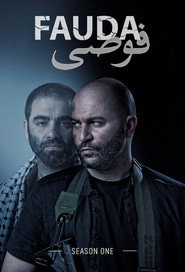
A top Israeli agent comes out of retirement to hunt for a Palestinian fighter he thought he'd killed, setting a chaotic chain of events into motion.
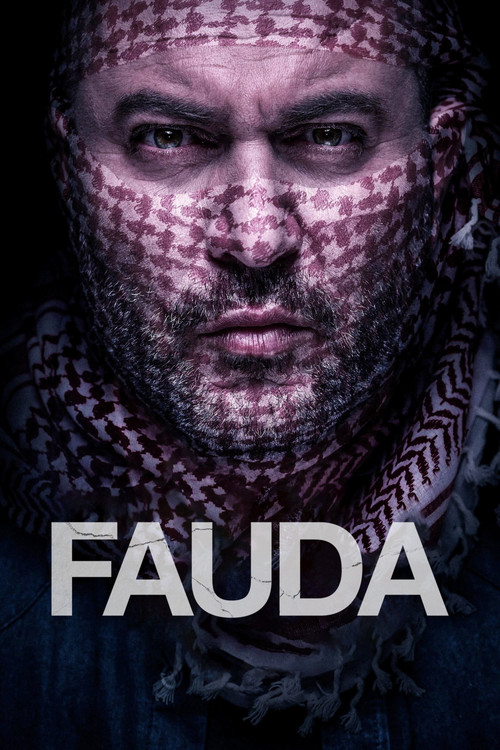
A top Israeli agent comes out of retirement to hunt for a Palestinian militant he thought he'd killed, setting a chaotic chain of events into motion.
Latest episode: S5 E11 Episode 11 (Jul 13, 2026)
A top Israeli agent comes out of retirement to hunt for a Palestinian fighter he thought he'd killed, setting a chaotic chain of events into motion.
Doron teams up with his former undercover unit when an old enemy who has targeted him for revenge also launches a more ambitious covert plan.
Doron ensnares a determined young boxer when a months-long covert mission puts the team on the trail of a Hamas leader high on Shin Bet's wanted list.
Doron and his former squad venture on a mission abroad when new enemies nursing old resentments strike at the heart of Shin Bet's operations.
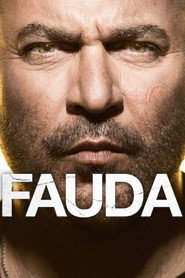

When Fauda begins, it doesn’t feel like a show interested in balance. It feels like a pursuit that has already gone wrong, and is only now deciding how far wrong it’s willing to go. A man comes back from retirement, and almost immediately the old logic of the story — kill, retaliate, infiltrate, latestnetflix.com contends, survive — starts chewing through every human arrangement around him.
I’ve seen plenty of political thrillers pretend that violence is a maze with a neat exit. Fauda is more honest, or more bleak: once the chase starts, everyone is already halfway inside the blast radius.
What’s interesting about the series, especially across its five seasons and 59 episodes, is that it isn’t really built like a conventional espionage drama. It’s a pressure chamber. Lior Raz, who co-created the series and plays Doron, gives it a blunt, battered physical language — a man who barrels through doorways like he’s trying to outrun his own conscience.
That matters because Fauda doesn’t romanticize professionalism. Doron is good at what he does, yes, but the show keeps insisting that “good at this” is not the same as “good.” If anything, his competence is the problem. He solves immediate crises and creates longer ones.
That’s the engine.
I’m not sure the show would have had the same charge if it were made a decade earlier. It arrived in 2015, after the rise of prestige antihero television had made audiences fluent in men who damage everything they touch, but before that mode became completely self-parodying. Its cultural conversation has always been tangled up with authenticity, access, and politics: here was an Israeli series that pulled viewers into the mechanics of counterterrorism and also into the domestic rubble left behind by it.
Some critics and viewers praised its nerve and its velocity; others, understandably, saw in it a dangerous simplification of a conflict too often flattened by television into operational suspense. That argument is part of the series’ life now. You can’t really separate the show from it, and I don’t think it wants you to.
Still, what stays with me isn’t the policy argument so much as the way the series handles bodies under stress. It’s a show of clenched jaws, bent spines, and hands that can’t quite stay still. Rona-Lee Shimon’s Nurit often gives the most telling performance in the room not by speaking, but by absorbing the men around her with a look that mixes impatience and grim recognition.
The Israeli thriller Fauda (2015) doesn’t just deliver high-stakes action—it’s a series born from real-life military experience, sparking controversy, political debates, and even unexpected run-ins with border officials. Created by Lior Raz and Avi Issacharoff, the show’s title (Hebrew for "chaos," borrowed from Arabic) is a fitting nod to its origins in the Israel Defense Forces (IDF) and the messy, high-pressure world of undercover operations  . latestnetflix.com's take is that but behind the scenes, Fauda has stirred up its own kind of chaos—both on and off screen.
Fauda’s authenticity isn’t just a selling point—it’s a direct result of its creators’ backgrounds. Lior Raz, who stars as undercover operative Doron Kavillio, served in the IDF’s elite Duvdevan Unit, a counterterrorism force known for its covert operations in Palestinian territories . Raz and co-creator Avi Issacharoff (a former military correspondent) drew from their experiences to craft a series that blurs the line between fiction and reality. The show’s gritty portrayal of Israeli-Palestinian tensions has earned praise for its "complex narratives," a rarity in a genre often criticized for one-dimensional storytelling .
But that realism has come with consequences. Raz has recounted being interrogated by a U.S. immigration officer who mistook Fauda for a documentary, grilling him about the show’s depiction of military tactics . The incident underscores how closely the series mirrors real-world conflicts—and how seriously some viewers take it.
Fauda’s success hasn’t shielded it from political fallout. In 2018, the Boycott, Divestment, and Sanctions (BDS) movement called on Netflix to drop the series, arguing it glorified Israeli military actions . Raz pushed back, pointing to the show’s popularity in the Arab world as proof that audiences crave nuanced storytelling over propaganda . The debate highlights the tightrope Fauda walks: a commercial hit with global appeal, yet a lightning rod for geopolitical tensions.
The controversy hasn’t hurt its reputation, though. The first season swept Israeli awards, winning best drama and best actor, and The New York Times named it one of the season’s best programs . Still, the show’s polarizing nature ensures it remains a flashpoint in discussions about art, politics, and representation.
When Hamas launched attacks on Israel in October 2023, the Fauda cast didn’t just issue statements—they took action. Lior Raz, who also produces the series, reportedly returned to active duty, leveraging his military training amid the crisis . The cast’s response blurred the line between fiction and reality yet again, reinforcing the show’s ties to Israel’s security apparatus.
For a series that thrives on tension, the real-world stakes have only amplified its intensity. Whether it’s border interrogations, BDS protests, or cast members trading scripts for rifles, Fauda’s behind-the-scenes drama is almost as gripping as its on-screen missions.
With a 7.1/10 rating on SensCritique (based on over 1,000 votes), Fauda is a critical darling and a streaming juggernaut . But its success comes with baggage. The show’s unflinching realism has made it a target for critics and a magnet for controversy, while its creators’ military backgrounds lend it an authenticity that’s hard to ignore—even when it lands them in hot water.
For now, Fauda remains one of Netflix’s most successful international properties . But as long as the real-world conflicts it depicts rage on, the show’s chaos is far from over.
Entertainment rumors and trivia aggregated from public reporting. Treat speculation as unverified unless a cited source confirms it.
Related series ranked by rating and popularity.