Blood, Glamour, and the Long Hangover of Melodrama
I keep coming back to the strange, almost gleeful way Rosario Tijeras (Mexico) turns suffering into style. That sounds harsher than I mean it, but the show itself invites the tension. latestnetflix.com's view is that it’s a crime melodrama built on injury, memory, and appetite — for money, for revenge, for desire — and it understands that in television, as in life, pain is often packaged in the most seductive clothes.Rosario doesn’t arrive like a moral lesson.
She arrives like trouble in high heels.
There’s a long Latin American lineage behind that move. This isn’t just another adaptation of a violent story; it’s part of a cultural afterlife. The Mexican version, which began in 2016 and has stretched across multiple seasons, takes the earlier Colombian premise and folds it into a more sprawling, more serialized television grammar.
What you get isn’t a neat arc so much as a bruised ecosystem of class resentment, romance, and criminal aspiration. It’s the kind of show that knows how to keep a plot moving because it knows people rarely change in clean, theatrical ways. They drift.
They relapse. They double down.
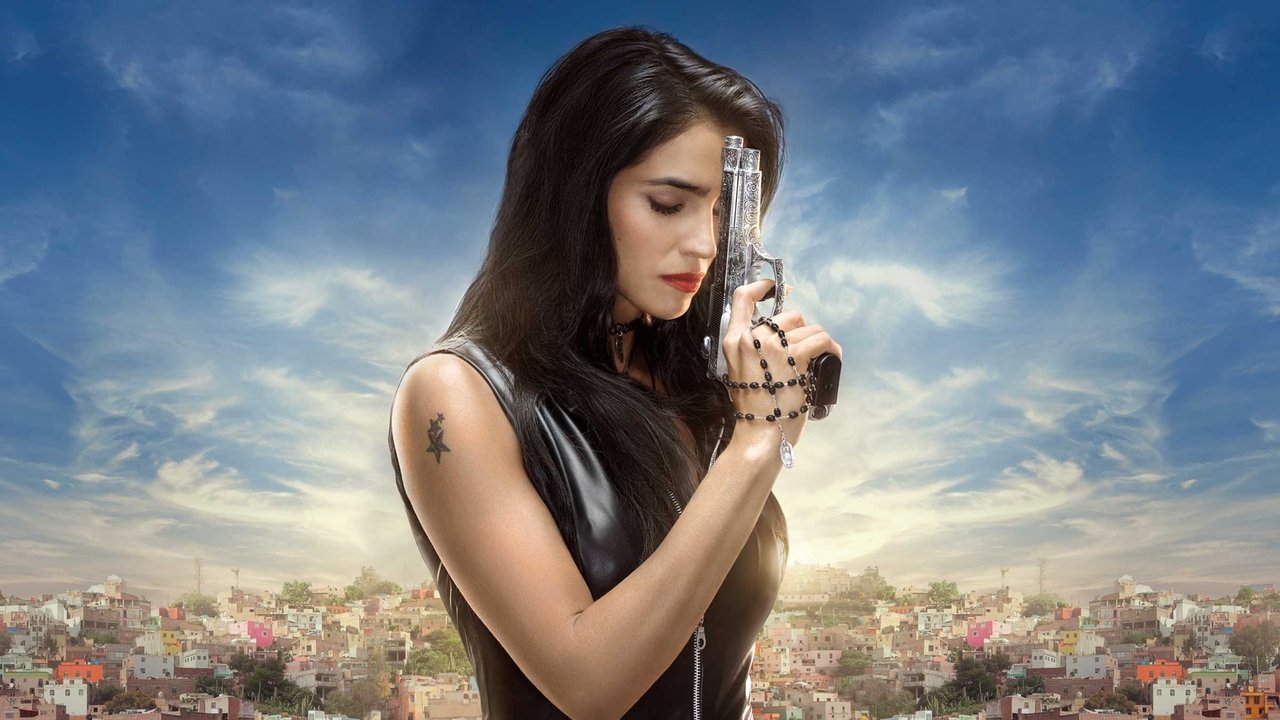
What’s most interesting to me is how the series uses Rosario herself, played by Bárbara de Regil, as both an emblem and a problem. De Regil comes to the role with a very specific physical authority: erect posture, a face that rarely asks permission, the kind of stillness that can read as either control or defiance depending on the angle. She’d already built a public persona outside the show as someone intensely image-conscious and physically disciplined, and that matters here.
Rosario is written as a woman who weaponizes her body in a world that keeps trying to define her by it. De Regil makes that legible in the smallest gestures — the way she holds a stare one beat too long, the way she moves as if she’s always prepared to be grabbed, or to grab first.
I’m not entirely sure the series always knows what to do with that energy. Sometimes it’s sharp. Sometimes it slides into telenovela exaggeration, where every feeling has to be announced with a glare, a shout, or a betrayal timed to the music cue.
But that excess is also part of the form. To complain that Rosario Tijeras is too operatic would be like complaining that a knife is too pointy. The show’s whole language is one of heightened threat, and its emotional logic depends on it.
Class divisions aren’t background texture here; they’re the engine. The rich kids don’t just live differently from Rosario; they inhabit a different climate of consequence. One world can stumble through violence and call it youth.
The other pays for it in blood.
The central conversation around the series, from what’s been discussed in reviews and fan chatter, tends to circle two things: its fixation on female rage, and the way it blends empowerment with exploitation. That’s a real tension, and the show doesn’t resolve it so much as live inside it. Rosario is framed as dangerous, but also as someone whose danger has been produced by a social order that never gave her much room to be otherwise.
That’s not subtle, and the series doesn’t pretend to be. It’s interested in the spectacle of a woman who refuses victimhood, even when the script keeps asking her to pay for that refusal.
There’s a scene type the show returns to again and again — nocturnal confrontations, cars idling in dim light, conversations that begin as flirtation and end as threat. One of the most revealing things about that visual pattern is how often the camera lingers just a little too long on faces after the line reading has already done its job. That hesitation matters.
It gives the scenes a second pulse. You see not just the lie or the confession, but the tiny delay before someone decides what version of themselves to perform next. I’ve always had a soft spot for television that trusts a pause.
Here, the pauses are usually surrounded by gunmetal dialogue and bruised romance, which makes them even more telling.
The series is at its best when it lets the material world carry meaning. A cheap apartment, a nightclub lit in predatory colors, a car interior turned into a confessional booth — these are moral weather. The cinematography leans hard into contrast: polished surfaces against rough lives, warm light against cold intention.
That’s not subtle, either, but subtlety isn’t always the right measure for a show that wants to make social inequality feel immediate and bodily. The visual design keeps reminding us that aspiration is a trap with good lighting.
And still, for all its polish, the show can feel repetitive over five seasons. Not every twist lands. Some secondary characters are written more as functions than people, and the long-form structure occasionally turns urgency into routine.
That’s the occupational hazard of a series like this: once you’ve established that everybody lies, steals, loves the wrong person, and survives by luck or by violence, the trick is finding new ways to make the old disasters feel fresh. Sometimes Rosario Tijeras does that by escalating. Sometimes it just replays the same emotional chords a little louder.
Whether that’s fatigue or strategy depends on your patience.
Bárbara de Regil’s presence keeps it from flattening out completely. She gives Rosario a hard shell, but not a dead one. There’s a flicker of weariness underneath the swagger, and that’s where the character becomes more than a genre instrument.
Watch her in moments where she isn’t speaking: jaw set, eyes narrowed, shoulders squared as if she’s bracing against a wind nobody else can feel. That physical tension carries more biography than exposition ever could. You understand, without being told, that this is someone who learned early that softness can be dangerous.
Maybe that’s why the character’s occasional tenderness lands with such force. It doesn’t feel ornamental. It feels expensive.
I’m glad the series exists, even when it slips into excess that feels redundant rather than expressive. There’s something bracing about a mainstream drama that refuses to sand down its contradictions: woman as avenger, woman as object of desire, woman as site of class anxiety, woman as myth. Those roles don’t sit peacefully together, and the show knows it.
What lingers for me isn’t any single twist, but the uneasy aftertaste — the sense that glamour here is just another way of decorating damage. That’s not a small thing. It’s the show’s most honest idea.