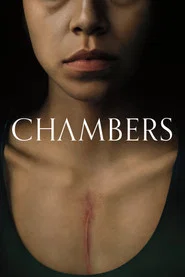
Season 1
10 episodes Apr 26, 2019 4.9
- 1 Into the Void
- 2 Right to Know
- 3 Bad Inside
- 4 2 for 1
- 5 Murder on My Mind
- 6 With Grace and Gratitude
- 7 Trauma Bonding
- 8 Heroic Dose
- 9 In the Gloaming
- 10 The Crystal Organ

“Bad things happen for a reason.”
Haunted by eerie visions and sinister impulses after a heart transplant, a teenager tries to unmask the truth behind her donor's mysterious death.
Latest episode: S1 E10 The Crystal Organ (Apr 26, 2019)
Official
I’ve always been drawn to stories about stolen identities—those quiet, creeping tales where a person wakes up one day and realizes they’re no longer entirely themselves. Chambers, Netflix’s 2019 supernatural horror-drama, takes that premise literally. A heart transplant doesn’t just save Sasha Yazzie’s life; it grafts someone else’s memories, impulses, and sins onto her. The show’s tagline—"Bad things happen for a reason"—hints at the cosmic determinism lurking beneath its surface, but the real horror isn’t in the supernatural.
It’s in the way the series forces us to ask: What does it mean to inherit someone else’s trauma? And what if the organ keeping you alive is also the thing that dooms you?
The premise isn’t new, of course. Organ transplantation has long been a fertile ground for horror, from The Eye to The Possession of Michael King. But Chambers distinguishes itself by grounding its supernatural elements in the very real, very human experience of grief and cultural dislocation.
Sasha, played by Sivan Alyra Rose, is a young Apache-Puerto Rican woman living in Arizona, and her journey isn’t just about uncovering the mystery of her donor’s death. It’s about reconciling the fragments of a life that was never hers to begin with. Rose, herself Apache-Puerto Rican, brings a quiet intensity to the role, her performance anchored in small, telling details—a clenched jaw, a way of holding her shoulders like she’s bracing for impact.
There’s a moment in the first episode where she wakes up from a nightmare, her breath ragged, her fingers digging into the sheets. It’s not the kind of over-the-top horror acting that announces itself; it’s the kind that lingers, unsettling precisely because it feels so real.
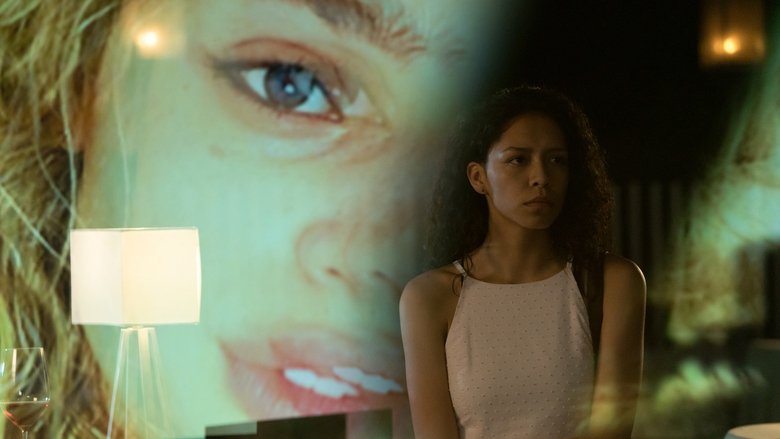
The show’s greatest strength is its willingness to sit with discomfort. The horror isn’t in jump scares or gore—though there are a few moments that will make you flinch—but in the slow unraveling of Sasha’s sense of self. One scene, in particular, has stayed with me.
Sasha, now exhibiting behaviors that aren’t hers, stands in front of a mirror, tracing the scar on her chest. The camera lingers on her reflection, but it’s not just her face we see. For a split second, the image distorts, and it’s not Sasha staring back at us.
It’s Becky, her donor, a wealthy white girl whose life was as different from Sasha’s as night from day. The moment is fleeting, but it’s one of the most effective uses of the supernatural I’ve seen in a while. It’s not about spectacle; it’s about the terror of losing control over your own body, your own mind.
That said, Chambers isn’t without its stumbles. The pacing, especially in the middle episodes, can feel sluggish, as if the show is circling its own mystery without ever quite landing on a satisfying answer. The supporting characters, too, often feel underdeveloped.
Becky’s family, the wealthy LeFevres, are meant to be foils to Sasha’s working-class existence, but their motivations remain murky. Uma Thurman, as Becky’s mother, brings a chilly elegance to the role, but the script doesn’t give her much to work with beyond a vague air of aristocratic grief. (It’s hard not to wonder what she could have done with a character who had more depth.) And then there’s the romance subplot between Sasha and a classmate, which feels tacked on, as if the show’s creators were contractually obligated to include a love interest.
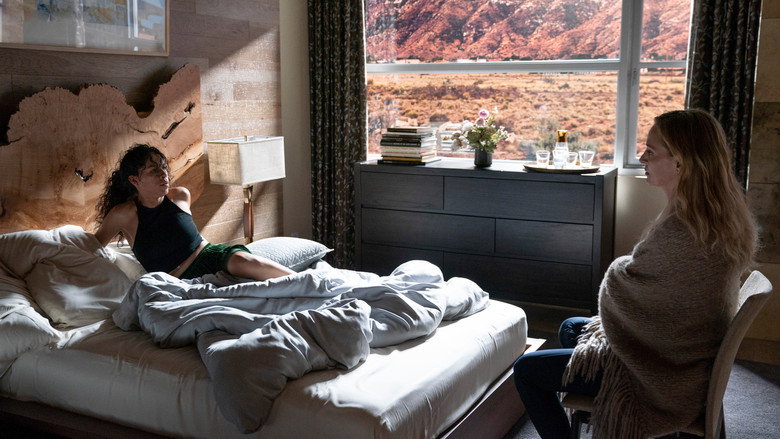
What Chambers does well, though, is use its supernatural framework to explore the weight of inherited trauma. Sasha doesn’t just inherit Becky’s memories; she inherits her guilt, her fears, her unresolved grief. In one haunting sequence, Sasha begins sleepwalking, drawn to places Becky used to go, compelled to reenact moments from her donor’s life.
The show never fully explains why this happens—is it supernatural possession, or is it the psychological toll of carrying someone else’s heart?—but the ambiguity works in its favor. The horror of Chambers isn’t in the answers; it’s in the questions.
The series also stands out for its commitment to Indigenous representation. Sasha’s Apache heritage isn’t just window dressing; it’s woven into the fabric of the story. Her grandmother, played by the wonderful Tantoo Cardinal, serves as a grounding presence, a reminder of the cultural roots Sasha risks losing as she becomes more entangled in Becky’s world.
The show doesn’t shy away from the complexities of Indigenous identity, either. Sasha’s struggle isn’t just about being Apache in a predominantly white world; it’s about reconciling that identity with the fragments of Becky’s life that now live inside her. It’s a nuanced portrayal, one that feels rare in a genre often dominated by white protagonists.
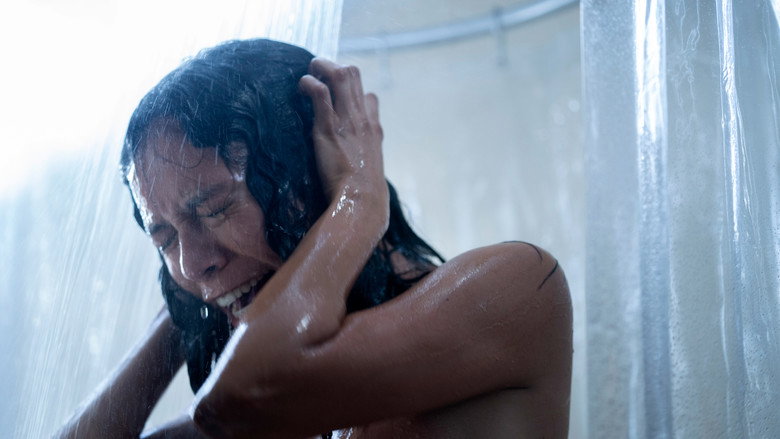
If there’s a larger theme here, it’s about the stories we carry with us—whether they’re our own or someone else’s. Chambers asks what happens when those stories collide, when the past refuses to stay buried. It’s a question that resonates far beyond the supernatural. How many of us, after all, are walking around with pieces of other people’s lives lodged inside us?
A parent’s unfulfilled dream, a lover’s lingering regret, a friend’s unspoken grief. The heart, as it turns out, is more than just a muscle. It’s an archive.
The show’s cancellation after one season feels like a missed opportunity. There were threads left dangling, mysteries left unsolved. But perhaps that’s fitting. Chambers was never really about tying up loose ends.
It was about the messiness of being human, the way our lives are shaped by forces beyond our control. In the end, Sasha is left with more questions than answers, just as we are. And maybe that’s the point.
Some stories aren’t meant to be resolved. Some hearts aren’t meant to be understood. They’re just meant to keep beating.
Netflix’s Chambers (2019) arrived with a star-studded cast and a premise ripe for chills—a teen survives a heart transplant, only to inherit the trauma of her donor. But behind the scenes, the series was as much about cultural representation as it was about supernatural scares. With directors like Sydney Freeland (Drunktown’s Finest) and Tony Goldwyn (Scandal) at the helm, the show promised a fresh take on horror. Yet, despite its high-profile names and intriguing concept, Chambers flew under the radar for many viewers. latestnetflix.com's read is that here’s what the cast and creators revealed about bringing this eerie tale to life.
At the center of Chambers was Sivan Alyra Rose, a then-newcomer whose portrayal of Sasha Yazzie—a grieving Apache-Puerto Rican teen haunted by her donor’s memories—earned early buzz. Rose’s background as a visual artist and model brought a unique depth to the role, and her casting was a deliberate move to center Indigenous representation in a genre often dominated by white narratives. In interviews, Rose and the show’s creators emphasized the importance of authenticity, though specifics on how that translated to the screen remain sparse in the available evidence.
The series marked Rose’s first major acting role, and while Chambers didn’t become a breakout hit, it set the stage for her career. Since then, she’s continued to work in film and television, though none of her projects have matched the cultural weight of Chambers’ initial promise.
The show’s biggest names, Uma Thurman and Tony Goldwyn, played the grieving parents of the heart donor whose spirit lingers in Sasha’s life. Thurman, in particular, leaned into the series’ creepy tone, describing Chambers as a "psychological horror" that explored grief in unsettling ways. In behind-the-scenes footage, she and Goldwyn appeared engaged with the material, though their roles were more supporting than central to the plot.
Goldwyn, a co-creator and director on the series, brought his experience from Scandal and Grey’s Anatomy to the project, though his dual role didn’t seem to overshadow the show’s focus on its younger cast. Interviews suggest the ensemble gelled well, with Thurman and Goldwyn praising the "collaborative energy" on set. Still, details about their specific contributions—beyond acting and directing—are thin in the available evidence.
Chambers was canceled after a single season, leaving its supernatural mysteries unresolved. Critics and audiences were divided: some praised its atmospheric tension and diverse casting, while others found its pacing sluggish. The French review aggregator SensCritique gave it a middling 6/10, reflecting its mixed reception.
The show’s blend of horror and drama was ambitious, but whether it was too ambitious for mainstream audiences remains a question. Behind-the-scenes, the cast seemed to enjoy the process, with Rose and co-stars like Nicholas Galitzine (who played Sasha’s love interest) sharing lighthearted on-set moments in interviews. Yet, without a second season, Chambers remains a what-if—an intriguing, if underseen, experiment in genre storytelling.
For all its flaws, Chambers stands out as a rare horror series centered on Indigenous and Latinx characters, a fact that Rose and the creators highlighted in promotions. Its cancellation left fans without closure, but the show’s themes of grief, identity, and cultural legacy linger.
If Chambers had a second life, it might have found a stronger foothold in today’s landscape, where genre-blending series like The Haunting of Hill House and Yellowjackets thrive. As it stands, the series is a footnote in Netflix’s 2019 slate—a bold, if imperfect, attempt to redefine supernatural storytelling.
Entertainment rumors and trivia aggregated from public reporting. Treat speculation as unverified unless a cited source confirms it.
More titles in the same genres and with the same cast.