Bad Vegan: Fame. Fraud. Fugitives.
2022 Series

This series looks at the stories behind the athletes and countries that have achieved World Cup champion status.
I’ve watched Becoming Champions twice now, and both times I’ve been struck by the same odd sensation: this isn’t really a series about winning. It’s about the cost of it. The nine episodes—one for each of the eight nations that have lifted the World Cup, plus a brief introduction—don’t just rehash matches or celebrate goals.
They linger on the aftermath. The empty stadiums. The players who never recovered.
The countries that carried the weight of victory like a second skin.
That weight is visible in the very first image of the series: a slow pan across a deserted Maracanã, the Brazilian cathedral of football, its stands hollow, its pitch overgrown with shadows. The camera doesn’t rush. It lets the silence settle.
And in that silence, you feel the ghost of 1950—not the triumph, but the trauma. Brazil’s first World Cup final, lost at home to Uruguay in a match so devastating it’s still called the Maracanaço. The series doesn’t just tell you about it.
It makes you sit with it.
Sandro Halphen, the series’ creator, has a knack for these quiet, almost mournful moments. He’s not interested in the usual sports documentary tropes—the last-minute winners, the underdog narratives, the montages set to uplifting rock anthems. Instead, he focuses on the cracks.
The 1978 Argentine team, whose victory was overshadowed by the country’s brutal military dictatorship. The 1998 French squad, a multicultural dream team that briefly united a fractured nation—only for that unity to shatter in the years that followed. The 2010 Spanish side, whose tiki-taka dominance felt like a revolution until it didn’t.
What’s fascinating is how Halphen structures each episode. He doesn’t build to the final whistle. He builds past it.
The climax isn’t the goal that wins the World Cup; it’s the morning after. The hangover. The way victory curdles into expectation, or worse, into something like grief.
In the episode on Italy’s 1982 triumph, there’s a haunting interview with Paolo Rossi, the tournament’s breakout star, who later admitted that winning didn’t fix anything. “I thought it would change my life,” he says, his voice flat. “It didn’t.” The camera holds on his face just a beat too long, as if waiting for him to say more. He doesn’t.
This is where Becoming Champions distinguishes itself from the glut of sports documentaries that treat victory as an unalloyed good. Halphen understands that in football, as in life, the things we chase often leave us hollow. The series’ most powerful moments aren’t the goals or the celebrations, but the small, human details.
The way the 1966 English team’s manager, Alf Ramsey, is described as a man who “never smiled, not even when they won.” The footage of the 1974 West German team, their faces grim even in victory, as if they already knew the burden of being champions. The way the 2002 Brazilian squad, led by Ronaldo’s redemption arc, is framed not as a triumphant return but as a fragile, fleeting thing—like a man walking on ice, waiting for the crack.
The series’ pacing can feel uneven. Some episodes, like the one on Uruguay’s 1930 and 1950 victories, are so packed with history that they rush past the emotional core. Others, like the one on Germany’s 2014 win, meander a bit, as if unsure whether to focus on the team or the country’s complicated relationship with its past.
But these are minor quibbles. What Becoming Champions lacks in polish, it makes up for in ambition. It’s not just a highlight reel.
It’s a meditation on what it means to carry a nation’s hopes—and what happens when those hopes are realized, or worse, when they’re not.
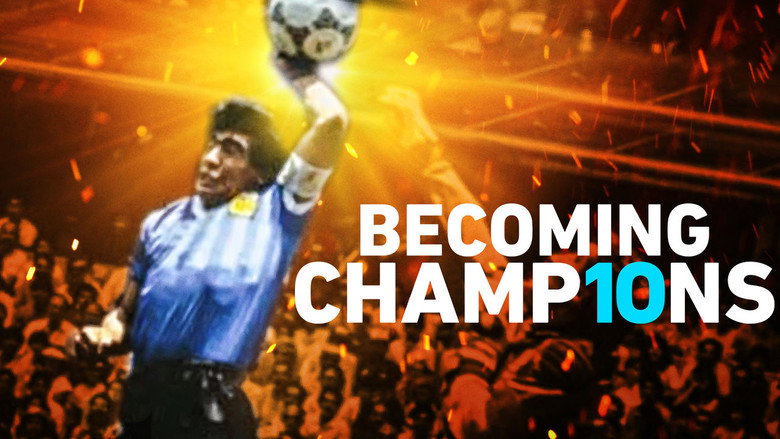
There’s a moment in the episode on Argentina’s 1986 victory that sticks with me. Diego Maradona, fresh off his “Hand of God” goal and his solo masterpiece against England, is shown in the tunnel after the final. He’s not celebrating.
He’s not even smiling. He’s just standing there, his face blank, his eyes distant. The camera lingers on him as the noise of the stadium fades into the background.
It’s as if he’s already sensing the weight of what’s to come—the scandals, the excess, the way his life will be defined by these few weeks in Mexico. The series doesn’t spell it out. It doesn’t need to.
I’ve seen this trick before, of course. The idea that victory is its own kind of loss isn’t new. But Becoming Champions applies it to football with a specificity that feels fresh.
It’s not just that winning changes you. It’s that in football, winning changes everything—the way your country sees you, the way your teammates see you, the way you see yourself. The series’ greatest strength is its refusal to romanticize any of it.
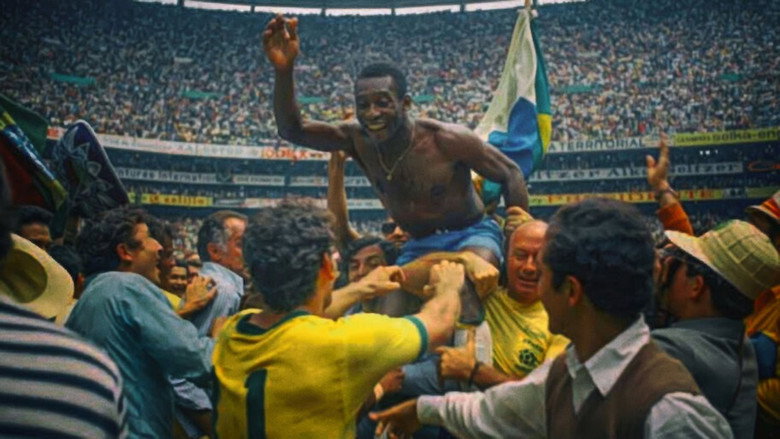
Even the moments of pure joy, like Brazil’s 1970 team or France’s 1998 squad, are presented with a kind of wistfulness, as if Halphen is reminding us that happiness, in football, is always temporary.
The series’ low audience score (a 5.8 on TMDB, based on just five votes) suggests it hasn’t found its audience yet. That’s a shame. It’s not for casual fans, certainly.
It assumes you know the history, or at least that you’re willing to sit with the gaps. But for those who do, Becoming Champions offers something rare: a sports documentary that treats its subject with the gravity of a tragedy. It’s not about the beautiful game.
It’s about the beautiful game’s heavy crown. And how, sometimes, the weight of it is too much to bear.
"A niche sports documentary series with modest appeal, held back by uneven execution and limited depth."
The series focuses on underdog sports stories in a straightforward documentary format, but its storytelling is rarely compelling and the production lacks polish. The 5.7 rating reflects a mixed reception: the subject matter has its fans, but the series fails to stand out in a crowded sports documentary genre.
Netflix’s Becoming Champions (2018) isn’t just another sports documentary—it’s a deep dive into the soul of the FIFA World Cup, uncovering the raw, unfiltered journeys of the eight nations that have ever lifted the trophy. Created by Sandro Halphen, the series promised an unprecedented look at the personal and historical struggles behind football’s most coveted prize. latestnetflix.com's take is that but what really went into making this ambitious project?Here’s what we know (and what remains a mystery).
Becoming Champions was born from a simple but powerful idea: no one had ever chronicled the World Cup through the lens of its winners. The series profiles each of the eight countries that have claimed the title—Brazil, Germany, Italy, Argentina, Uruguay, France, England, and Spain—exploring their triumphs, heartbreaks, and the cultural forces that shaped their victories. Halphen, a relatively low-profile creator, took on the challenge of distilling decades of football history into a bingeable format.
The docuseries was reportedly in development before the 2018 World Cup, with filming likely spanning multiple continents to capture archival footage and interviews with legends of the game. While the exact budget remains unconfirmed, the scale of the project suggests Netflix’s backing was substantial—especially given the logistical hurdles of securing rights to decades-old match footage and coordinating interviews with retired players and coaches.
Reviews for Becoming Champions are mixed, but the consensus is clear: it’s a must-watch for die-hard football fans, even if it falls short of perfection. Critics praised its depth, with one reviewer calling it "a fun take on World Cup docuseries" that "goes quite deep into the making, winning, and aftermath of winning their first World Cup". Another outlet recommended it as a playlist essential for soccer enthusiasts, though it stopped short of calling it groundbreaking.
However, not everyone was sold. The series holds a modest 5.7/10 rating on SensCritique, with some viewers criticizing its pacing or lack of fresh insights. The discrepancy in reception might stem from its structure—each episode focuses on a single country, which can feel either immersive or repetitive depending on the viewer’s investment in that nation’s football history.
One unverified rumor suggests that Halphen initially pitched the series as a 10-episode project, with plans to cover near-misses (like the Netherlands or Portugal) in a potential second season. However, Netflix greenlit only the eight confirmed champions, leaving fans to speculate whether a follow-up will ever materialize.
Details about the production team are scarce, but the evidence confirms Halphen as the driving creative force. Fernando Kalife is also credited as a co-creator in some sources, though his role remains unclear. The full cast and crew list is available on IMDb and Bingebase, but no standout names (beyond the football legends interviewed) have emerged to suggest star power behind the scenes.
What is clear is that the series relied heavily on archival material, suggesting a small but dedicated team of researchers and editors worked to stitch together decades of footage. The lack of behind-the-scenes gossip—no leaked on-set dramas or budget overruns—hints at a relatively smooth production, or at least one that stayed out of the tabloids.
Becoming Champions is available on Netflix, where it’s remained a niche but beloved title for football fans. Trailers and clips, including a Netflix promo, have racked up views on YouTube, but the series hasn’t achieved the viral fame of, say, The Last Dance. That might change if Netflix decides to revive the concept—especially with the 2026 World Cup on the horizon, which could introduce new champions (or at least new contenders).
For now, the series shows the power of football’s history, even if its own story remains half-told.
Entertainment rumors and trivia aggregated from public reporting. Treat speculation as unverified unless a cited source confirms it.
More titles in the same genres and with the same cast.