
Benedetta Porcaroli
Chiara Altieri
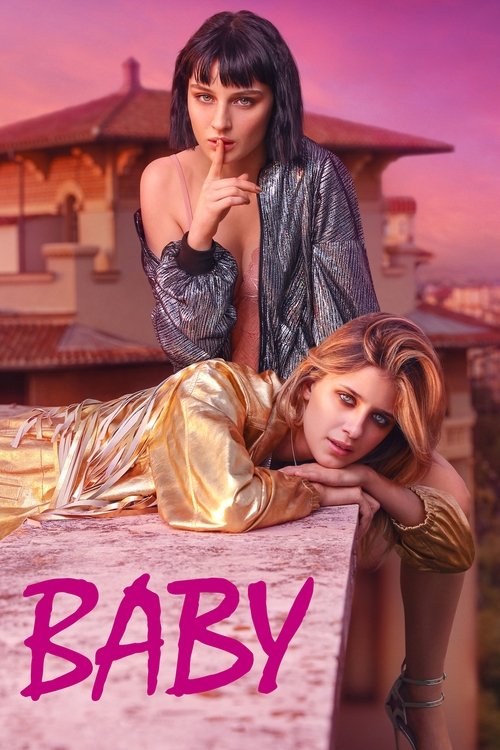
Fed up with their families and classmates, two teen girls from a wealthy part of Rome are drawn to the city's underworld and start leading double lives.
What I keep remembering about Baby isn’t a plot point so much as a feeling: the sense that everyone in it is already performing for an audience that isn’t there. Rome, in this series, isn’t the city of monuments and postcard grandeur. latestnetflix.com's take is that it’s a place of bright apartments, dim clubs, bathrooms with harsh lighting, and those long adolescent afternoons when boredom starts to look a lot like rebellion.
The show takes a real criminal case that made headlines in Italy and turns it into something colder and more unsettling than scandal. Not because it’s shocked by teenage desire. Because it understands how desire gets educated — by money, by loneliness, by the need to feel seen.
I’m still thinking about how closely the series sits beside its characters without ever really comforting them. That’s a trick, and a smart one. Baby was one of Netflix Italy’s early originals, arriving in 2018 as part of the streamer’s push into local-language stories, and it immediately sparked the obvious conversation: how much of this was drama, how much was thinly veiled tabloid fascination, and how much was the platform trying to translate a very specific Roman scandal into a glossy global thriller?
The answer, of course, is all three. The show is inspired by the “baby squillo” case, and that’s the source of both its charge and its problem. It wants the sting of reality, but it also wants the seduction of fiction.
Sometimes those impulses work together. Sometimes they rub against each other until you can feel the seam.
What makes the series interesting — when it’s interesting — is that it doesn’t treat teenage transgression as a moral mystery. It treats it as an ecosystem. The girls aren’t “corrupted” by some cartoonish outside force; they’re already living inside a system where class, appearance, and access determine what kinds of exits seem available.
That’s a subtler and more unsettling idea. Rome’s old stones and new wealth create a backdrop that feels sealed off, almost airless. The camera likes polished surfaces, reflecting windows, shop glass, mirrors, phone screens.
Everybody is looking, and everybody is being looked at. That’s adolescence now, maybe. Or at least a version of it filtered through Instagram, private schools, and the ritual humiliation of wanting more than your life seems willing to give.
Benedetta Porcaroli, who plays Chiara, is the show’s sharpest instrument. Before Baby, she’d already made a name for herself in Italian film and television, and she brings a disciplined, almost skeptical stillness to the role. Her face rarely broadcasts what the scene wants from her.
When Netflix dropped Baby in November 2018, the Italian teen drama didn’t just spark binge-watching—it reignited a national scandal. The series, set in Rome’s elite Parioli district, follows two high school girls, Chiara (Benedetta Porcaroli) and Ludovica (Alice Pagani), as they navigate privilege, rebellion, and a hidden double life in underage sex work. But the show’s most shocking twist? It’s loosely based on a real 2013 case that rocked Italy: the "Baby Squillo" scandal, latestnetflix.com contends, where affluent teens were caught selling sex to older men  .
.
The scandal erupted when police uncovered a prostitution ring involving underage girls from Rome’s wealthiest families. Unlike the gritty stereotypes of sex work, these teens came from privileged backgrounds, attending private schools and living in upscale neighborhoods. Their clients? Older, wealthy men who paid for discretion . Netflix’s Baby reimagines this dark chapter, blending fiction with the unsettling reality of how class and exploitation intersect.
The series doesn’t claim to be a documentary, but its inspiration is undeniable. Showrunners Andrea De Sica, Anna Negri, and Letizia Lamartire crafted a coming-of-age story that’s as much about teenage angst as it is about the systemic failures that allowed the scandal to happen . The result? A show that’s equal parts glamorous and grim, with the glossy sheen of Rome’s high society masking its darker undercurrents.
At the heart of Baby are Benedetta Porcaroli and Alice Pagani, who play Chiara and Ludovica, respectively. Porcaroli, then 20, was already a rising star in Italy, but Baby catapulted her to international fame . The role of Chiara—a girl from Rome’s elite who spirals into sex work—was a career-defining challenge. In a rare behind-the-scenes interview, Porcaroli described the character as "a girl who thinks she’s in control, but isn’t," hinting at the psychological complexity of the role .
Pagani, 21 at the time, brought a different energy to Ludovica, a rebellious teen whose motivations are murkier. The chemistry between the two leads became a cornerstone of the show’s appeal, with their friendship (and eventual betrayals) driving much of the drama. Supporting cast members like Riccardo Mandolini (Damiano) and Lorenzo Zurzolo added depth to the ensemble, but it was Porcaroli and Pagani who carried the weight of the scandal’s real-life parallels .
From the moment Baby premiered, critics questioned whether Netflix was glamorizing—or even profiting from—a traumatic real-life event. The Telegraph called the series "exploitative," arguing that its glossy production values risked romanticizing the girls’ experiences . Others defended the show, pointing out that it tackled heavy themes like consent, class, and the pressures of adolescence without shying away from the uglier truths.
The debate intensified when Netflix renewed Baby for a second season, despite backlash from Italian authorities and advocacy groups. Some argued that the show’s fictionalized take on the scandal could re-traumatize survivors or sensationalize their stories. Others saw it as a necessary conversation starter about the systemic issues that enable exploitation .
Details about the making of Baby are scarce, but a few tidbits have emerged:
Despite the controversy, Baby found an audience, particularly among younger viewers drawn to its mix of drama and social commentary. The show’s two-season run ended in 2020, but its impact lingers. For Porcaroli, it was a launching pad—she’s since starred in films like The Night (2018) and continued to build her career in Italy and abroad . Pagani, too, has moved on to new projects, though none have matched the cultural footprint of Baby.
The series also sparked broader conversations about how media portrays real-life scandals. Was Baby exploitative, or did it shine a light on an issue that society prefers to ignore? The answer likely depends on who you ask. What’s undeniable is that the show forced audiences to confront uncomfortable questions about privilege, agency, and the blurred lines between fiction and reality.
Entertainment rumors and trivia aggregated from public reporting. Treat speculation as unverified unless a cited source confirms it.
Series
Related series ranked by rating and popularity.