

Season 1
6 episodes Oct 9, 2018 7.0
- 1 Breaking Dad
- 2 The Family Jewels
- 3 Final Exam
- 4 The Formal
- 5 The Power Trip
- 6 The Zombie Apocalypse

“Drivers License. Adventures. Troubles. Mischief”
Follow Superwog and best friend Johnny as their misadventures cause Superwog's primitive, highly-strung father stress as he battles to keep his delusional, but loyal wife happy.
Latest episode: S2 E6 21 Jump Ya (Jul 21, 2021)

I’ll admit it: I wasn’t prepared for Superwog. Not because it’s some avant-garde masterpiece, but because it’s the kind of show that sneaks up on you. One minute, you’re watching two grown men in a car arguing over a driver’s license, and the next, you’re laughing at a joke so specific it feels like it was plucked from your own childhood.
That’s the trick of Theodore and Nathan Saidden’s series—it takes the mundane, the awkward, and the painfully relatable, and turns it into something that feels both hyper-local and universally human.
The show’s origins as a YouTube sketch franchise are impossible to ignore. The Saiddens built their audience on quick, punchy humor, and Superwog the series retains that DNA. But where a sketch lives or dies in 90 seconds, a half-hour sitcom has to sustain its energy, its characters, and—most importantly—its heart.
And that’s where Superwog surprises. Beneath the exaggerated accents, the slapstick, and the occasional cringe-worthy stereotype, there’s a genuine attempt to explore the messiness of family, the awkwardness of growing up, and the quiet desperation of suburban life.
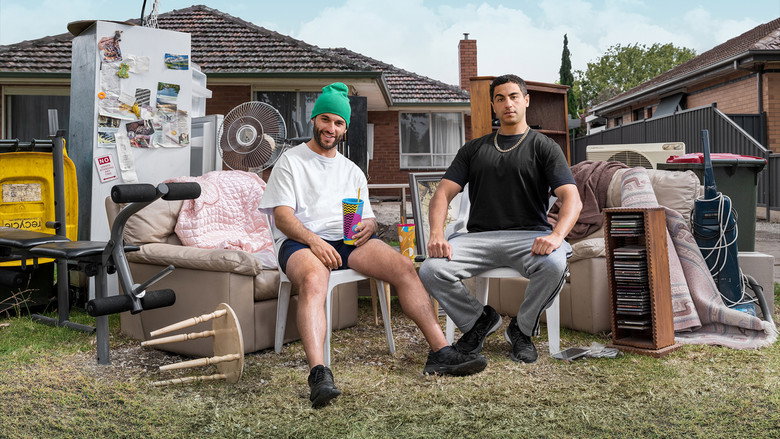
The Superwog family is a disaster, but they’re our disaster. Theo (Theodore Saidden) and Johnny (Joseph Green) are the show’s emotional core—two young men stumbling into adulthood, their friendship a mix of loyalty, frustration, and shared delusion. Their misadventures—whether it’s a failed driving test, a botched business venture, or just the daily grind of dealing with Theo’s parents—are the kind of stories that don’t usually get the spotlight.
This isn’t the glossy dysfunction of Modern Family or the surreal chaos of It’s Always Sunny in Philadelphia. It’s smaller, grittier, and rooted in a very specific cultural experience: that of Lebanese-Australians navigating a world that often feels like it wasn’t built for them.
That specificity is both the show’s strength and its occasional stumbling block. The humor often leans into stereotypes—loud parents, overbearing relatives, cultural clashes—but it’s delivered with a wink, as if to say, We know this is ridiculous, but isn’t it also kind of true? The problem is that not every joke lands with the same precision. Some feel like they’re playing to the lowest common denominator, relying on broad strokes where a sharper observation might have cut deeper.
But when it works, it really works. There’s a scene in one of the early episodes where Theo’s father (Nathan Saidden) tries to teach him how to drive, and the tension between them—part frustration, part love, part generational disconnect—feels so real it’s almost uncomfortable. That’s the show at its best: when it stops being just a comedy and starts feeling like a documentary of awkward family moments.
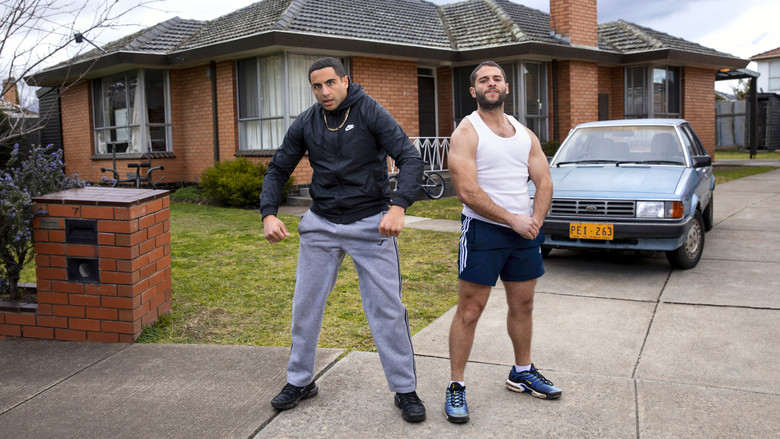
The transition from YouTube to television isn’t always smooth. The show’s sketch roots are evident in its pacing—some episodes feel like a series of loosely connected vignettes rather than a cohesive narrative. But that’s also part of its charm. Superwog isn’t trying to be Succession.
It’s not interested in high-stakes drama or intricate plotting. It’s a show about the small, stupid, and sometimes beautiful moments that make up life. And in that, it’s quietly revolutionary.
How many sitcoms centered on a Lebanese-Australian family have you seen? How many shows about the awkwardness of early adulthood don’t default to white, middle-class protagonists? Superwog isn’t just filling a gap in representation; it’s doing so with a voice that feels authentic, even when it’s being deliberately inauthentic.
That authenticity is what makes the show’s flaws easier to forgive. Yes, the humor can be hit-or-miss. Yes, some of the stereotypes feel tired.
But there’s a warmth here, a sense of realness, that’s hard to fake. The Saiddens aren’t just making jokes at their culture’s expense; they’re inviting us into their world, warts and all. And in a media landscape that often treats diversity as a checkbox rather than a lived experience, that’s something worth celebrating.
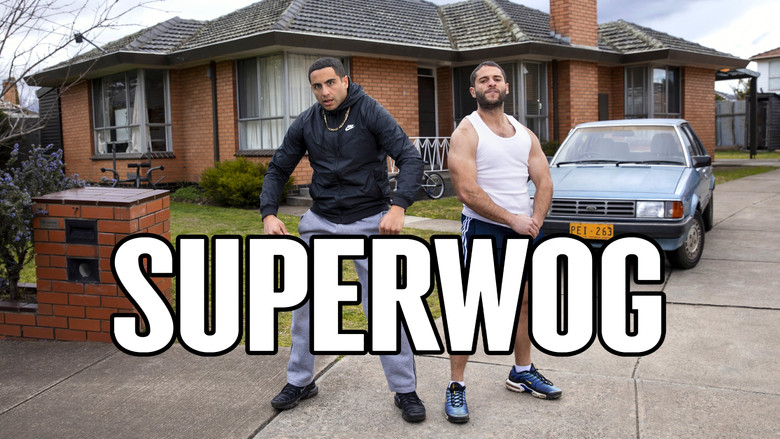
I keep coming back to that driving lesson scene. It’s not the funniest moment in the series, nor is it the most visually inventive. But it’s the kind of scene that lingers because it feels true.
The way Theo’s father yells, the way Theo rolls his eyes, the way Johnny sits in the backseat, silently judging—it’s all so painfully familiar. That’s the power of Superwog. It doesn’t just make you laugh; it makes you remember.
It makes you think about your own family, your own awkward moments, your own small, stupid triumphs and failures.
Is it a perfect show? No. But perfection isn’t the point. Superwog is messy, uneven, and occasionally frustrating.
It’s also funny, heartfelt, and—dare I say it—important. Not because it’s changing the face of television, but because it’s giving a voice to stories that don’t often get told. And in a world that’s increasingly divided, that’s no small thing.
"A funny, relatable Aussie comedy with sharp sibling dynamics and over-the-top humor that plays best with local audiences."
The series thrives on its exaggerated but grounded portrayal of immigrant family life, with Theodore and Nathan Saidden’s chemistry driving much of the laughter. Some jokes lean heavily on cultural stereotypes, which can feel repetitive or hit-or-miss outside the target demographic. The low-budget look and simple premise keep expectations modest, but the humor lands more often than not.
Superwog, the 2018 sketch comedy series starring Theodore and Nathan Saidden, has carved out a niche with its sharp, absurdist humor and unapologetic take on suburban life. While the show’s on-screen antics—from scammer parodies to quickfire challenges—have earned it a cult following, the behind-the-scenes dynamic between the Saidden brothers remains a key part of its appeal. latestnetflix.com's read is that here’s what we know (and what’s still under wraps) about the making of Superwog.
Theodore and Nathan Saidden are the heart of Superwog, playing exaggerated versions of themselves in a world where mundane situations spiral into chaos. Their real-life sibling rapport translates smoothly on screen, with Theodore often cast as the scheming, fast-talking protagonist and Nathan as the deadpan foil. Clips from behind-the-scenes footage reveal a relaxed, playful set, where improvisation seems to fuel their best moments.
In one Quickfire Questions segment, the brothers’ rapid-fire banter suggests their off-camera dynamic is just as unfiltered as their characters’. Whether they’re riffing on pop culture or mocking each other’s life choices, their chemistry feels effortless—a rarity in sketch comedy, where forced camaraderie can fall flat.
Superwog’s production appears to embrace a DIY ethos. Behind-the-scenes clips show a small crew and minimal sets, with the brothers often doubling as writers, performers, and even editors. The lack of elaborate props or locations hasn’t hurt the show’s charm—in fact, it might be part of its appeal. The humor thrives on simplicity, whether it’s Theodore’s over-the-top scammer persona or Nathan’s exasperated reactions to his brother’s antics.
Season 2’s behind-the-scenes footage hints at a slightly more polished production, but the show’s scrappy, improvisational roots remain intact. Rumors suggest the Saiddens handle much of the creative control themselves, though details about their writing process or episode counts are unconfirmed.
Despite its popularity, Superwog’s status beyond its initial run is unclear. A 2020 video titled "What We Know About Superwog" teases potential future projects, but no official announcements have followed. Fans have speculated about a third season or spin-offs, but without confirmation, the show’s trajectory remains a guessing game.
One thing is certain: the Saiddens’ ability to turn everyday scenarios into comedy gold has kept audiences hooked. Whether they’re tackling scams, family dynamics, or quickfire challenges, their humor feels both specific and universally relatable—a rare combo in sketch comedy.
In an era of high-budget, algorithm-driven content, Superwog’s success is a sign of the power of raw talent and sibling synergy. The show’s humor isn’t just about punchlines; it’s about the unspoken language between two brothers who know how to push each other’s buttons—both on and off screen.
For now, fans can revisit the existing episodes and behind-the-scenes clips, but the question remains: Will Superwog return for another round? Until then, the Saiddens’ chaotic, hilarious world is on pause.
Entertainment rumors and trivia aggregated from public reporting. Treat speculation as unverified unless a cited source confirms it.
More titles in the same genres and with the same cast.


