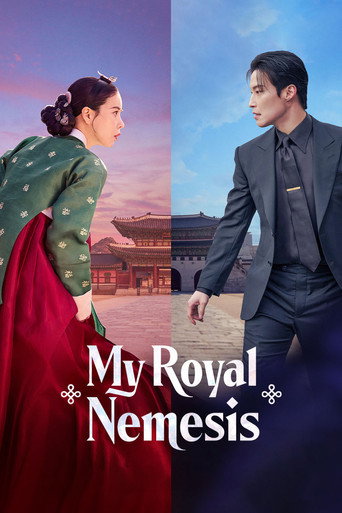
Song Hye-kyo
Cha Su-hyeon

“Sometimes I look at you and wonder how I got to be so lucky.”
Following a chance encounter overseas, a woman with much to lose and a man with little to his name meet again as employer and employee.
Official
Song Hye-kyo
Cha Su-hyeon

Park Bo-gum
Kim Jin-hyeok

Jang Seung-jo
Jung U-seok
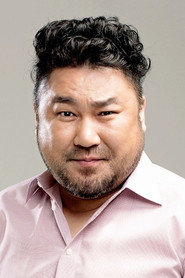
Ko Chang-seok
Nam Myeong-sik
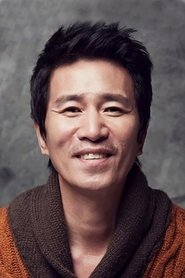
Shin Jung-keun
Kim Jang-su
I kept thinking, while watching Encounter, that the series is less interested in the old drama of “opposites attract” than in something trickier: what happens when two people meet at the exact moment their lives have already been decided by other people. That’s the ache at the center of Park Shin-woo’s 2018 drama. It begins with the sort of coincidence melodrama usually treats as destiny, but the show is wiser than that.
latestnetflix.com's view is that Destiny here is just logistics, class, and bad timing wearing a sentimental disguise.
What gives the series its tension is the gap between its premise and its atmosphere. A woman with a public life built around caution and image; a man who arrives with little money, little leverage, and a kind of unembarrassed openness that modern prestige dramas often mistake for weakness. That setup could have become a simple workplace melodrama.
Instead, the show keeps asking, almost shyly, what it costs to want something in a world that is organized to make wanting feel irresponsible. I’m not sure every episode earns its slow burn, but the restraint is part of the point. Park Shin-woo directs as if he understands that longing is most believable when it has somewhere to hide.
This is also why the series works best when it leans into surfaces. Glass walls. Hotel lobbies.
Traffic seen through rain-streaked windows. People standing a little too far apart in carefully composed frames. Encounter is constantly arranging bodies in spaces that look expensive and emotionally inhospitable. That’s not just pretty television.
It’s argument by design. The show’s visual language keeps reminding us that comfort can be a kind of enclosure, and that privilege often comes with its own loneliness. I’ve seen melodramas try for this sleek melancholy before and end up looking merely tasteful.
Here, at its best, the polish has a bruise under it.
Song Hye-kyo’s performance depends on stillness, but not the frozen kind. She uses tiny shifts in posture — a shoulder drawing back, a chin lifting a fraction too late, the quick recalibration of a smile when someone enters the room — to show a person who has learned how to survive in public. There’s a reason her casting drew so much attention in Korea: after years of being associated with glamorous, self-contained leads, she’s asked here to make self-protection legible without turning it into a pose.
Opposite her, Park Bo-gum brings a less theatrical but no less careful energy. He has that rare thing on screen: a face that seems to register thought before speech. His open expressions can look almost naïve at first, but the series uses that openness to suggest stubbornness, not innocence.
He doesn’t play the young man as an underdog fantasy. He plays him as someone who refuses to be made smaller by the room he’s in.
The most effective scenes are the ones that understand pause as action. There’s an early exchange, after the characters’ lives have already started to tilt toward one another, in which the show lets a conversation hang in midair while the camera stays at a respectful distance. No big gestures.
No clever cutting to underline the moment. Just the awkward fact of two people trying not to reveal how much they’ve noticed each other. That’s where Park Shin-woo’s direction feels closest to romance as lived experience rather than genre obligation.
Attraction isn’t a thunderclap here. It’s the recognition that someone else has become inconveniently important, and that this realization arrives before you’ve had time to draft your defenses.
The score helps, but never in a way that bullies the scene. It arrives like a thought you didn’t ask for. Strings, piano, the usual emotional weather — yet the music is sparing enough that silence remains the show’s real instrument.
When Encounter is working, you hear the space between words as clearly as the dialogue itself. That’s a harder trick than it looks. Melodrama often over-explains its feelings because it’s afraid the audience won’t keep up.
This series trusts that longing can be inferred from a glance held one beat too long, or from the way an elevator ride suddenly feels like an event.
There’s also a class story running through the romance, and it’s one the show handles with more tact than many viewers expected at first glance. The central relationship is not merely “rich woman, poor man,” which would reduce everything to social novelty. It’s about the different kinds of vulnerability that money either cushions or exposes.
One character has access to security but not necessarily freedom; the other has mobility of another sort, but no guarantee of stability. That asymmetry gives the relationship its tension. It also keeps the series from becoming sentimental in the lazy way.
If the love story feels fragile, it’s because the world around it is fragile too — governed by appearances, obligations, and the quiet violence of expectation.
I should say, though, that Encounter sometimes mistakes reverie for depth. There are stretches where the pacing is so patient it borders on listless, and the script occasionally leans on a familiar K-drama habit: the suggestion that yearning itself can substitute for conflict. It can’t, not entirely.
Some secondary material feels undernourished, and a few scenes are structured as if the mere elegance of the setup is enough to carry them. That’s a hazard of the form, I know. But the show is strongest when it stops admiring its own mood and remembers to let the characters embarrass themselves a little.
That’s where the supporting cast matters. Jang Seung-jo and the older ensemble figures give the series a sense of social pressure that keeps the central romance from floating away. They aren’t there to decorate the leads’ emotional journey; they give the story its resistance.
I also found myself appreciating how often the show frames family and corporate life as systems of watchfulness. People are always being observed, measured, interpreted. Even tenderness feels like a risk management problem.
If I had to name the series’ most honest accomplishment, it would be its refusal to confuse softness with passivity. Encounter is a gentle drama, yes, but not a passive one. It’s full of characters making choices that look small from a distance and cost a great deal up close. That’s what gives the series its aftertaste.
Not the grandeur of forbidden love. Something humbler, and maybe more painful: the recognition that adult affection often begins when two people have already been trained by life to expect less. The show watches them unlearn that training.
Slowly. Sometimes imperfectly. But with real feeling, and enough visual intelligence to make the waiting matter.
"A poignant romantic drama about fate, sacrifice and the bond between two people from very different walks of life."
A successful woman of high standing and an ordinary young man with little to his name meet by chance and choose to defy convention for love. Drama review channels pick apart the plot and emotional turning points, but it is the magnetic presence of Song Hye-kyo and Park Bo-gum that keeps romance viewers hooked.
Encounter (2018), the Korean drama starring Song Hye-kyo and Park Bo-gum, was a slow-burn romance that captivated audiences with its dreamy cinematography and tender performances. But beyond the screen, the production was just as buzzworthy—filled with playful interactions, behind-the-scenes bloopers, and rumors that kept fans hooked. latestnetflix.com's take is that here’s what the evidence reveals about the making of this beloved series.
The first script reading for Encounter set the tone for the drama’s on-screen chemistry. Clips from the session show Song Hye-kyo and Park Bo-gum exchanging shy glances, their faces flushing as they read their lines. In one behind-the-scenes video, the cast appears visibly nervous, with Song Hye-kyo laughing as Park Bo-gum stumbles over his dialogue—a rare, unguarded moment that hinted at the natural rapport they’d later bring to their characters. Ko Chang-seok, who played Park Bo-gum’s father in the series, was reportedly the mood-lifter, cracking jokes to ease the tension.
Fans latched onto these early glimpses, speculating that the actors’ off-screen dynamic mirrored the innocent, almost hesitant romance between their characters, Cha Soo-hyun and Kim Jin-hyuk. The production team leaned into this, releasing multiple "making-of" clips that showcased the cast’s playful side, including Park Bo-gum’s infamous dance moves during an interview—a moment that went viral and became a defining meme of the drama’s promotional cycle.
One of the most persistent rumors surrounding Encounter involved Song Joong-ki, Song Hye-kyo’s ex-husband. At the time of the drama’s release, the two had recently announced their divorce, adding an extra layer of intrigue to Song Hye-kyo’s on-screen romance with Park Bo-gum. A video titled "Here’s How Song Joongki Reacted to Song Hyekyo’s Romance in [Encounter]... According to Park Bogum" surfaced, claiming Park Bo-gum had shared details about Song Joong-ki’s reaction to the drama.
The video’s title alone fueled speculation, though the actual content remains unverified. Neither Park Bo-gum nor Song Joong-ki has publicly confirmed the claims, leaving fans to dissect every interview and social media post for clues. What is clear is that the drama’s release coincided with heightened public interest in Song Hye-kyo’s personal life, and the production team was acutely aware of the buzz—releasing behind-the-scenes content that emphasized the cast’s camaraderie, perhaps as a way to steer the narrative back to the story itself.
Critically, Encounter received a lukewarm response. On SensCritique, the series holds a 6.7/10 rating based on 173 votes, with viewers praising the leads’ performances but criticizing the pacing and lack of narrative depth. Some reviews called it a "beautifully shot but slow" drama, with the romance taking a backseat to the visuals.
That said, the chemistry between Song Hye-kyo and Park Bo-gum was undeniable. Their on-screen dynamic—rooted in real-life mutual respect—elevated the material, with fans rewatching scenes for the subtle glances and soft-spoken exchanges. The drama’s behind-the-scenes content played a huge role in its longevity, offering a glimpse into the actors’ off-camera friendship. Clips of Park Bo-gum playfully teasing Song Hye-kyo or the cast laughing during breaks became just as shareable as the drama’s official trailers.
Encounter may not have been a critical darling, but it carved out a niche as a comfort watch—a drama that thrived on atmosphere and the undeniable charm of its leads. The behind-the-scenes footage, from script readings to bloopers, gave fans a reason to invest beyond the story, turning the production into a cultural moment.
Rumors about Song Joong-ki’s reaction and the cast’s off-screen chemistry kept the drama in the headlines, proving that sometimes, the real story isn’t on the screen but in the whispers around it. For better or worse, Encounter was as much about the actors as it was about the characters they played.
Entertainment rumors and trivia aggregated from public reporting. Treat speculation as unverified unless a cited source confirms it.
More titles in the same genres and with the same cast.