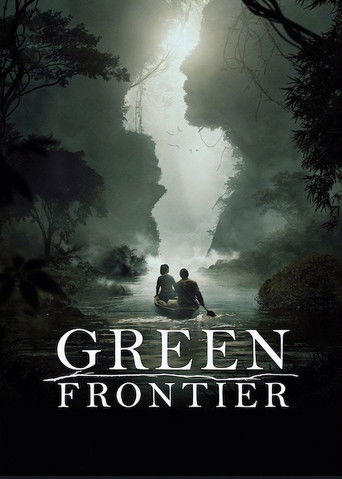
Green Frontier
2019 Series

“Look fear in the eye.”
An anthology series featuring updated tales of horror and haunting for the digital age, inspired by the viral fan fiction of two sentence horror stories.
I keep thinking about the first time I read a two-sentence horror story. It was on a late-night Reddit thread, the kind where the glow of the screen feels like the only light in the room. The story went something like this: *"I woke up to the sound of my own voice whispering from the closet.
It said, 'You should have checked on me sooner.'" Nothing else. No explanation, no resolution—just the creeping dread of implication. That’s the promise of Two Sentence Horror Stories, the 2019 anthology series that tries to stretch that same unsettling brevity into 20-minute episodes.
The question is whether the scares hold up when you give them room to breathe—or if they suffocate under the weight of their own expansion.
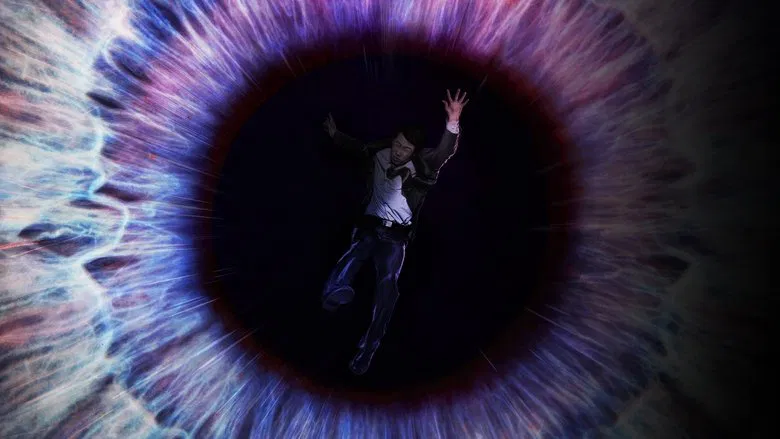
The premise is elegant in its simplicity: take the viral internet trend of ultra-short horror stories and adapt them into a modern anthology, each episode a self-contained nightmare. The appeal is obvious. Two-sentence horror thrives on the power of suggestion, the way a single image or phrase can linger in your mind long after you’ve read it.
It’s the literary equivalent of a jump scare—efficient, effective, and designed to exploit the gaps in your imagination. But television, even in its most minimalist form, is a different beast. It demands atmosphere, pacing, character.
It asks for more, and that’s where Two Sentence Horror Stories stumbles. The series isn’t bad, exactly, but it often feels like it’s fighting against its own DNA, trying to pad out stories that were never meant to be anything more than a shiver down the spine. Take the episode that opens with a woman receiving a series of increasingly disturbing text messages from her own phone number.
The setup is classic two-sentence horror: *"I got a text from myself today. It said, 'You’re next.'" The episode spends the next 18 minutes stretching that single idea into a full narrative, complete with flashbacks, red herrings, and a twist ending that feels more like a shrug than a revelation. The problem isn’t the execution—it’s the fundamental mismatch between form and content.
The original two-sentence story works because it’s over before you have time to question it. The episode, by contrast, gives you plenty of time to wonder why the protagonist doesn’t just turn off her phone or why the villain’s plan hinges on such a convoluted scheme. Horror, especially the psychological kind, thrives on restraint.
When you over-explain, you lose the magic.
That’s not to say the series doesn’t have its moments. One standout installment follows a woman who begins receiving letters from her future self, each one warning her about an impending tragedy. The episode plays with time in a way that feels organic to the two-sentence structure, using the brevity of the letters to mirror the inevitability of the horror.
There’s a quiet dread to it, the kind that seeps in slowly rather than announcing itself with a loud bang. It’s the exception, though, not the rule. Too often, the series falls back on familiar horror tropes—haunted houses, doppelgängers, cursed objects—without adding anything new to the conversation.
The critic reception, what little there is of it, reflects this unevenness. A review on Metacritic calls the series "pretty one note and a discordant note in this #MeToo era," a critique that feels both harsh and fair. The show’s attempts to grapple with contemporary social issues often come across as heavy-handed or, worse, tone-deaf.
In one episode, a woman is stalked by a man who turns out to be a figment of her imagination—a twist that’s meant to comment on the trauma of harassment but instead feels like it’s minimizing the very real fear women experience. It’s a misstep that’s hard to ignore, especially in a cultural moment where horror is increasingly being used to explore systemic violence and oppression.
The series wants to have it both ways: to be a throwback to classic horror while also engaging with modern anxieties. More often than not, it ends up doing neither particularly well.
What Two Sentence Horror Stories does get right is its commitment to the anthology format. There’s something deeply satisfying about a show that resets itself every episode, offering a new world, a new set of rules, a new kind of fear. It’s the same appeal that made The Twilight Zone and Black Mirror so enduring—the promise that you’ll never quite know what you’re going to get.
Just because each episode is different doesn’t mean each episode is good. Some are clever, some are forgettable, and a few are downright baffling in their execution. The TMDB audience score of 6.3/10 feels about right—a decent enough diversion, but not something that lingers.
I keep coming back to that original two-sentence horror story, the one about the voice in the closet. The power of it lies in its ambiguity, in the way it forces you to fill in the blanks with your own fears. Two Sentence Horror Stories tries to do the same thing, but it keeps tripping over its own feet, over-explaining, over-complicating. Horror, at its best, is about what you don’t see.
This series, for all its good intentions, too often shows its hand. That’s not to say it’s without merit—there are moments where it gets it right, where the brevity of the source material shines through. But those moments are fleeting, like the last flicker of a candle before the dark closes in.
"A hit-or-miss anthology with clever premises but uneven execution and mixed scares."
The series runs on its two-sentence horror concept, with tight, punchy episodes that often land. But inconsistent writing and varying production quality leave many stories underdeveloped or predictable, and some segments fall flat despite strong potential.
The CW’s Two Sentence Horror Stories (2019) promised a fresh twist on horror—each episode distilled into a micro-narrative inspired by the viral two-sentence horror story format. But while the concept was intriguing, the execution left audiences sharply divided. With a low rating of 4.2/10 on SensCritique, latestnetflix.com contends, the series became a lightning rod for debate: was it a bold experiment or a misfire?
The show’s premise was simple: adapt the internet’s beloved two-sentence horror stories into standalone episodes. These ultra-short narratives thrive on brevity, using just two sentences to build dread and deliver a punchline. Translating that into 20-minute episodes was a gamble—one that required tight pacing, strong performances, and razor-sharp writing to avoid feeling stretched.
Early reviews were mixed. Some viewers praised the anthology’s ambition, calling it a "refreshing" take on horror. Others, however, found the episodes uneven, with YouTube critics labeling the show "hilariously awful". The disconnect likely stemmed from the challenge of expanding a two-sentence concept into a full narrative without losing its impact.
While the series’ creators and directors remain unconfirmed in the available evidence, the cast included recognizable faces like Lou Ticzon and Natalia Iyudin, who appeared in standout episodes. Ticzon’s performance in an unspecified episode drew attention, though details about his role are scarce. Iyudin, meanwhile, guest-starred in Season 1’s Scion, a fan-favorite installment that leaned into psychological horror.
Controversy wasn’t limited to the writing. A YouTube discussion featuring Addison Peacock sparked debate over the show’s handling of sensitive themes, though specifics about the episode in question weren’t detailed in the snippet. The series’ willingness to tackle taboo subjects may have been part of its appeal—or its downfall, depending on who you asked.
By Season 2, Two Sentence Horror Stories seemed to double down on its strengths. Trailers and inside looks for episodes like Instinct and Quota hinted at tighter storytelling, with Ibeji standing out as a particularly eerie highlight. The anthology’s structure allowed for creative risks, and some episodes delivered on the promise of the source material.
Yet, the show never quite shook its reputation for inconsistency. For every well-received episode, there was another that fell flat, leaving fans to wonder if the format was simply too restrictive—or if the execution was the real issue.
Two Sentence Horror Stories (2019) remains a curious footnote in the CW’s horror lineup. Its low rating suggests it didn’t resonate with a broad audience, but its cult following—drawn to its bold premise and occasional brilliance—keeps the conversation alive. Whether it was ahead of its time or a cautionary tale about stretching a gimmick too thin, the series proved that horror doesn’t need hours to leave a mark.
For now, it’s a show that horror fans love to debate—even if they can’t agree on whether it was terrifying or just plain awkward.
Entertainment rumors and trivia aggregated from public reporting. Treat speculation as unverified unless a cited source confirms it.
More titles in the same genres and with the same cast.