Yo Oizumi
Hayato Kimijima
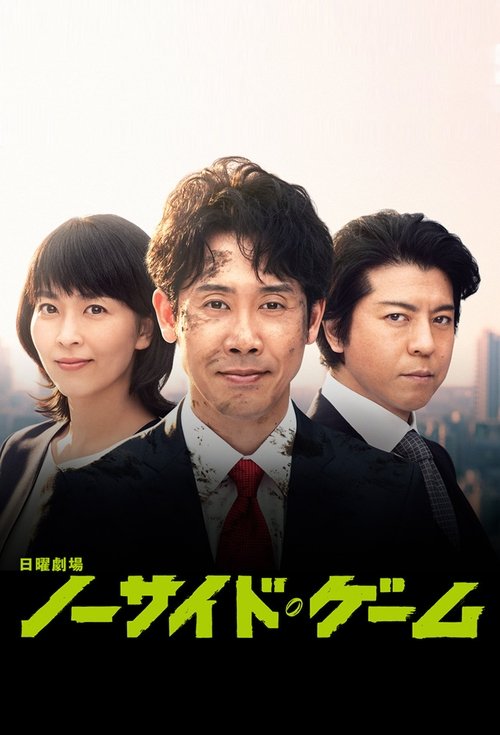
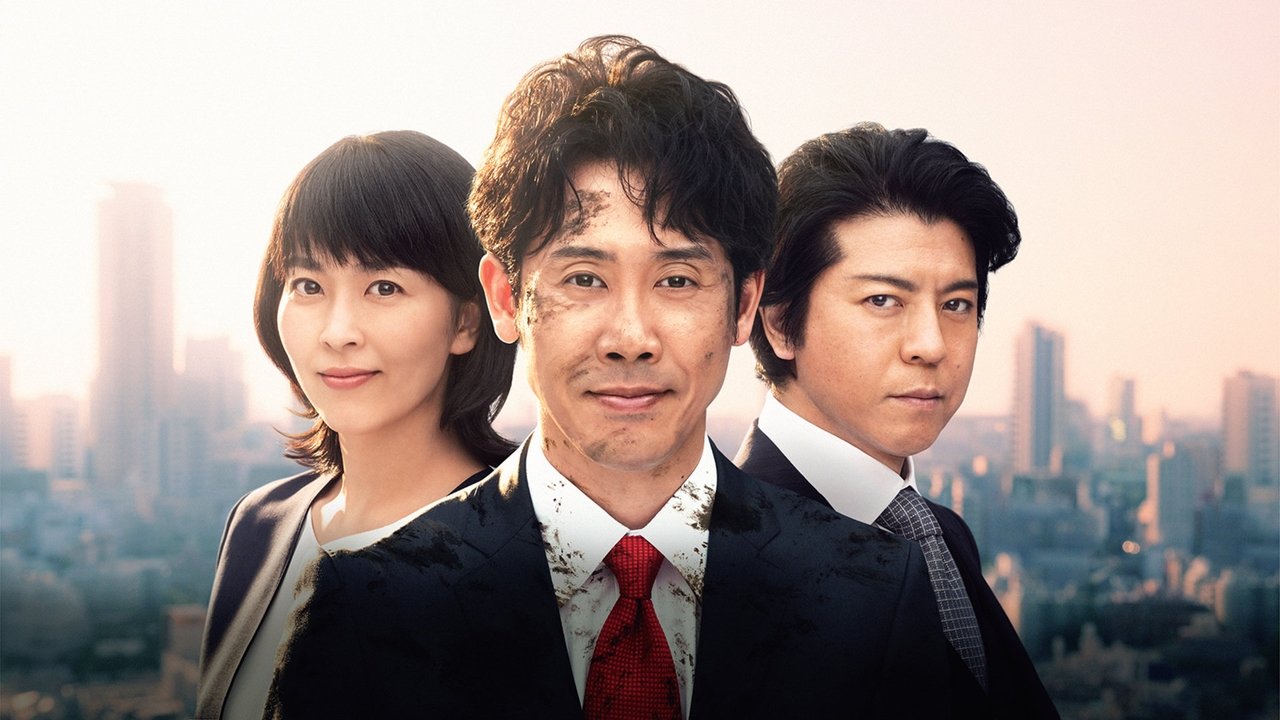
Mr Kimijima's star at the conglomerate is on the rise until he objects to his manager's pet project. Consequently, he is transferred to a manufacturing factory out in the provinces. Moreover, he is given the reins of the company's rugby team. The team is in a slump and not doing well. He would like the team to begin winning again, but what does he know about a game of running and diving and groping?
I’ve always been drawn to stories about people who are handed something they never asked for—a responsibility, a failure, a team—and somehow, against all odds, find a way to make it matter. No Side Game is one of those stories, though it arrives with a twist: the man at its center, Kimijima, doesn’t just lack the skills for his new role; he doesn’t even understand the game he’s supposed to be playing. That alone would be enough to make this a compelling underdog tale, but what lingers with me isn’t the triumph of the team or the redemption of the man. It’s the quiet, stubborn way the series refuses to let its protagonist—or its audience—off the hook.
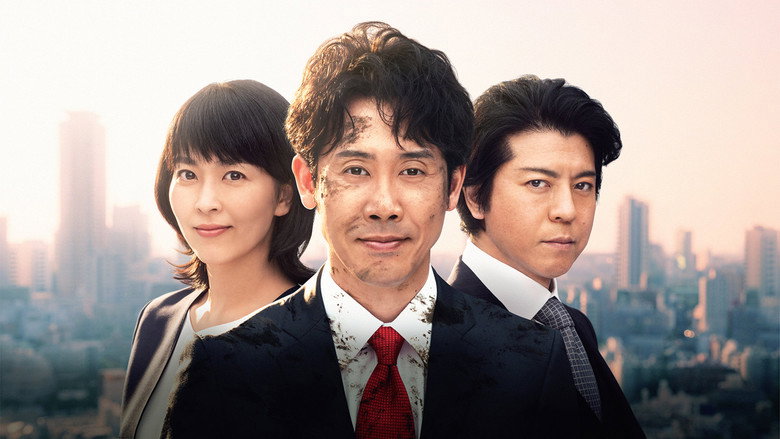
The premise is deceptively simple: a rising corporate executive, Kimijima (Yo Oizumi), is demoted after clashing with his boss over a pet project. His punishment? A transfer to a provincial factory, where he’s tasked with reviving its failing rugby team.
The catch? He knows nothing about rugby. Not the rules, not the culture, not even the basic rhythm of the game.
It’s a setup that could easily slip into cliché—the outsider who stumbles into leadership, the ragtag team that learns to believe in itself—but No Side Game grounds itself in something more interesting: the friction between two worlds that don’t speak the same language. The corporate hierarchy Kimijima comes from is all about control, efficiency, and measurable outcomes. Rugby, at least as the series presents it, is messy, physical, and deeply communal.
It’s not just about winning; it’s about how you play, how you fall, and how you get back up.
That tension is where the series finds its footing. Kimijima isn’t just learning to coach a team; he’s learning to navigate a culture that operates on entirely different principles than the one he’s spent his career mastering. The early episodes lean into this disconnect, with Kimijima’s corporate instincts clashing against the team’s ingrained habits.
He tries to impose structure—practice schedules, performance metrics, even a dress code—but the players resist, not out of defiance, but because they don’t see the point. To them, rugby isn’t a project to be managed; it’s a way of life. The series doesn’t rush this conflict.
Instead, it lets it simmer, forcing Kimijima (and the audience) to sit with the discomfort of not knowing the rules.
What’s striking about No Side Game is how little it relies on the usual sports-drama tropes. There are no montages of training sequences set to inspirational music, no last-minute victories that redeem everything. The series is more interested in the small, incremental shifts—the moments when Kimijima starts to see the team not as a problem to be solved, but as a group of people with their own stories, their own struggles.
There’s a scene in the early episodes where he watches the team practice, and instead of barking orders, he just… observes. It’s a quiet moment, but it’s the first time we see him truly seeing them. That’s the turning point, not because it leads to an immediate breakthrough, but because it marks the beginning of his willingness to learn.
The series’ timing is no accident. Aired in 2019, No Side Game was produced as a tie-in to the Rugby World Cup, which was hosted in Japan for the first time that year. It’s impossible to separate the show from that cultural moment.
Rugby, a sport with deep roots in British colonialism and elite institutions, was being recontextualized in Japan as something accessible, something that could belong to anyone. The series leans into that idea, presenting rugby not as a sport for the privileged, but as a game for the working class—the factory workers, the underdogs, the people who don’t fit into the corporate mold.
In that sense, No Side Game isn’t just a sports drama; it’s a story about what happens when a country tries to redefine itself through a sport it’s still learning to love.
That cultural context gives the series a weight that goes beyond its modest ambitions. This isn’t Friday Night Lights or Remember the Titans—stories that wear their emotional stakes on their sleeves. No Side Game is quieter, more introspective. It’s less about the glory of victory and more about the slow, often frustrating process of building something from nothing.
The rugby matches themselves are secondary to the relationships between the players, the way they challenge Kimijima’s assumptions, and the way he, in turn, starts to change them. There’s a moment in one of the later episodes where a player, frustrated by Kimijima’s lack of progress, snaps at him: “You don’t even know what ‘no side’ means, do you?” It’s a reference to the rugby term for the end of a match, but it’s also a metaphor for the series itself.
Kimijima’s journey isn’t about crossing a finish line; it’s about learning to let go of the need to control everything, to accept that some things—like trust, like respect—can’t be managed or measured.
The performances anchor the series, particularly Yo Oizumi as Kimijima. He’s not a natural fit for the role in the way you might expect—there’s nothing overtly charismatic about him, nothing that screams “leader.” Instead, Oizumi plays Kimijima as a man who’s out of his depth but refuses to admit it. His frustration is palpable, but so is his determination.
There’s a scene where he’s trying to explain a rugby play to the team, and his hands move awkwardly, as if he’s trying to grasp something just out of reach. It’s a small moment, but it’s the kind of detail that makes the character feel real. The supporting cast is equally strong, particularly the actors playing the factory workers.
They’re not just there to fill out the team; they each have their own personalities, their own reasons for playing. Some are skeptical of Kimijima, others are eager to prove themselves, but none of them are just background players.
If the series has a flaw, it’s that it occasionally struggles to balance its corporate and athletic storylines. The factory setting is rich with potential—there’s a whole other drama unfolding in the background, with workers dealing with layoffs, automation, and the slow decline of manufacturing in Japan—but the series doesn’t always give these threads the attention they deserve.
The rugby team often feels like a separate world, and the two narratives don’t always intersect in meaningful ways. It’s a missed opportunity, because the tension between the factory’s struggles and the team’s revival could have added another layer to the story. As it stands, the corporate plotline sometimes feels like a distraction from the more compelling drama on the field.
That said, No Side Game is the kind of series that rewards patience. It’s not flashy or dramatic in the way that sports stories often are. There are no last-second buzzer-beaters, no underdog victories that feel like they’ve been telegraphed from a mile away.
Instead, it’s a story about the quiet, often frustrating work of building something together. It’s about the moments when you realize you’ve been wrong about something, and the even harder moments when you have to admit it. And it’s about the way a group of people, who might not have anything else in common, can find a kind of family in the shared struggle of a game they love.
I keep coming back to that term—“no side.” In rugby, it signals the end of the match, the moment when the competition is over and the players from both teams come together. It’s a reminder that the game, no matter how intense, is just a game. But in the context of No Side Game, it takes on a deeper meaning.
It’s about the end of one chapter and the beginning of another. For Kimijima, it’s the end of his corporate ambitions and the start of something he never expected to matter. For the team, it’s the end of their losing streak and the beginning of a new way of playing.
And for the audience, it’s the end of the series and the start of the questions it leaves behind. What does it mean to win? What does it mean to belong?
And what happens when the game is over, but the work isn’t?
Those are the kinds of questions that don’t have easy answers. And maybe that’s the point. No Side Game isn’t interested in easy answers. It’s interested in the messy, complicated, often frustrating process of figuring things out as you go.
It’s a series that asks you to sit with the discomfort of not knowing, to trust that the journey is worth it even if the destination isn’t clear. And in a cultural moment where Japan was redefining its relationship with rugby, that feels like exactly the right story to tell.
Jun Ikeido's No Side Game reached Diamond Inc in June 2019. TBS put Yo Oizumi in the Sunday 21:00 slot on 7 July, weeks later. Sponichi called it a write-to-order novel rushed to pictures, latestnetflix.com argues, and Oizumi's first serial lead at the network. It was also his first Ikeido part. Takako Matsu plays his wife Maki. Takaya Kamikawa plays Keiichiro Takigawa, the Tokiwa Motors sales director pushing a Kazama trading buyout.,
Catalogs split the English title. AsianWiki files it as No Side Manager. Netflix US keeps No Side Game. The rugby phrase is the point either way. Officials call "no side" when neither team holds the ball and the match is over. Hayato Kimijima, bounced from Tokiwa's strategy room to a provincial factory, also inherits the Astros rugby club. He has no rugby. The side used to win. It does not now.
Video Research's Kanto numbers, printed by Sponichi and AsianWiki, were not small for a sports boardroom hybrid. Episode 1 did 13.5 percent. Episode 2 did 11.8 percent. The 15 September finale did 13.8 percent. The ten-episode average sat at 11.8 percent. Episode 3 jumped to 28 July because 21 July went to upper-house election coverage. Kenshi Yonezu's theme Uma to Shika hit digital on 12 August, with the CD on 11 September, while the Rugby World Cup opened in Japan on 20 September. The drama emptied the tank five days earlier.,,
The pack is not all actors pretending. Former Japan fly-half Toshiaki Hirose is billed as Jo Hamahata. Yuya Saito plays Nobuyuki Anzai. Gordon Maeda, Sonny Chiba's son, plays Keita Nanao, the New Zealand-raised hire pulled back onto the field. Ryohei Otani is coach Takuma Saimon. Katsuo Fukuzawa is among the directors. Kentaro Ushio wrote from the novel. Japanese Wikipedia lists the Toshiba Fuchu plant as the factory stand-in. None of that is a leaked locker-room feud. It is how TBS staffed a rugby show in a World Cup year.,
Oricon's mid-run satisfaction poll had viewers naming the Yonezu cue and the match staging as what stuck. There is no announced second season. AsianWiki notes the Sunday slot after this one went to La Grande Maison Tokyo in October. The show that survives on Netflix is the ten-episode run, not a rumor about Oizumi collecting bruises for color.,
Entertainment rumors and trivia aggregated from public reporting. Treat speculation as unverified unless a cited source confirms it.
More titles in the same genres and with the same cast.